PLEASE SHARE WIDELY
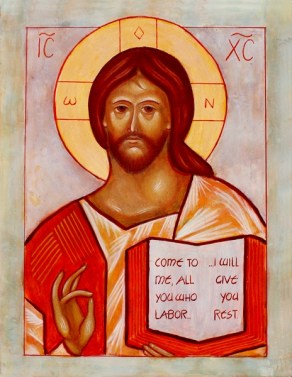
Come to me, all who labour and are heavy laden, and I will give you rest…for I am gentle and lowly in heart, and you will find rest for your souls.
Come to me, all who labour and are heavy laden, and I will give you rest…for I am gentle and lowly in heart, and you will find rest for your souls.
This paper will be delivered at the 8th Biennial Graduate Student Conference hosted by the Toronto Mennonite Theological Centre on June 14-16, 2018.
In the Name of the Father, and of the Son, and of the Holy Spirit. Amen.

Good afternoon. I should like to begin by expressing my humble gratitude to the conference committee for accepting me as a participant in this weekend’s proceedings. As an Orthodox Christian I possess no more than the most rudimentary knowledge of Mennonite history and its theological themes from the beginning of the Anabaptist movement in the 16th century to the present. Yet I hope to make at least a very small contribution to mutual understanding among friends in Christ. The title of my paper has been inspired by a series of informal conversations over the past fifteen months with colleagues in theological studies at TST who are also associated with the Toronto Mennonite Theological Centre. In chronological order I would like to thank the following gentlemen publicly for their interest and especially their guidance: Russ Snyder-Penner, Kyle Gingerich Hiebert, Pablo Kim, and Joshua Loewen-Samuels.
When I call myself Orthodox or speak of the Orthodox Church, I mean what is conventionally known as Eastern Orthodox, the Church that recognizes Seven Ecumenical Councils as authoritative: Nicaea I, Constantinople I, Ephesus, Chalcedon, Constantinople II, Constantinople III, and Nicaea II. We also accept the authority of certain local councils held in Constantinople after Nicaea II up to the 19th century, among these the six 14th-century councils which vindicated the orthodoxy of St. Gregory Palamas. As we shall see shortly, Palamas’ articulation of the distinction between the divine essence and the divine energies—as arcane and esoteric as it may seem—comprises an indispensable aspect of the Orthodox understanding of theosis.
To the best of my knowledge the first modern Mennonite scholar who attempted to draw positive comparisons between Orthodoxy and Anabaptism was Thomas N. Finger in his 1994 article, “Anabaptism and Eastern Orthodoxy: Some Unexpected Similarities?” At the time he was professor of systematic and spiritual theology at Eastern Mennonite Seminary in Harrisonburg, Virginia. A little more recently Ben C. Ollenburger, in his 2005 article, “True Evangelical Faith: The Anabaptists and Christian Confession,” engages with small-o orthodoxy, but identifies themes central to the capital-O Orthodox faith. He was, and I believe remains, professor of biblical theology at Associated Mennonite Biblical Seminary in Elkhart, Indiana. Both Finger and Ollenburger focus some of their attention on the idea of theosis and its importance for such early Anabaptist thinkers as Menno Simons, Dirk Philips, and Pilgram Marpeck. Read More
Not only does Orthodoxy in Dialogue consider the following a newsworthy report to be shared widely, but it raises important questions of ecclesiology, ecumenical relations, and what exactly is envisioned by “Christian unity” generally and “reunion” between the Orthodox and Roman Churches specifically. What is the implicit message of one Church to another when it glorifies a saint for leading people out of communion with the latter into communion with the former? What does this say about the claim by some Eastern Catholics that they are already Orthodox? As usual, Orthodoxy in Dialogue poses difficult questions not to give offense but to promote heartfelt and honest discussion among brothers, sisters, and friends in Christ.
 The possibility of canonizing Metropolitan Joseph (Semashko) of Vilnius and Lithuania, the initiator of the reunification of Belarusian Uniates with the Orthodox Church, was discussed at a press conference dedicated to the 220th anniversary of his birth and the 150th anniversary of his death on Tuesday. 2018 has been declared the year of Met. Joseph in the Belarusian Exarchate.
The primate of the Belarusian Church His Eminence Metropolitan Pavel of Minsk stated that if Met. Joseph will be glorified, most likely he will be canonized as a Church-wide saint, rather than locally-venerated. Met. Joseph was a special person, his ministry being associated with many countries, reports the site of the Belarusian Orthodox Church.
Met. Pavel did note that he believes it is too early to speak of the canonization of Met. Joseph, although the nature of his missionary work testifies to his extraordinary abilities and considerable service to the Church and the people of God. Read More
When Orthodoxy in Dialogue published my “Orthodoxy, Sissies, and the Performance of Masculinity: Part One” on March 3, 2018, the present article was not the Part Two that I envisioned. Yet an unexpected exchange of emails last night and this morning, and the disturbing facts to which they led, have not only prompted, but imposed, the following report. Here we see more clearly the line that runs straight from insecure masculinity—among its symptoms misogyny, homophobia, transphobia, etc.—to white nationalism, neo-Nazism, and the alt-right.
People who contact Orthodoxy in Dialogue can normally expect complete confidentiality on our part. Yet this is too important not to make public.
Yesterday we received an email from “Michael” (last name not provided), assuring us that he belongs to “the canonical Greek Orthodox Church” and asking us to list his newly released book in The Marketplace. It seemed initially like a good idea to promote the book—an Orthodox exposé of Freemasonry by a former member.
At the same time, his email raised a few red flags:
First, not only did he not sign his full name (unusual when writing to the editor of a publication), but the name that appeared in our inbox was “Deus Vult Radio.” The email address was “christianmgtow1@….”
Second, not only did he fail to provide a link to his book so that we could have a look for ourselves, but a Google search for the title turned up absolutely nothing.
 Third, Deus vult! is well known to history buffs as the battle cry of the First Crusade, attributed in some sources to Pope Urban II. The avatar for both Michael’s email account and Deus Vult Radio’s podcast is the same one used on the Twitter account of the Knights Templar International.
Fourth, I wondered what was the meaning of “mgtow” in his email address.
I wrote back asking for Michael’s full name and an explanation of why his book could not be found online. In the meantime I continued to do my own research….
Deus Vult Radio describes itself as follows: Read More


