ROME’S RESPONSE TO THE ZOGHBY INITIATIVE by David Brown

zogharticle

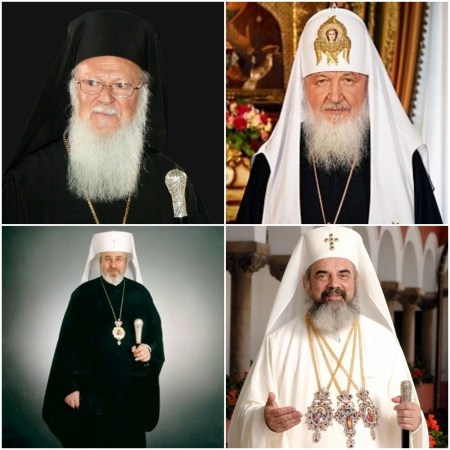
Clockwise from top left: Cardinal Cassidy, Cardinal Silvestrini, Melkite Patriarch Maximos V Hakim, Cardinal Ratzinger

On December 8 Father James Graham described in detail for Orthodoxy in Dialogue the ecumenical vision of Elias Zoghby, a Melkite Greek Catholic archbishop. [See Father Graham’s article here.] The Melkite Greek Catholic Church is an Eastern Catholic patriarchate in union with the See of Rome and centered in Antioch. Archbishop Elias,  like many Melkites, felt deeply the pain of the 1724 schism between them and the Antiochian Orthodox Patriarchate, whom they considered to be their Sister Church. He proposed the idea of dual communion between the Melkite Church and both the Antiochian Orthodox Church and the Roman Catholic Church, based upon the shared faith of Catholicism and Orthodoxy in the first millennium before the Great Schism. Father Graham lays out the entire vision in his article: for Elias, the common faith of the first millennium provided a valid basis for communion today, despite any growth of theological development in the East and the West since then.

In 1997 Pope John Paul II tasked the heads of three Vatican dicasteries with writing to Melkite Patriarch Maximos V Hakim on why they felt the so-called “Zoghby Initiative” was untenable. The letter was written by Joseph Cardinal Ratzinger (who later became Pope Benedict XVI) of the Congregation for the Doctrine of the Faith; Achille Cardinal Silvestrini of the Congregation for the Eastern Churches; and Edward Cardinal Cassidy of the Pontifical Council for Christian Unity.

The letter has never been officially published, but some news outlets reported on it at the time. I read about it then and contacted Melkite Bishop Nicholas Samra, who was kind enough to fax me the original French text. In 2011 a friend gifted me with a translation, which I published at the time on a blog which is no longer active. Read More


ARCHBISHOP ELIAS ZOGHBY’S VISION OF CHRISTIAN UNITY by Priest James K. Graham

Orthodoxy in Dialogue has decided to publish this lengthy article without abridgement. It deserves a careful reading and broad discussion by those concerned for restored communion between the Orthodox Church and the Roman Catholic Church. Despite the rejection of the “Zoghby Initiative” by the Antiochian Orthodox Church and the Roman Catholic Church, we can ask ourselves and each other if any of its individual elements can contribute to a road map forward in the 21st century.

arch_zoghby1

Archbishop Elias Zoghby (1912-2008)

In February 1995 Melkite Greek Catholic Archbishop Elias Zoghby, former Patriarchal Vicar in Egypt and Sudan and retired Metropolitan of Baalbek, dropped a bombshell into the ecumenical arena with his “declaration of faith”— 

  1. I believe everything which Eastern Orthodoxy teaches.
  2. I am in communion with the Bishop of Rome as the first among the bishops, according to the limits recognized by the Holy Fathers of the East during the first millennium, before the separation.

The “Zoghby Initiative,” as it came to be known, received overwhelming endorsement from the Melkite Synod of Bishops (24 in favor, two opposed), but was rejected by the Synod of the Greek Orthodox Church of Antioch and by the Congregation for the Doctrine of the Faith in Rome.

But Zoghby (1912-2008) had promoted East-West reunion for many years. In the essays collected in A Voice from the Byzantine East (R. Bernard, trans., West Newton, MA: Diocese of Newton Office of Educational Services, 1992; original French edition, 1970) and the monograph Tous Schismatiques? (Beirut: Heidelberg Press-Lebanon, 1981; English translation as We Are All Schismatics, Diocese of Newton, 1996), he presents an ecclesiological vision that goes far beyond the two statements of his declaration of faith.

Archbishop Elias bases his ecclesiology in the first millennium of undivided, but diverse, Christianity. During that period, he says, the Churches founded by the Apostles grew and evangelized the known world, developing liturgically, theologically, and ecclesiologically according to the particular needs of each geographical location and also according to their unique historical-cultural-political situations. A basic agreement on the essential content of the Christian faith, derived from the Scriptures and the teaching of Jesus and the disciples and their successors, and articulated for the universal Church at the seven Ecumenical Councils, united all Christians, despite their wide geographic dispersal and their many divergent local practices.

In summary, he proposes that the Catholic and Orthodox Churches should realize their reunion in the following way: Read More


JERUSALEM: A HELPFUL DECISION? by Murray Watson

patsheads

Patriarchs and Heads of the Local Churches in Jerusalem

Yesterday Patriarch Theophilus III of Jerusalem was first signatory among the Patriarchs and Heads of Local Churches in Jerusalem, which are historically based in the Holy City, in their joint plea to President Donald Trump. They wrote:

We are certain that such steps [by the American government] will yield increased hatred, conflict, violence and suffering in Jerusalem and the Holy Land, moving us farther from the goal of unity and deeper toward destructive division.

Their letter speaks of the desire to build a just, inclusive, and sustainable peace—and of their fears that such American actions risk upending such peace-building efforts. For us Christians, even at a distance, questions about Jerusalem must find a particular echo in our hearts, and summon our attention and our prayers.

[A PDF of the original letter has been provided by Haaretz here.] 

I first met Jerusalem in 2001, in the midst of the last Palestinian intifada, when suicide bombings were a terrifying but not uncommon factor of daily life in that most complex and spiritually rich of cities. In the sixteen years since, I have wandered her streets, studied in her libraries, taught in her schools, feasted with her citizens, and prayed in her churches and synagogues. For part of the last several years, my home has been the Ecce Homo convent on the Via Dolorosa, right in the heart of the Old City, a stone’s throw from the Temple Mount/Haram al-Sharif. As a Christian, as a student of the Bible, and as an interfaith activist, I love Jerusalem deeply…but I also know the very real wound it represents in the lives of so many people. It simultaneously inspires me and breaks my heart. And I realize that there are so many levels to Jerusalem that an outsider like me will never fully grasp.  Read More


AN OCA DIOCESE’S GAY PURGE OF 1977 by Giacomo Sanfilippo

axios3

It is commonly assumed that the strident homophobia of the contemporary American Orthodox Church has been imported with the influx of thousands of unconverted converts from Evangelical fundamentalism since the late 1980s to the present. Many of these seem to regard the Orthodox Church as the last bastion of Christian social conservatism. While this phenomenon may certainly account for a marked exacerbation in our Church’s inability to have a rational discussion on sexual and gender variance in human nature, the following very brief excerpt from my MA thesis (2015) offers a more nuanced historical perspective.

Response and Counter-Response: A Brief Pastoral History 

To my knowledge, the earliest instance in which same-sex orientation surfaced as a public pastoral issue in the North American Orthodox Church occurred in the late spring or early summer of 1977 at St. Seraphim of Sarov mission parish in Long Beach, California. Samuel Garula, a freshly ordained priest acting under orders from Archbishop John (Shahovskoy) of the Diocese of the West of the Orthodox Church in America, excommunicated en masse the dozen same-sex oriented members at his new parish assignment within weeks of his arrival in May. The excommunicants’ appeal for pastoral understanding, mailed to priests throughout Southern California and signed “Your gay Orthodox brethren in Christ” was met with howls of laughter.[1] The congregation of some seventy weekly worshippers, largely supportive of their same-sex oriented brothers and sisters, quickly began to dwindle. The parish folded after a protracted death, and Long Beach’s once vibrant, rapidly growing English-language Orthodox mission became a distant memory.[2] Read More