TORONTO CONFERENCE ON ST. ATHANASIUS AND THE INCARNATION TO BE LIVE-STREAMED: LINK PROVIDED

Athanasius Event Poster 2017 - printers marks-1On October 11 Orthodoxy in Dialogue published Ramez Rizkalla’s “Eastern & Oriental Orthodox Conference to Be Held in Toronto.” He introduces our readers to the work of St. Mark’s Orthodox Fellowship, and specifically to its sponsorship of the all-day conference to be held on Saturday, December 9, on St. Athanasius and the Incarnation.

The keynote speaker will be V. Rev. Dr. John Behr, professor of patristics at St. Vladimir’s Orthodox Theological Seminary, followed by Dr. George Bebawi, Director Emeritus of the Institute for Orthodox Christian Studies at the University of Cambridge, and Dr. Richard Schneider, professor of hermeneutics and liturgical art at St. Vladimir’s Seminary and Trinity College.

Because a great many of our readers around the globe have contacted us to express their hope that the conference would be live-streamed, it gives us enormous pleasure to respond in the affirmative. Mr. Rizkalla has written to us to provide the link: Read More


RELATIONSHIPS IN MYSTERY by John (Patrick) Ramsey

In Christianity, human relationships can become more than human relationships, and can be transformed into relationships binding man to God. Human relationships can be formed as mysteries in which God becomes present in the relationships to enable humanity to tangibly relate to Him. The formation of these relationships is effected through the Mysteries of the Church, in which each person involved becomes a living icon of the relationship of man to God. 

La_création_dÈve_(mosaïques_de_la_Chapelle_palatine,_Palerme)_(7026707189)What is meant by these statements? In what way are human relations transformed into relations with God? What does this mean about human relationships, and how we are to engage in them? These are some of the questions to be addressed in this article. 

God is not a mere power or force, nor an object, but rather a being, or the being, of mind, and reason, who is able to express this in Word, that is, to communicate. He is able to love and to relate. We know this from the testimony of the Scriptures and from our own abilities as humans. Yet, God is not accessible to humanity through the senses, and so we cannot have a relationship with Him in a manner accessible to our nature.

However, through the Incarnation such a relationship becomes possible through Christ. Man can relate to God through the humanity of Christ. However, having become man, Christ was only accessible in one space-time location, so this did not permit all humanity to relate to Him in other space-time locations. His human accession into the heavens, that is, transcending space-time, has opened the potential for Him to be present in all space-time locations. Yet again, His spiritualised humanity still needs to be brought into the present limited space-time of the fallen world: this is achieved through the Mysteries. Chiefly, this has been recognised in the Eucharist as the Body and Blood of Christ, yet this food is not an end in itself; it is to eaten so that those consuming it can be united to Christ and He can be present in and with them. This is not the relationship in itself, but only the precondition of a relationship with God. Read More


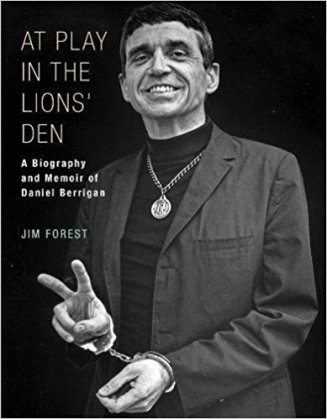
BRIDGE DWELLER by Jim Forest

jimforest

Jim Forest

As someone who made his way to the Orthodox Church from a Roman Catholic background, I am often asked why I became Orthodox and how I would compare the two Churches.

In the 29 years since my Orthodox chrismation, my answers to both questions have evolved. One of the constants has been to stress that, in crossing the Great Schism’s border in an eastward direction, I neither slammed nor locked any doors, and that my transition has not involved a conversion. There has been but one conversion in my life, and that occurred before I was either Catholic or Orthodox—my becoming a Christian, that is, an apprentice follower of Jesus. Finding a church came next.

“But after so many years a Catholic,” friends have asked, “why your turn to Orthodox Christianity?”

In the early years, I tended to stress what I didn’t like about Catholicism: its monarchical papacy, a fast-food liturgy that too often could be described as a McMass, a legalistic approach to pastoral issues such as failed marriages, its insistence that priests be celibate, its obsession with sexual sins, its insertion of the filioque into the ancient creed. (As Hilaire Belloc wrote, “The moral is / it is indeed / you must not monkey / with the Creed.”)

Taking a slightly different tack, I sometimes said that the two Churches were like parallel highways which, at first glance, looked nearly identical; but then, on closer inspection, you notice the traffic moves more slowly on the Orthodox highway, and there are no police cars. With such slow-moving vehicles, cops aren’t needed. Read More


THE ORTHODOX CHURCH IN AUSTRALIA VS. THE SAME-SEX MARRIAGE PLEBISCITE by Dennis Ryle

mailformLeaders of the current political scene in Australia deemed it expedient for Federal Parliament to decide the question of changing the Marriage Act (1961) to allow for same-sex marriage by considering the results of a voluntary plebiscite. Citizens of Australia over the age of 18 years could receive a voting paper in the mail and return it having answered “Yes” or “No” to the question: “Should the law be changed to allow same-sex couples to marry?”  The voluntary plebiscite would run over eight weeks, with a non-binding result on lawmakers—the outcome would merely inform a debate on a Bill to enable same-sex marriage. 

On November 15 the Australian Bureau of Statistics announced a comfortable win for the “Yes” vote: 61.6% as against 38.4% for the “No” vote. 79.7% of eligible Australians participated, a surprisingly high rate for what amounted to little more than an opt-in survey. On the same day, Senator Dean Smith introduced a bill to legalise same-sex marriage. It is expected to be enacted by mid-December.

Of interest to Orthodoxy in Dialogue’s readers will be the nature of the involvement of various expressions of the Church in Australia as the debate that accompanied the survey unfolded.

The very nature of the plebiscite was controversial. It had never been done before. Various referenda requiring compulsory participation were the nearest comparison, with only 8 out of 44 carried since Federation in 1901. Advocates for the “Yes” campaign were reluctant participants, believing that the conservative referendum pattern was to their disadvantage. Opponents to marriage change, aware of such an advantage, championed the right for democratic participation in such an important question, seemingly forgetting that democracy in Australia is exercised primarily through parliamentary representation.

Once the plebiscite was announced, however, the opposing campaigns got under way without the usual regulatory restraints that constrain referendum debates. Both sides poured in as much energy, resources, and chicanery as they could muster. Read More