
Orthodoxy in Dialogue has published extensively on white supremacy and racism in the Orthodox Church, especially since our White Supremacy in the American Orthodox Church: An Open Letter to the Assembly of Canonical Orthodox Bishops of the United States of America on January 22. (See the full list of editorials, letters, and articles under White Supremacy and Racism in our Archives by Author.) Four months later we have yet to receive a response from any episcopal synod, individual bishop, or seminary. Dr. Berry’s book traces how we have gotten to the point where the “conservative” Christianities in the United States—including the Orthodox Church, as we have stated on our pages over and over again—have come to be seen as natural allies in the struggle for “white survival.” The American Orthodox Church ignores him at our own peril.
 The events at Charlottesville in August 2017 highlighted for many what had become apparent during the 2016 election—white nationalism was not extinct. Indeed, white nationalists like Richard Spencer seem to thrive in the current political climate. During the rally at Charlottesville to “unite the right,” David Duke, the former Klan leader who publicly supported Trump’s candidacy, claimed that he and his fellow white nationalists were going to “fulfill the promises of Donald Trump” and take the country back. The President’s equivocating remarks about the violence perpetrated by attendees of the rally made the appearance of acceptability of white nationalist ideals a greater possibility for white nationalists and their opponents alike, putting white nationalists at the center of debates about the place of racism in contemporary American life.
The rally at Charlottesville took place almost two months after the Southern Baptist Convention, whose membership is one of the most reliably Republican voting groups in the country, voted to “denounce and repudiate white supremacy and every form of racial and ethnic hatred as a scheme of the devil intended to bring suffering and division to our society.” And readers may already be aware of the very public efforts which Russell Moore, a very important leader in the SBC, mounted to convince Evangelical voters not to vote for Trump—an effort that did not bear fruit as white Evangelicals voted for Trump by 81%, a percentage greater than voted for the self-professed Evangelical candidate George W. Bush in the 2000 election. Read More

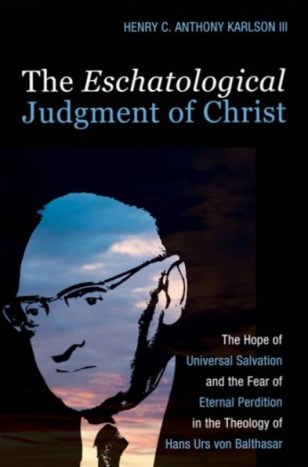 In modern times many Orthodox theologians, such as Sergius Bulgakov, Pavel Florensky, and David Bentley Hart, have questioned the way that eternal perdition, or hell, has been understood and taught. Each of them, in his own way, has sought to find a way to see Jesus’ salvific work as being universal while taking into account His words about hell. Bulgakov, for example, proposes that the eternal fires of hell represent the pain and sorrow we feel when we contemplate the ways that we have failed God in our lives. Florensky considers that salvation entails the removal of what is evil within a person— his or her evil character—so that what is evil is cast aside and perishes.


 The events of the last week in the Gaza Strip have elicited concern and outrage in equal parts around the world. The faith community, including the Orthodox Patriarch Theophilus of Jerusalem, has been outspoken in

