The fact that incidents such as the one reported here are occurring in historically Orthodox societies underscores all the more the need for the Church to articulate a proper theological and pastoral response to the universal phenomenon of sexual and gender variance in human nature.
‘Outrageous Sins’: Moldovan Church Sidelines Priest In Spat Over LGBT Support

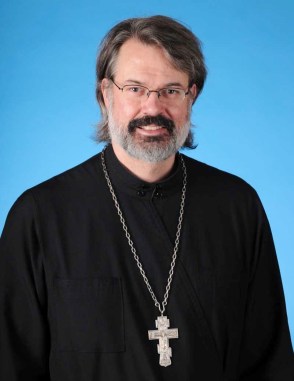
Father Maxim Melenti (centre)
Every week, priest Maxim Melinti can be found at the Church of the Virgin Mary in the Moldovan village of Ghidighici. This past weekend was no different, except Melinti was in front of the altar, not behind it.
Melinti was relegated to the role of spectator by the Moldovan Orthodox Church, which banned him indefinitely from officiating services as of June 21, alleging he was “promoting and encouraging sexual minorities and contributing to the development of the LGBT movement in the Republic of Moldova.”
There’s just one problem: He says he didn’t do anything.
“In me, many have found the man who will understand them and treat them with respect. I do not judge anyone, I just help people get to Christ,” he told reporters at a press conference on June 26.
“Unfortunately, there was no fair, transparent, public church judgment. The act was signed in my absence. All the press rang and asked me to comment, but it was the first time I was hearing about this. No clear accusations have been presented to me, which canons have been violated by me. I was not allowed to argue. Members of our community were not consulted,” he added. Read More



 Recently, in reference to the ongoing controversy of separating children from their parents who have illegally crossed the border into the United States of America, our government officials on several levels quoted from Holy Scripture the following:

