

Two days ago we republished a report on Tanzania’s Cardinal Pengo by New Ways Ministry’s Robert Shine under the headline of African Cardinal: Better to Die of Hunger Than to Accept Foreign Aid Attached to Gay Rights. In it Mr. Shine cites a November 30 article at the AMECEA News Blog, a presumably reliable source of information on the Association of Member Episcopal Conferences in Eastern Africa.
The AMECEA News Blog report includes the following:
[Cardinal Pengo] thanked the Tanzanian Government for its position on the matter [of homosexuality] while stressing that all Tanzanians should say no to homosexual [sic] which apparently is encroaching very fast in African countries.
[…]
It should be noted that recently, the Minister for Internal Affairs, Kangi Lugola, stated that homosexual acts should be shunned by every human being created in the image of God because the act is against human nature and consequently the Government of Tanzania will not accept it.
Cardinal Pengo becomes the second bishop in Tanzania to condemn homosexuals in public.
What, precisely, is the Tanzanian government’s “position on the matter” for which Cardinal Pengo expresses his gratitude?
Not a week later, we have our answer to this question, as reported by Religion News Service in its December 5 LGBT People Flee Tanzania amid Police Crackdown by Doreen Ajiambo: Read More


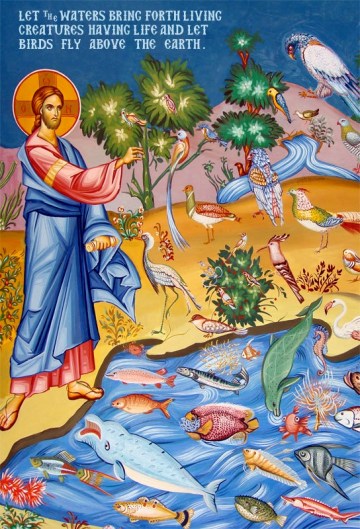 When St. Athanasius in the 4th century addressed the centrality of the incarnation of Christ and His subsequent redemption of all creation via His death on the cross, he also justified the use of icons in Christian worship. (See Athanasius, On the Incarnation.) His appeal wasn’t aesthetic or moral, but theological, albeit a theology rooted in the Gospel. The denial of iconography vis à vis honoring the cross, he claimed, was a denial of the intrinsic goodness of creation, and thereby also a denial of the incarnation. Denying the incarnation, he said, was of the spirit of the antichrist (1 Jn 4:2).


