IMAGINARIES IN GEOMETRY reviewed by Henry C. Antony Karlson III

Imaginaries in Geometry
Pavel Florensky (Anna Maiorova and Karen Turnball, Translators; Andrea Oppo and Massimiliano Spano, Editors).
Milan IT: Mimesis International, 2021
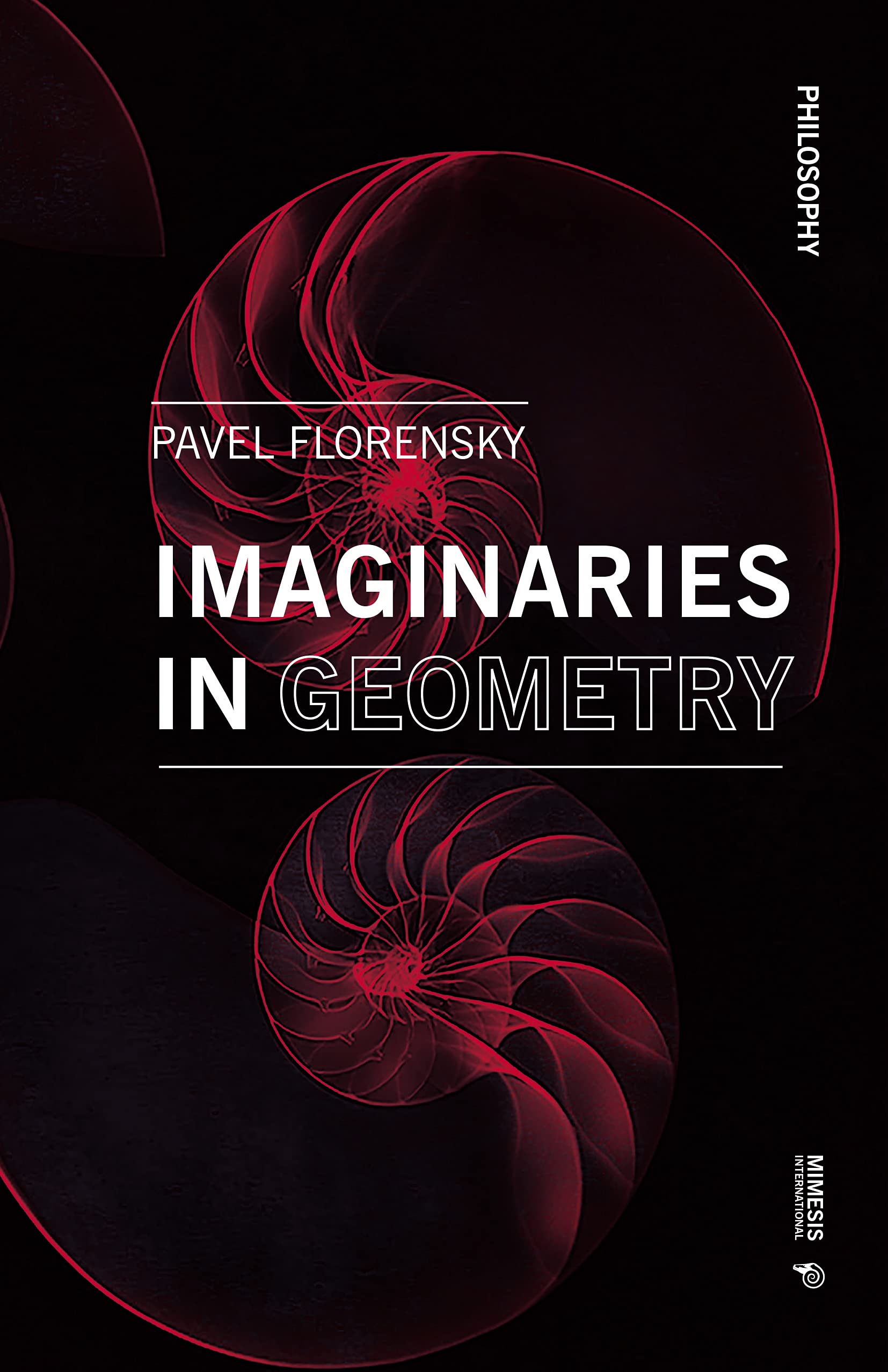
florimagPublished in 1922, while mostly written in 1902 [Editor: When the author was 20!], Florensky’s Imaginaries in Geometry is not an easy text to read because its focus is mathematical in nature. There are philosophical and theological ideas addressed in it which will allow many readers to appreciate his thought. Nonetheless, the mathematical elements which serve as his proof of concept will not likely be understood by many of its readers. I found them to be almost incomprehensible. I say “almost,” because even though I was unable to comprehend his mathematical equations, I was able to use what mathematical knowledge I remember from my studies to follow along with the concepts being expressed. Most of his readers will be able to do so as well, allowing them to discern how the book connects to the greater philosophical picture which Florensky wanted to reveal through his work.

What is that picture? That mathematics and the sciences all serve to translate and interpret reality, each presenting its own worldview that accounts for some element of a greater whole. Just as those who translate poetry from one language to another will lose something in their translation, so something is lost in the translation of reality through their exploration in the sciences. Different models, different worldviews, just like different translations of a book, can and should complement each other. They each have something invaluable to tell us. What is important is that we do not merely embrace one model and try to reduce reality to what can be discerned by it. This is exactly what he felt was the error of the scientific positivism embraced by the Soviets: Read More


THE 2020 CENSUS OF AMERICAN RELIGION: WE HAVE WORK TO DO

This pie chart was published on the website of the Public Religion Research Institute. PRRI describes itself as “a nonprofit, nonpartisan organization dedicated to conducting independent research at the intersection of religion, culture, and public policy.” It goes on to say:

PRRI’s research explores and illuminates America’s changing cultural, religious, and political landscape. PRRI’s mission is to help journalists, scholars, pundits, thought leaders, clergy, and the general public better understand debates on public policy issues, and the important cultural and religious dynamics shaping American society and politics.

The chart shows that Orthodox Christians account for a mere half of 1% of the US population; in other words, about 1.66 million Americans out of a total population of 331,449,281. This gives an average of 33,200 Orthodox Christians per state. The actual numbers are likely lower: if similar surveys are any indication, this figure includes those not in communion with the Orthodox Church who nevertheless call themselves Orthodox. (See Sotiris Mitralexis’ Questions à Propos Pew Research Center’s Report on Orthodoxy.) The Assembly of Canonical Orthodox Bishops of the United States of America counts 1.5 million Orthodox Americans under its collective omophoria, distributed among multiple overlapping, unnamed “jurisdictions.” (The Bylaws define the Assembly’s membership as comprised of “all active Orthodox Bishops in the United States of America who are in canonical communion with all the local Autocephalous Orthodox Christian Churches.”) All but one—the Orthodox Church in America—have ethnic qualifiers before the word Orthodox in their names: Albanian, Antiochian, Bulgarian, Carpatho-Russian (aka Rusyn), Georgian, Greek, Romanian, Russian (in principle, since their departure from the Assembly to protest the autocephaly of the Orthodox Church of Ukraine), Serbian, Ukrainian, etc.

Read More

THE MEANING OF IDEALISM: THE METAPHYSICS OF GENUS AND COUNTENANCE reviewed by Giacomo Sanfilippo

The Meaning of Idealism: The Metaphysics of Genus and Countenance
Pavel Florensky (Boris Jakim, Translator and Editor)
Brooklyn NY: Semantron Press, 2020

The Meaning of Idealism marks the latest testimony to Father Pavel Florensky’s (1882-1937) illimitable intellect to be translated by Boris Jakim. It comprises a series of course lectures on the topic of Platonism at the Moscow Theological Academy (which Jakim, for some reason, calls the Moscow Religious Academy [p.2]), originally published in 1915 when Florensky was 33 years old and four years a priest and father of his first child. In 1908, at age 26, he had been offered a teaching position in the Academy’s Chair of the History of Philosophy immediately upon graduating, but before the completion of his thesis. In September of that year, he delivered his maiden lecture, “The Universal Human Roots of Idealism,” and was thereupon appointed to teach a course entitled Introduction to the History of Ancient Philosophy. The lectures contained in the present volume were delivered several years into his teaching career and just months before his publication date, as his sources date as late as October 1914.

A word about the translator: Florensky studies in the English language would not exist without Boris Jakim. In 1997 he bequeathed Father Pavel Florensky’s magnum opus—The Pillar and Ground of the Truth—to the English-speaking world. This was followed twenty years later by Pavel Florensky: Early Religious Writings 1903-1909. I was delighted to learn of the release of The Meaning of Idealism so soon after Early Religious Writings. In the interim, the indefatigable Jakim went on to translate most of Father Sergius Bulgakov’s major theological works. Jakim never fails to impress with his apparent ease in translating some of the most abstruse texts and complex ideas to come out of Russian religious philosophy. This makes each of his translations as much his own masterpiece as that of the original author.

Read More

GIACOMO SANFILIPPO TO BE INTERVIEWED LIVE: JULY 20

At 12:30 p.m. (GMT-4) on Tuesday, July 20, Orthodoxy in Dialogue’s founding editor Giacomo Sanfilippo will be interviewed live by Nathan Ormond of Digital Gnosis. You may click here to set a reminder for yourself. They look forward to a broad-ranging conversation on the theme of sexual and gender diversity, Orthodox theology, and pastoral praxis. Questions may be submitted via chat during a brief Q&A session at the end.

Read More