
Metropolitan Petros of Accra
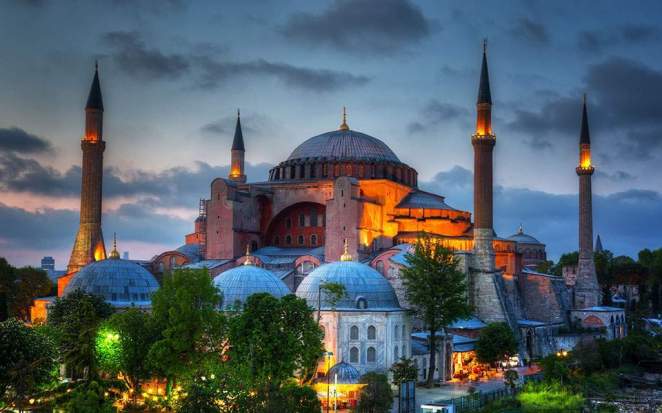
There can be no doubt that Hagia Sophia evokes strong sentiments. For Orthodox Christians, the Greeks in particular, the “Great Church of the Divine Wisdom of God” was the seat of the Ecumenical Patriarch, the greatest cathedral in the Christian world for almost a thousand years, the spiritual heart of the Byzantine Empire. When Constantinople fell in 1453, Mehmet the Conqueror made it a mosque. For Turks (and I stress Turks, not Muslims) who have now turned it back into a mosque, it has become once again the symbol of the conquest of Constantinople and victory over Byzantium, but also the victory of Islam over Christianity.
Hagia Sophia embodies the complexity of Turkish and European history, and of Christian and Islamic traditions. Recognizing this, and driven by his efforts to secularize Turkey, in 1935 Mustafa Kemal Atatürk turned it into a museum and it subsequently became a UNESCO World Heritage Site. It thus became a “place of encounter,” inspiring people of all nations and faiths, an expression of Turkey’s desire to leave behind the conflicts of the past. Read More





 ORTHODOXY IN DIALOGUE