BLACK LIVES MATTER: A REFLECTION by Richard Bauly

Black Lives Matter - WikipediaDo black lives matter? Indeed, they matter. Then given something so self-evident, what underlies so much of the controversy around Black Lives Matter (“BLM”) as an organization? The recent death of George Floyd at the hands of a white police officer, and the resulting waves of protest, have once again brought this matter to the fore. As a result of its close association with BLM as an organization, some have expressed concerns about the  black lives matter movement as a response to this recent event.

It should be clear that aligning with the pure idea that black lives matter appears self-evidently incumbent on all people of goodwill. Making such a statement does not deny that all lives matter, since by definition the idea of black lives mattering is contained within that broader truth. Those who in a disingenuous way intend to deny the stand-alone proposition are playing unnecessary games with language. If we intend to build a just society, we must indeed be able to say that “black lives matter” and decry acts of apparent—and even perceived—violence or oppression against such lives. The foundation and stability of a free and liberal civil society rests upon the ground of just laws fairly applied to all citizens—where race or class plays no role in outcomes.  Read More


FROM RUSSIA WITH LOVE: “WHITE PRIVILEGE” DOES NOT EXIST; “BLACK LIVES MATTER” IS IGNORANT, HYPOCRITICAL by Priest Joseph Gleason

Father Joseph Gleason

Alright. So, we need to talk about race, about judging people merely because of their skin color. I’m an Orthodox priest, and I admit that I’ve been a really slow learner, but with all the recent events, I have finally seen the light. This is a very serious issue, and I now realize that I have not done enough — personally — to fight against it.

Slavery was widespread, until is was abolished in the 1860s. And today, there are millions of people who are descendants of these slaves. Literally millions of them, today, are members of the Orthodox Church.  Read More


A RADICAL PROJECT IN THE AMERICAN COPTIC COMMUNITY by Mary Fawzy

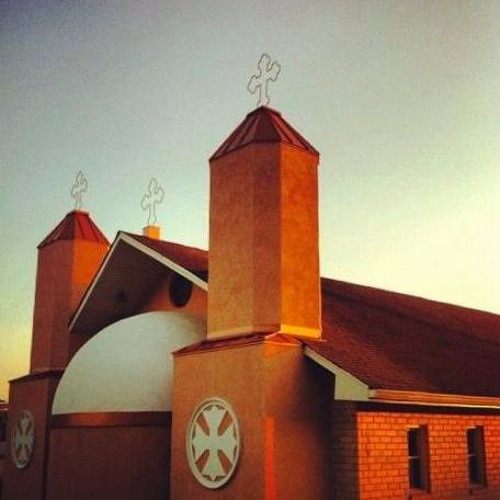
Midnigh praises, St Mina Coptic Orthodox Church, Nashville TN by ...

St. Mina’s Church, one of Nashville’s three Coptic Orthodox churches.

The Elmahaba Center Podcast was created in 2019 by three Coptic Egyptian women from a working-class neighborhood in Nashville, Tennessee, an area with one of the largest Coptic communities in North America. Coptic people, or “Copts,” are a Christian minority in Egypt, the majority of whom belong to the Coptic Orthodox Church; it’s one of the world’s oldest churches. Many Copts have left Egypt in self-imposed exile due to religious persecution and socioeconomic strain. The podcast—hosted by Erinie Yousief, Lydia Yousief, and Roni Nashed—takes an educational approach to some radical political and leftist ideas. It’s the first of its kind for the Coptic community, which is generally deeply religious and politically conservative. Read More


GREEK ORTHODOX ARCHDIOCESE LAUNCHES RESOURCE CENTER ON RACIAL RECONCILIATION

Archbishop Elpidophoros of America
Greek Orthodox Archdiocese

For our entire three-year history, Orthodoxy in Dialogue has called repeatedly for substantive action from our hierarchs, clergy, laity, monasteries, and seminaries on racial justice. See the White Supremacy and Racism section in our Archives 2017-19 and Archives 2020, especially our Open Letter to Our Beloved Orthodox Bishops of the United States of America and White Supremacy in the American Orthodox Church: An Open Letter to the Assembly of Canonical Orthodox Bishops of the United States of America.

It therefore gives us pleasure to note that the Greek Orthodox Archdiocese of America has launched an online Resource Center on Racial Reconciliation. We recommend it to Orthodoxy in Dialogue’s readers, with one major caveat. Read More