IT’S OFFICIAL: ECUMENICAL PATRIARCHATE DISSOLVES RUSSIAN ARCHDIOCESE OF WESTERN EUROPE

The following appeared earlier today, with a Greek title and French text, on Φως Φαναρίου (Phos Phanariou, Light of the Phanar). We publish our translation after having verified the authenticity of the document with our contact at the Ecumenical Patriarchate. According to our report earlier today, Archbishop John was informed of this decision as a fait accompli without prior consultation.
(Addendum: This communiqué appeared a day later, November 29, on the website of the Ecumenical Patriarchate.)
eglise-alexandre-nevsky (2)

St. Alexander Nevsky Cathedral, Rue Daru, Paris*

Communiqué on the Orthodox Churches of Russian Tradition in Western Europe 

The Holy Synod of the Ecumenical Patriarchate, in its session of November 27, 2018, has decided to revoke the Patriarchal Tomos of 1999 by which it had granted the pastoral care and administration of the Orthodox parishes of Russian tradition in Western Europe to its Archbishop-Exarch.

This decision responds to the pastoral and spiritual needs of our era, with the greatest respect for canon law and for the spiritual responsibility which falls to us. Indeed the historical circumstances leading to the creation of such a structure in the wake of the October 1917 Russian Revolution, just a hundred years ago, have evolved profoundly. We give thanks to God for the tireless courage which your communities have shown over time in preserving the rich spiritual tradition which had come from Russia in the aftermath of the bloody persecutions committed by the new atheist regime. We rejoice especially that the Mother Church of the Ecumenical Patriarchate took the responsibility to offer her canonical protection to these communities and so permit them to enjoy, in accordance with ecclesial order, a freedom synonymous with life in the Holy Spirit. Read More

ARCHDIOCESE OF RUSSIAN ORTHODOX CHURCHES IN WESTERN EUROPE/EXARCHATE OF THE ECUMENICAL PATRIARCHATE TO BE ABOLISHED

The following brief communiqué appeared earlier today on the website of the Archdiocese of Russian Orthodox Churches in Western Europe, an exarchate of the Ecumenical Patriarchate, under which jurisdiction the renowned St. Sergius Orthodox Theological Institute in Paris operates. We trust that an explanation of this unexpected action and the future of the Archdiocese will be made public soon.
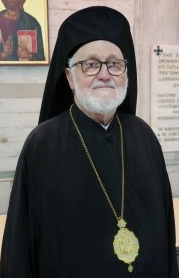
Mgr-Jean-200x300

Archbishop John of Charioupolis

Communiqué of November 28, 2018

from the Office of the Diocesan Administration 

The diocesan administration communicates to all the members of the Archdiocese that, on November 27, 2018, the Holy Synod of our Patriarchate decided to abolish the status of our Archdiocese as an Exarchate.

This decision of the Holy Synod, which has yet to be received officially at the see of the Archdiocese, was in no way requested by the Archdiocese. His Eminence, Archbishop John, was not consulted prior to this decision.

In Istanbul/Constantinople with the secretary of the Archdiocesan Council, Nicholas Lopoukhine, for a meeting of the synodal commission, Archbishop John learned of this decision during a private meeting with the Patriarch. Read More


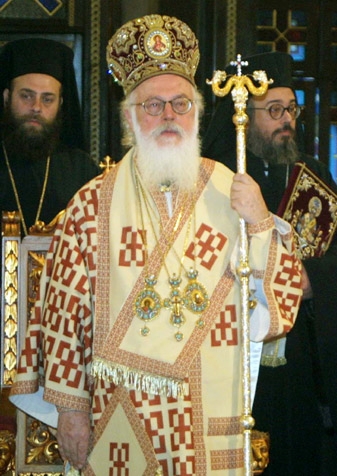
LETTER TO PATRIARCH KIRILL: THE EUCHARIST AS WEAPON? by Archbishop Anastasios of Tirana, Durres, and All Albania

anastasios

† Anastasios
Archbishop of Tirana, Durres, and All Albania

Nr. Prot. 796/18                                                                                                                   Tirana, 7th November 2018

To His Beatitude, Holy Brother in the Lord,
the Patriarch of Moscow and All Russia
KIRILL

Dearest Brother in Christ and Co-celebrant,

“My soul is sorrowful.” A deep pain, worry and embarrassment engulf us too, as we  follow the developments in the Ukraine issue, after the decisions of the Ecumenical Patriarchate (11.10.2018) and of the Orthodox Church of Russia (15.10.2018), which You record in Your letter of the 29th of October 2018.

Unfortunately, they corroborate the fears we had expressed to the representatives of the Ecumenical Patriarchate (30th of July 2018), namely that the currently planned granting of autocephaly to Ukraine will be a “march in a minefield” with painful repercussions for all.

At the same time, however, we ought to remark that the latest decision of the Church of Russia is also a source of great concern. It is unthinkable that the Divine Eucharist, the mystery par excellence of the infinite love and the utter humiliation of Christ, could be used as a weapon against another Church. Is it possible that the decision and order of the Hierarchy of the Church of Russia may cancel the energy of the Holy Spirit in the holy Orthodox churches that operate under the jurisdiction of the Ecumenical Patriarchate? Is it possible that the Divine Eucharist performed in the Churches of Asia Minor, Crete, the
Holy Mountain, and elsewhere on earth, may now become unsubstantiated for the faithful Russian Orthodox? And if they come forth “with the fear of God, faith, and love” to partake of the Sacred Gifts, is it possible that they commit “a sin,” which they should confess?  Read More


ON THE INCARNATION: GOD COMES TO US AS HEALER by Dallas Thomas

This is the first article in our On the Incarnation series for the Nativity Fast.

healerchristWhat does it mean for me that God has become man? How does it affect the way that I am called to live and relate to myself and other human beings? I would like to answer this question from a Pentecostal perspective that is being ever so transformed by Orthodox theology. Being both from a Pentecostal background and as a practicing psychotherapist, the idea of Christ coming as a healer and physician is of utmost importance to me theologically and practically.

The Word becomes flesh and dwells among us to identify with us and to assume fully what we are, so that He can transform a broken people into His image. Or, as St. Irenaeus of Lyons says, “Jesus Christ, in His infinite love, has become what we are, in order that He may make us entirely what He is.” The Word becoming flesh then, is the first act in bringing healing to humanity and the entire cosmos. This assumption of the flesh opens the door for others to partake by grace of what God is by His very nature.

God becoming man provides a window for His light to shine in the darkness of our pain, exposes our woundedness, shares in our suffering, and embraces us in His presence, which itself is healing and transformative. As a Pentecostal, an important part of my experience and knowledge of God is that He is a healer and wants to heal all that is broken, sick, and dying—even if, after we pray for healing, it does not come to fruition on this side of eternity. Read More