QUESTIONS À PROPOS PEW RESEARCH CENTER’S REPORT ON ORTHODOXY by Sotiris Mitralexis

pew

Pew Research Center’s report published on November 8, “Orthodox Christianity in the 21st Century,” contains very valuable data concerning the state of Orthodox Churches and the countries in which they prevail. However, questions concerning a number of the researchers’ choices cannot but emerge.

(1) The report’s definition of what constitutes “Orthodox Christianity” is deeply problematic. The report bundles together the Eastern Orthodox Church with the Oriental Orthodox Churches (also called Old Oriental, Anti-Chalcedonian, Non-Chalcedonian, Pre-Chalcedonian, Miaphysite, or Monophysite Christianity). These have hardly anything in common (compared, for example, to the common theological elements between the Eastern Orthodox Church and the Roman Catholic Church): we are referring here to Churches that are not in communion with each other, haven’t been in communion since the Council of Chalcedon in AD 451, and have developed different theologies ever since.

To illustrate the point, the Eastern Orthodox Church (today a communion of 14 local/national Churches, plus the Orthodox Church in America [OCA]) has ceased to be in communion with the Roman Catholic Church since, conventionally, AD 1054—half a millennium later than the clash with what are today the Oriental Orthodox Churches. The use of the word “Orthodox” in the title of Churches is purely coincidental (a claim made by both Churches, essentially), and problematic as terminology. One struggles to understand what would exactly be the rationale for this bundling of Churches that are not in communion and haven’t been so in more than 1500 years, in spite of current and laudable ecumenical attempts. What would be the definition of “”Orthodox Christianity” in “Orthodox Christianity in the 21st Century” so that it encompasses both the Eastern Orthodox and Oriental Orthodox Churches, but not other Churches? The reader shouldn’t get me wrong: I am inquiring on methodology, not making pronouncements about the Oriental Orthodox Churches.

By excluding certain impossible options (such as an academically reputable terminology, theological grounds, the question of communion, etc.), one is led to identify an orientalist sentiment as the sole possible basis for this definition: i.e., that these Churches “look Eastern,” they look liturgically similar and “exotic,” so naturally they can be bundled together in a report on their current state. There is a way this could work by employing the equally problematic term—although not downright wrong, as would be the case with “Orthodox Church”—of “Eastern Christianity,” which would geographicalize the question and leave other terminological considerations aside. But even in that case, how is it that other Churches, like the Nestorian “Church of the East” or even the Byzantine Rite Catholics, do not fit the description and are not included in the report?

Read More


THE VOCABULARY OF CONJUGAL FRIENDSHIP by Giacomo Sanfilippo

When Public Orthodoxy published “Conjugal Friendship” on May 2, a number of commentators objected in particular to its conflation of friendship with conjugacy. The present reflection seeks to address some of those concerns. 

Floresky-Friendship-Chapter-image-600-px (2)

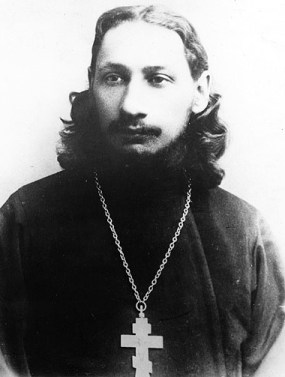
“Happy Battle” – from Father Pavel Florensky’s 1914 “Friendship”

My use of conjugal in a sense that both subsumes and transcends its marital connotation derives from a number of interrelated linguistic factors, mainly its Latin cognates and their Greek equivalents. I share Florensky’s structuralist approach to language, which gives priority to the embedded etymological meaning of a word over its conventional usage in a given time and place or the idiosyncratic intention of a given speaker. This places us at odds with postmodern assumptions about language while not denying its intrinsic malleability as a living medium of communication. Our attention to the morphemic structure of words, with its implicit premise that language possesses on some level an interior life of its own that operates independently of us—to wit, that language imposes itself on us, both shaping and revealing human reality no less than we shape and reveal our own reality through our creative use of language—remains as central to understanding Florensky’s theology of friendship as it does, for instance, to biblical studies.     Read More


AN ENCOMIUM FOR FATHER ROBERT F. TAFT, SJ by A.A.J. DeVille

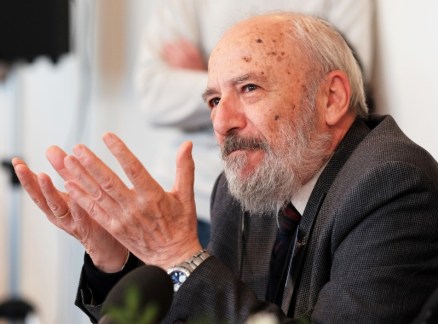
robtaftThe Orthodox priest-scholar and my friend Father William Mills passed on to me an e-mail from the Jesuit, Father John Baldovin, who was in to see Father Robert Taft last weekend and reported that he is no longer eating and is very weak and frail. Taft, now in his 86th year, will soon appear, it seems, before the “awesome tribunal of Christ,” as the Byzantine liturgy, which Taft has done so much to help us understand, plaintively puts it.

For those who do not know him, Taft has, more than any scholar of our time, helped Eastern Christians and others understand the Byzantine tradition, tracing out its liturgical history in all its fascinating and often messy details through hundreds of articles and books stretching back more than fifty years.

Though a Catholic, and a Jesuit whose whole life has been lived in the Russian recension of the Byzantine tradition, Taft has shaped many minds in the Orthodox world. Scholars such as Father Alexander Rentel at St. Vladimir’s Seminary in New York studied under him; Sister Vassa Larin was one of his last graduate students; and many other Orthodox and Catholic scholars today have been influenced by his myriad works. It is, in fact, impossible to study liturgy or Eastern Christian history seriously without coming across Taft’s works.

His formidable reputation precedes him, and so, when I was scheduled to be on a panel with him at the Orientale Lumen conference in Washington, DC in June 2011, I was a little nervous, for Taft is a gruff, no-nonsense kind of guy infamous for his take-no-prisoners style. He was still quite vigorous then, but clearly slowing down. We had, I was relieved to discover, a very amicable time together, in part because I had done my homework and was not indulging in some of the things Taft has long denounced, not least “confessional propaganda” masquerading, he says, as church history. Read More


REACHING FOR THE REAL by Priest Richard René

As a prison chaplain in a pluralistic environment, I have often engaged in conversations with men and women of other faiths. This has challenged me to understand how Orthodox Christians can fruitfully engage in interfaith dialogue.*

To illustrate my own process of understanding, I would like to sketch an hypothetical interaction with an inmate called Damien, a Muslim who by all accounts practices his religion consistently, thoughtfully, and sincerely.

paulathensOne day, Damien asks me a question: How can he find out whether his religion is true? He comes to me and not, say, to his own Muslim Chaplain, because I will respect his freedom to search without coercing him (however gently) to my own answer. At the same time, my own faith commitment compels me to respond to Damien in a way that maintains the integrity of Orthodox Christianity, including its claims to exclusive fulness of truth. How do I prepare? I go to that quintessential scriptural interfaith engagement: the Apostle Paul’s speech to the philosophers of Athens (Acts 17:22-31).

In this speech, St. Paul identifies an “unknown god” (v. 23) as the basis of dialogue with his pagan Greek audience. This unknown god is singular, utterly transcendent, and independent not only of human control (vv. 24-25), but also of the human ability to imaginatively conceive and thus represent (v. 29). The Apostle highlights here a way of thinking about God that is developed more fully in later Christian theology: apophaticism, a systematic negation of positive human conceptions of God’s nature. Read More