Dr. Petros Vassiliadis, professor emeritus of theology at the Aristotle University of Thessaloniki, has graciously brought the present article to our attention. Entitled “Περί ‘αλλαγής φύλου’ και η ιστορία και χρήση μιας σχετικής ευχής,” it appeared on Sunday, October 22 on Father Timothy’s Αγιοκέρι (Agiokeri) blog. We publish it as a sequel to our “Greek Prayer for Transgender Name Change” and “Intersex vs. Transgender.”
In sharing Father Timothy’s article we are not arguing for the now discredited and largely discontinued practice of surgical modification for intersex newborns. As Dr. Vassiliadis aptly notes in the discussion in Orthodoxy in Dialogue’s Facebook group, “The crucial point of that historical event, I think, is not so much the correctness of the surgical intervention, but the readiness of the Church to meet without any prejudice, and in cooperation with both theology and science, the pastoral needs of the time with loving Christian concern. Much more progressive an attitude than nowadays.” More than fifty years later one cannot but wonder at the Church’s intransigent resistance to scientific and social advances in our understanding of human sexuality, sexual orientation, gender and transgender identity, etc.
 The issue of gender change, or rather, of gender correction, was experienced jointly for the first time by the [Greek] Church and the [Greek] State in 1963, when corrective medical intervention was offered to a person with an intersex condition for the first time, and the Ministry of Interior sought the advice of the Church as to the identity of the person. The Metropolitan of Paramythia, Titus (Matthaiakes), handled the matter with his Synod, which sought and received the advice of Amilka Aleivatos, Professor of Canon Law, and Georgios Merikas, Director of the Pathology Clinic at Evangelismos Hospital. Both agreed that only with the intervention of science would this person be able to live a normal life, and that this had already been done; and so all that remained was the matter of renaming the person. They also agreed that the Church, with love and affection, should take special pastoral care of this person and any others who appeared in the future; and that the Church accepted that, when these circumstances arose, there was the need for a special blessing for renaming the person since the person was already baptized.
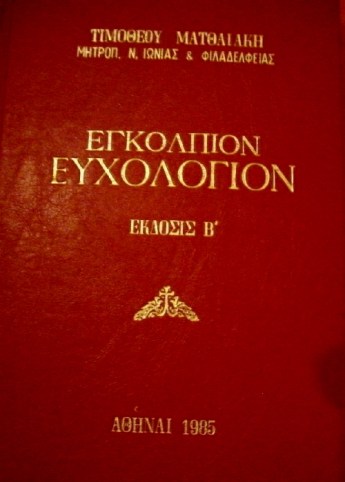
The void which existed in the Church’s euchologions was addressed by the wise and scholarly Metropolitan Timothy (Matthaiakes), then of Maroneia and later of New Ionia, who drew up a special blessing for this situation. Read More



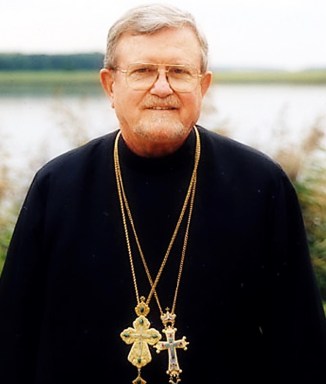 The Orthodox priest-scholar and my friend Father William Mills passed on to me an e-mail from the Jesuit, Father John Baldovin, who was in to see Father Robert Taft last weekend and reported that he is no longer eating and is very weak and frail. Taft, now in his 86th year, will soon appear, it seems, before the “awesome tribunal of Christ,” as the Byzantine liturgy, which Taft has done so much to help us understand, plaintively puts it.

