Zionism has again come to the forefront of our public dialogue with the recent decision of the President to recognize Jerusalem as the capital of Israel, including plans to move the US Embassy from Tel Aviv—where all nations with diplomatic ties to Israel have their embassies—to Jerusalem. As of this writing, only one other nation, Guatemala, has decided to follow the US on this policy.
The politics of this decision are steeped in Zionism. Particularly in the US this takes the form of Christian Zionism, which is prevalent in some circles of American Protestantism as part of a larger eschatological framework called Dispensationalism. I will analyze the history and theology of this problematic teaching first, and then contrast it with the ancient teachings of Orthodoxy on Israel and the end times.

John Nelson Darby (1800-1882)
The doctrine of Dispensationalism was invented in 19th-century England by an Anglican priest turned Brethren minister named John Nelson Darby. Darby was the first to create a systematic paradigm of Dispensationalism, which teaches that God acts in different ways at different times to administer His overall plan for the world. While this is built on earlier concepts that date all the way back to St. Irenaeus of Lyons in the 2nd century, Darby goes much further in systematizing this concept.
A key concept, unique to Darby, is that the prophecies of the Old Testament that speak of an eternal Israel, such as those found in Isaiah 60, require the physical re-establishment of the nation of Israel on earth, that this is separate from the establishment of the Church, and that this must happen before the “end times.” This idea was strongly advocated by Darby, who travelled much of continental Europe and North America to spread this idea. It has caught on in a number of Protestant circles, and is as good as Gospel for them: Israel must be re-established and fully recognized before Christ can return. Read More

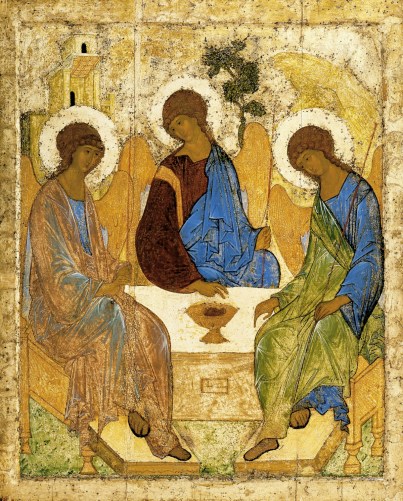 Christian unity is foremost unity established through Christ. More specifically it is participation in the unity of the Trinity: “That they also may be one in Us.” Christ gives this to those believing in Him: “And the glory which You have given to Me, I have given to them, so that they may be one just as We are one: I in them, and You in Me; so that they may be perfected in unity.” So Christian unity is something received from Christ in union with the Trinity.
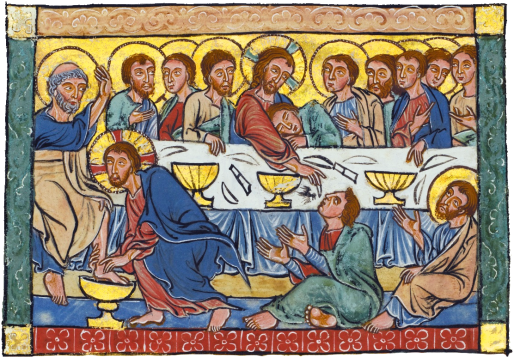 Every year, in the third week of January (in the northern hemisphere), many Christian individuals, parishes, and associations organize ecumenical liturgies, Bible studies, and other activities to animate a Week of Prayer for Christian Unity (WPCU). The WPCU calls Christians to repentance for sinful events and attitudes that led (and lead) to divisions in the church, and promotes the way of ecumenism, which aims to restore unity within the global Christian family.
 I’d like to take on the issue of what Jesus wrote in the dust. It is, indeed, a riddle: presented as a puzzle, which can be solved from the evidence and information presented around it, and which asks for such a solution. I make no claim to scholarship in the formal sense, but the genre of riddle does not ask for it, being a matter of reading, even reading for the plot, and working with the material itself.

