THE SYSTEMATIC PERSECUTION OF RELIGIOUS MINORITIES IN TURKEY by B. Theodore Bozonelis

This article provides important additional background to Niko Efstathiou’s “Islamic Educational Center Planned beside Ecumenical Patriarchate’s Shuttered Theological School” and Fehim Tastekin’s “Are Turkey’s Christians as ‘Fine’ as They Say?” 
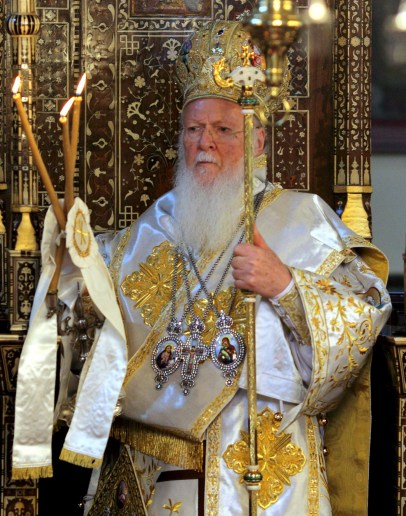
TURKEY GREEK ORTHODOX EASTERDespite the world-wide recognition of the status of His All-Holiness Ecumenical Patriarch Bartholomew as the spiritual leader of all Orthodox Christians, the government of Turkey will give no legal standing and status to the Ecumenical Patriarchate, the historical Holy Center of Orthodox Christianity at the Phanar, in Istanbul. The lack of legal standing and status in essence nullifies property and other fundamental civil rights in Turkey for the Ecumenical Patriarchate which precludes its full exercise of religious freedom.  The Ecumenical Patriarchate cannot own in its name the churches to serve the faithful or the cemeteries to provide for their repose. Since it lacks a legal standing, the Ecumenical Patriarchate is powerless to pursue legal remedies to assert property rights or even seek to repair deteriorating property without government approval.

Instead and in lieu of legal standing, Turkey has established a system of minority (community) foundations for Orthodox Christians and other non-Muslim religious minorities to hold properties supervised and controlled by the Turkish government’s General Directorate of Foundations. The Directorate regulates all the activities of religious community foundations which include approximately 75 Greek Orthodox, 42 Armenian and 19 Jewish foundations. The 1935 Law on Religious Foundations, and a subsequent 1936 Decree, required all foundations, Muslim or non-Muslim, to declare their properties by registering the same with the General Directorate of Foundations. Read More


THE REAL ORIGINS OF THE RELIGIOUS RIGHT by Randall Balmer

This article is four years old, yet it remains as relevant today for Orthodox readers as when it first appeared in print. The quasi official alliance of the Orthodox Church in the USA with the social and political conservatism of right-wing Evangelicalism—see, for instance, the high profile Orthodox signatories of the questionable Manhattan Declaration of November 2009—continues to make for stranger and more unfortunate bedfellows with the passing of time. Case in point: see Orthodoxy in Dialogue’s extensive coverage of the rise of white supremacy and neo-Nazism (White Supremacy and Racism section in Archives by Author) in certain parishes, seminaries, and monasteries of the American Orthodox Church. The aggressive politicization of what should remain pastoral issues for us (abortion, same-sex marriage, et al.) creates an ecclesial climate in which too many overt racists and white supremacists find a natural home for themselves.

school_segregation_001-e1522172647686

6-year old Ruby Bridges being escorted to and from school (1960).

They’ll tell you it was abortion. Sorry, the historical record’s clear: It was segregation.

One of the most durable myths in recent history is that the religious right, the coalition of conservative evangelicals and fundamentalists, emerged as a political movement in response to the U.S. Supreme Court’s 1973 Roe v. Wade ruling legalizing abortion. The tale goes something like this: Evangelicals, who had been politically quiescent for decades, were so morally outraged by Roe that they resolved to organize in order to overturn it.

This myth of origins is oft repeated by the movement’s leaders. In his 2005 book, Jerry Falwell, the firebrand fundamentalist preacher, recounts his distress upon reading about the ruling in the Jan. 23, 1973, edition of the Lynchburg News: “I sat there staring at the Roe v. Wade story,” Falwell writes, “growing more and more fearful of the consequences of the Supreme Court’s act and wondering why so few voices had been raised against it.” Evangelicals, he decided, needed to organize.

Some of these anti-Roe crusaders even went so far as to call themselves “new abolitionists,” invoking their antebellum predecessors who had fought to eradicate slavery.

But the abortion myth quickly collapses under historical scrutiny. In fact, it wasn’t until 1979—a full six years after Roe—that evangelical leaders, at the behest of conservative activist Paul Weyrich, seized on abortion not for moral reasons, but as a rallying-cry to deny President Jimmy Carter a second term. Why? Because the anti-abortion crusade was more palatable than the religious right’s real motive: protecting segregated schools. So much for the new abolitionism. Read More


FAITH & SCIENCE: YOKEFELLOWS OR ANTAGONISTS? by Aidan Hart

Faith-and-Science-for-web

I have long been perplexed by the embarrassment that the contemporary scientific world feels towards religious faith. This is a recent phenomenon. History is full of believing scientists. There is an equally puzzling tendency for many religious people to view science either as a threat to faith, or—which is perhaps worse—to treat it as a completely separate realm of truth, with little relationship to faith. Certainly, the knowledge that comes from loving God (γνῶσις, gnosis) is distinct from the knowledge of science (ἐπιστήμη, episteme). The first is to know the living God through love, the second is to know about God’s creation. But since God created both the heart and the head they must be designed to work together in the service of His love.

For me personally, the study of God’s world and scientific discoveries is to breathe in the fragrance of Christ. Knowledge of this world makes me desire and seek its Creator even more. Each discovery is a footprint—not the Beloved Himself, but an imprint, and an imprint with a direction pointing towards Him.

And when we do follow the footprints and eventually meet and commune with Him who “made the stars also,” our mind is expanded. This in turn makes us more able to receive further scientific insight into the splendours of His world. Life with Christ is full of surprises. Beholding Him, we pass “from glory to glory.” This spiritual awareness that there will always be new realms in one’s spiritual life helps to keep the mind flexible, and therefore also open to new paradigms of science, both to learn them from others, and even to discover new things. A healthy faith feeds scientific discovery; it does not trammel it.

In this article I want to explore a more mutually positive view of the relationship of faith and science—with an emphasis on physics—a view that could benefit both science and our relationship with God. I am by no means suggesting an interference of one field in the other. Yet when I noticed the remarkable similarities between the fundamental principles of quantum mechanics and trinitarian theology, and of relativity with other theological truths, I couldn’t help but think that, in future, some theological principles might just suggest to scientists a fresh way of looking at a particular scientific problem—not in a dogmatic or rigid way, but as a possible avenue to explore. A scholar friend has told me that this approach is called, broadly speaking, correlationism or correspondentism. Read More


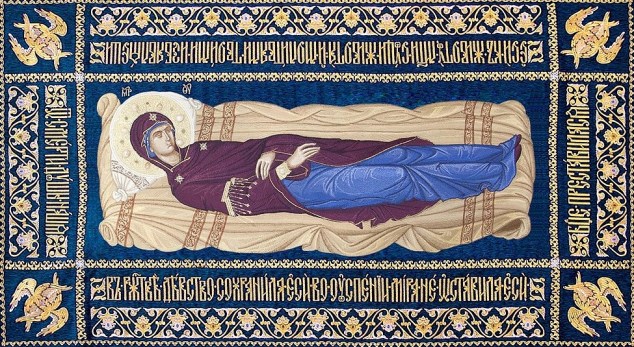
UNSLEEPING SLEEP

dormition

~

Unsleeping sleep

Fallen asleep, unceasingly wakeful,
Eyes closed in death, with life overbrimming,
In darkness enshrouded, unquenchable light,
Fruitfully barren, aflame, yet unburnt;

Field unsown yielding harvest of bread,
Receptacle hidden encompassing heaven,
Marble unquarried and pigment unmixed,
Whence sculpted and Sculptor, image and Imaged;

Virginal mother, bride though unwedded,
Departed, remaining, and never forsaking;
Each tear of her orphans dispelled by her hand,
Her tomb of great sorrow with blossoms bursts forth.

Read More