
Editorial Foreword
We offer the present reflection to our many Roman Catholic readers, our Protestant and Anglican readers, our Orthodox readers, and all of our readers of good will, whether Christian or not. The clergy sex abuse scandal in the Roman Catholic Church—with its latest chapter in the grand jury report from Pennsylvania—weighs heavily and painfully on all Christians everywhere, regardless of our particular ecclesial affiliation. Not one of us has grounds to cast stones at the Roman Church, because not one of us belongs to a church that is institutionally sinless. All of our churches stand in need of repentance, healing, and reform through the collaboration of human initiative with divine grace.
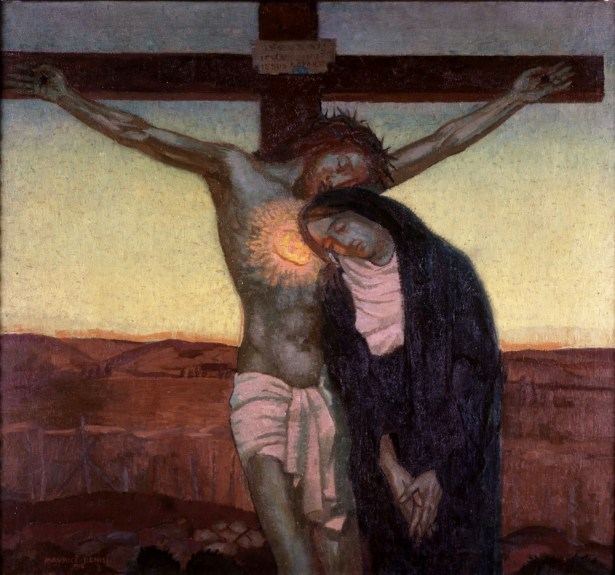
Le Sacré Cœur (The Sacred Heart). Maurice Denis. 1916.
In the last few weeks, the ongoing scandal of sexual abuse in the Catholic Church has once again become front page news, with the publication of accusations against Theodore McCarrick, and the release of the report of the Pennsylvania grand jury investigation into sexual abuse in the dioceses of that state.
I have recently become the associate to the provincial superior of the Jesuits of Canada. In that new role, it is my responsibility to review and supervise the policies and practices of our community for the protection of vulnerable persons. But for the last fifteen years, in my work as a theologian, I was tasked with preparing young men and women for ordained and lay ecclesial ministry. In that context, I trained these future ministers to conduct themselves professionally, to respect boundaries, and to recognize their power in a ministry relationship so as to exercise fiduciary care for the other. I have made sure that they understand their responsibilities to report abuse to the proper civil and ecclesial authorities. My students know what they need to do to exercise good self-care, and they can recognize in themselves the need for supervision in difficult situations. Read More

 This work fills a much needed void in our understanding of the liturgical tradition in Jerusalem. It focuses on the recognition of a unique rite in Jerusalem and the surrounding region, and on where and when the transformation of the rite evolved to conform to that in Constantinople—a process that the author calls Byzantinization.