The Orthodox Church in America (hereinafter the OCA) is one of multiple overlapping Orthodox jurisdictions in North America. Because its dioceses cover the US, Canada, and Mexico, its bishops sit as members in one of three interjurisdictional Assemblies of Canonical Orthodox Bishops: that of the United States, Canada, or Latin America.
As can be read here, on March 31, 1970 the Soviet-controlled Moscow Patriarchate and the schismatic Russian Orthodox Greek Catholic Church of America (popularly known as “the Metropolia”) entered into an Agreement which resulted in the immediate restoration of communion between them and—ten days later—a Tomos of Autocephaly granted by the former to the latter, followed soon thereafter by the name change of the latter to the Orthodox Church in America.
Almost a half-century later, in 2018, the OCA’s autocephaly remains unrecognized by most of the Orthodox Church—although no Patriarchate or autocephalous metropolitanate has ever broken communion with the OCA or Moscow over the issue.
Yet even the Moscow Patriarchate continues to apply a selectively limited meaning to the term “autocephaly” in the OCA’s case insofar as the Russian Church retains control of two separate jurisdictions on American soil: The Patriarchal Parishes in the USA: Moscow Patriarchate and the better known—and until 2007 schismatic—Russian Orthodox Church Outside of Russia (ROCOR).

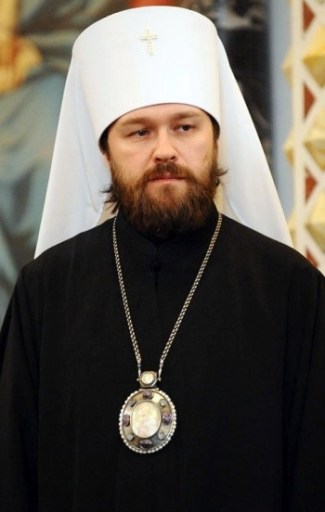
Metropolitan Tikhon, Primate, and the Holy Synod of the OCA
This article is not “anti-OCA.” Despite the OCA’s long history of unanswered questions vis-à-vis the nature of its relationship with Moscow, of missed opportunities, and of outright failures—including the scandals surrounding the “retirement” of the three consecutive primates immediately prior to the current one (see here for a partial record of this period)—and despite the injustices that I have endured personally at the hands of the Holy Synod for the past twenty-three years, I remain fundamentally pro-OCA. (I do not, however, attend an OCA parish.) The OCA still represents the only concrete, albeit mishandled attempt to establish an ecclesiastical structure in North America that is both ecclesiologically and canonically correct. For now we can overlook the anomaly of its own three non-territorial ethnic dioceses—Albanian, Bulgarian, and Romanian—given that their bishops too hold full membership in the OCA’s Holy Synod. Read More