WHEN ANDREW REIGNED ALONE ON THE EARTH: ECCLESIAL IMPLICATIONS OF THE UKRAINIAN TOMOS by Joseph Zheng

When Orthodoxy in Dialogue published the full text of the Ukrainian Church’s Tomos of Autocephaly on January 16, 2019, we appended the following note: “Orthodoxy in Dialogue welcomes discussion and debate on the ecclesiological assumptions implicit and explicit in the Tomos—particularly in its understanding of the primacy and canonical prerogatives of the Ecumenical Patriarchate—which might seem contrary to other modern articulations of Orthodox ecclesiology.” Mr. Zheng’s commentary presents a well-written and thoughtful response to these kinds of questions.

andrew_252520copy__12072.1372976887.1000.1200_grande

Holy, Glorious, and All-Laudable Apostle Andrew the First-Called
Patron of the Ecumenical Patriarchate of Constantinople

✠

The ongoing crisis surrounding the new Ukrainian autocephaly has blended historical, political, canonical, and doctrinal problems into a rank polemical stew, which it’s hard to even sniff without getting a little dizzy and bad-tempered. Here I hope to set aside as far as possible the historic particularities of Orthodoxy in Ukraine, and focus on the one ingredient with the most far-reaching potential for world Orthodoxy. This is the matter of the Ecumenical Patriarchate’s special privileges, which it asserts in its intervention in Ukraine.  

What’s New in the Ukrainian Tomos

After the Tomos of Autocephaly for the Orthodox Church of Ukraine was published, Vladimir Burega, a professor at the Kyiv Theological Academy, wrote a helpful analysis of it, comparing it with previous Tomoi issued to other Churches and highlighting elements that set the Ukrainian Tomos apart. Read More


MARTIN LUTHER KING, JR. DAY: READINGS ON CHRISTIANITY AND RACE

iakovos1

Our elder sister blog, Public Orthodoxy, has sent the following four selections from its archive to its mailing list in honour of Martin Luther King, Jr. Day. It gives us pleasure to share them with Orthodoxy in Dialogue’s readers as well, along with a brief selection from our own archive. 

✠

Racism: An Orthodox Perspective
Aristotle Papanikolaou

✠

African American Orthodox Christians: Faith, Culture, and Emerging Values
Lydia Kemi Ingram

Read More


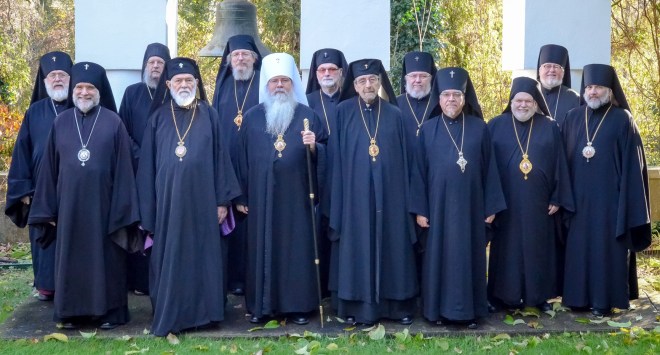
UKRAINIAN AUTOCEPHALY: WHAT SAYS THE OCA?

synod

The Holy Synod of the Orthodox Church in America

On December 16, 2018 we published Ukrainian Autocephaly: An Awkward Spot for the OCA, which quickly became one of our most popular, most shared, most discussed articles of all time. It sits currently in the top 2% of over 500 articles.

On January 7, 2019 we reached out to the Chancery of the OCA with the following questions:

  1. Does the OCA recognize the autocephaly of the OCU [Orthodox Church of Ukraine]?
  2. Has the Metropolitan begun, or does he intend to begin, commemorating Metropolitan Epiphanius of Kyiv and All Ukraine, liturgically/publicly in the diptychs, as the Primate of an autocephalous Church?
  3. If “no” to 1 and/or 2, is the OCA at least in communion with the OCU as well as the newly renamed ROCU [the Russian Orthodox Church in Ukraine, until recently known as the Ukrainian Orthodox Church-Moscow Patriarchate]?

Read More


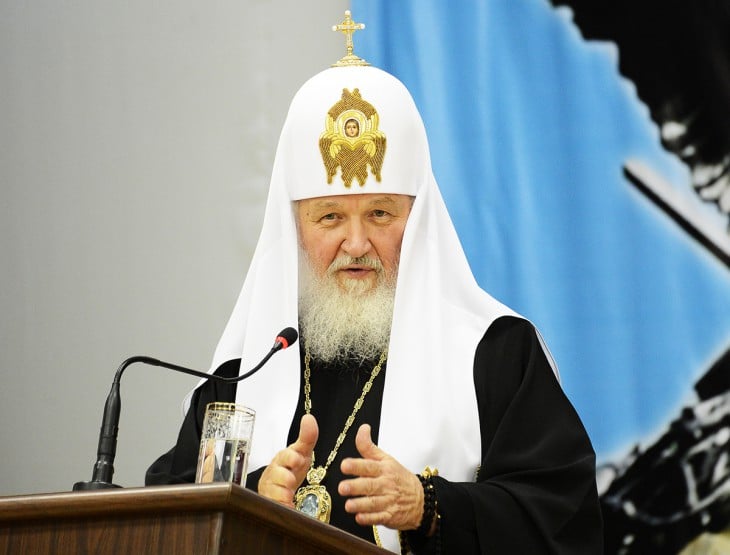
PATRIARCH KIRILL BLESSES RUSSIAN PILGRIMS TO COMMUNE AT ST. PANTELEIMON’S ON MOUNT ATHOS by Christophe Levalois

Shortly after our Moscow’s “Schism” No More than a Publicity Stunt? went to press earlier today, one of our readers brought the following brief report to our attention. It serves not only to confirm our impression that Moscow’s “schism worse than 1054” is no more than a publicity stunt, but Patriarch Kirill’s reference to St. Panteleimon’s as “our” monastery chillingly reinforces Moscow’s oft repeated conceit that Russian-speakers anywhere in the world fall somehow under its “protection”—even though Mount Athos in its entirety lies within the immediate, direct jurisdiction of the Ecumenical Patriarch.

Patriarch Kirill of Moscow

During the clergy meeting of the Diocese of Moscow which took place on December 21, 2018 in Christ the Saviour Cathedral’s Hall of Councils in Moscow, a priest asked Patriarch Kirill if it was possible or not for him to commune on Mount Athos.

Let us recall that the Holy Synod of the Russian Orthodox Church had decided to forbid the laity to commune in churches dependent on Constantinople.

The Patriarch responded to the priest that St. Panteleimon’s Monastery Read More