
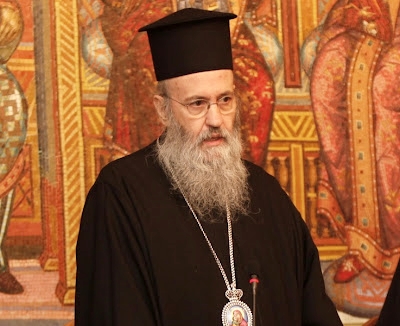
As we noted a month ago in Dialogue at Last? Metropolitan Nathanael on Same-Sex Orientation (Part One), one of His Eminence’s most significant statements acknowledges the importance of science to our growing understanding of sexual diversity in human nature: “First, the Orthodox Church embraces scientific truth and medical knowledge, and the opinion to which I am responding [see reference here] has no basis whatsoever in science or medicine.”
It should go without saying that good theology is impossible absent conversation with good science.
 Studies have indicated that same-sex orientation and behavior has a genetic basis and runs in families, yet specific genetic variants have not been isolated. Evidence that sexual orientation has a biological component could shape acceptance and legal protection: 4 to 10% of individuals report ever engaging in same-sex behavior in the United States, so this could affect a sizeable proportion of the population. On page 882 of this issue, Ganna et al. report the largest study to date, comprising almost half a million individuals in the United Kingdom and United States, identifying genetic variants associated with same-sex sexual behavior. They provide evidence that genetic variation accounts for a small fraction of same-sex sexual behavior and uncover a relationship to the regulation of the sex hormones testosterone and estrogen as well as sex-specific differences. They also reveal complexity of human sexuality. Read More





 ORTHODOXY IN DIALOGUE