A BYZANTINE ANCESTOR TO SAME-SEX MARRIAGE? by Mark Masterson

Editor’s Note: John Boswell’s seriously flawed scholarship on the liturgy of brother-making (addressed in Giacomo Sanfilippo’s A Bed Undefiled: A Partial Retraction) creates obstacles for subsequent treatments of the topic to receive an impartial reception from an Orthodox audience. Yet brother-making studies originated not with Boswell, but some hundred years earlier with Orthodox scholars in Russia. (See Pavel Florensky’s 1914 The Pillar and Ground of the Truth, trans. Boris Jakim, p. 571, n. 809 for a partial but extensive bibliography.) Florensky himself regarded brother-making as a sacrament and took for granted that it constituted the Orthodox Church’s rite for sanctifying modern same-sex relationships that resemble marriage in all respects but procreation. (See Sanfilippo’s Father Pavel Florensky and the Sacrament of Love in The Wheel, which introduces his doctoral research on the subject.) We offer Dr. Masterson’s brief essay for discussion and debate in our ongoing dialogue on the possible place of same-sex love in a life transfigured in Christ through the Holy Spirit in the sacramental economy of the Church.
brothermaking

You might think same-sex marriage is something completely new. You would be mostly right, but history has other things to show us. History is not as familiar as we sometimes think it is.

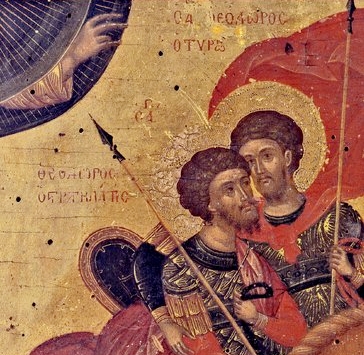
Spiritual brotherhood in the Byzantine Empire of the Middle Ages is an ancestor to our same-sex marriage. In the Byzantine Empire men became spiritual brothers and some scholars believe that sexual intimacy did or could occur. There is some controversy about this. For some it is a bridge too far to speak of sex, for we cannot know for sure. My position is that it was a possibility at all times and the Byzantines were aware of this.

Brothers for life

First, how did men become spiritual brothers? In church two men would be blessed by a priest who would say a prayer over them. Many of these prayers survive and more are being located all the time. Spiritual brotherhood was popular. Read More


ORTHODOXY IN DIALOGUE’S 3rd ANNUAL FEED THE HOMELESS ON CHRISTMAS CAMPAIGN

homelessjesusjpg-55c08e8ca366cdc0

“When I was hungry, you gave me to eat.”

Welcome to Orthodoxy in Dialogue’s 3rd Annual Feed the Homeless on Christmas Campaign

On Christmas Eve or Christmas Morning, two or three of us will walk the streets of downtown Toronto delivering cash into the hands of those who sleep outdoors in our frigid Canadian nights.
Last year we collected enough to give $100 each to 40 individuals. Our goal this year is to do the same for 50 individuals.
When we consider our Christmas budget—gifts, new clothes, parties, family dinners, decorations, trips, etc.—how much can we offer to our Newborn Saviour Himself, who comes to us disguised as the least of His brothers and sisters?
Please give as generously as your means permit. Encourage your friends, family members, coworkers, and fellow Christians to join in.
Don’t forget to pray for the success of this initiative and for its hungry, homeless beneficiaries.
As we journey mystically to Bethlehem, may our Lord, God, and Saviour Jesus Christ, who comes to be born anew in the manger of our hearts, bless you with a holy, prayerful, and spiritual Nativity Fast. 

CLICK HERE TO MAKE YOUR OFFERING Read More


METROPOLITAN IGNATIUS OF DIMITRIAS AND ALMYROS: HE WHO DOESN’T HELP REFUGEES AND MIGRANTS “IS NOT A CHRISTIAN”

The Old Testament, the New Testament, and the writings of the Holy Fathers of the Church consider the care of foreigners to be a non-negotiable duty of believers in the one true God. Visit our Angels Unawares page to learn how you can provide assistance to the refugees and asylum seekers at the US-Mexico border, or Orthodox Christians Helping Children and Families in Syria to provide assistance to victims of unending war in that part of the world.

Metropolitan Ignatius of Dimitrias and Almyros

Someone who refuses help to refugees and migrants is “neither Greek nor Christian,” said Metropolitan Ignatius of Dimitrias and Almyros amid growing protests by local communities against the resettlement of refugees from the islands.

Speaking to Alpha FM, Ignatius said, “I cannot accept anyone who refuses to help refugees and immigrants. For me, he is neither Greek nor Orthodox. Orthodoxy cares for any person, regardless of their origin. This means Jesus. As long as we preach Jesus, this we’ll practice.” Read More


THE WEAPONIZATION OF RELIGION: HOW THE KREMLIN IS USING CHRISTIAN FUNDAMENTALISM TO ADVANCE MOSCOW’S AGENDA by Lesia Shymko

A question for Orthodoxy in Dialogue’s readers to ponder: How is the Kremlin using the Orthodox Church in America (OCA), the Russian Orthodox Church Outside of Russia (ROCOR), Archbishop John (Renneteau) and his followers in Western Europe, and its other ecclesiastical proxies around the globe to advance Moscow’s geopolitical agenda?

Recent public attention has focused on Moscow’s use of cyber warfare against elections in the US and Europe. But lately, a far more insidious threat to liberal democracy and the Euro-Atlantic alliance has emerged – Russia’s weaponization of faith-based organizations.

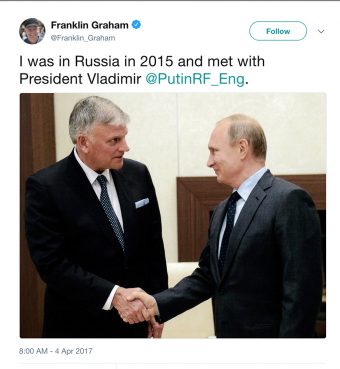
Expelled from the G-8 and sanctioned economically for its illegal seizure of Crimea, Russia is employing new tactics to influence US and European decision makers and win the war of public opinion. In America, the Russian government has re-configured its active measures strategy to deliberately target the three pillars of modern American conservatism — big business, gun-rights advocates, and Christian fundamentalists. Read More