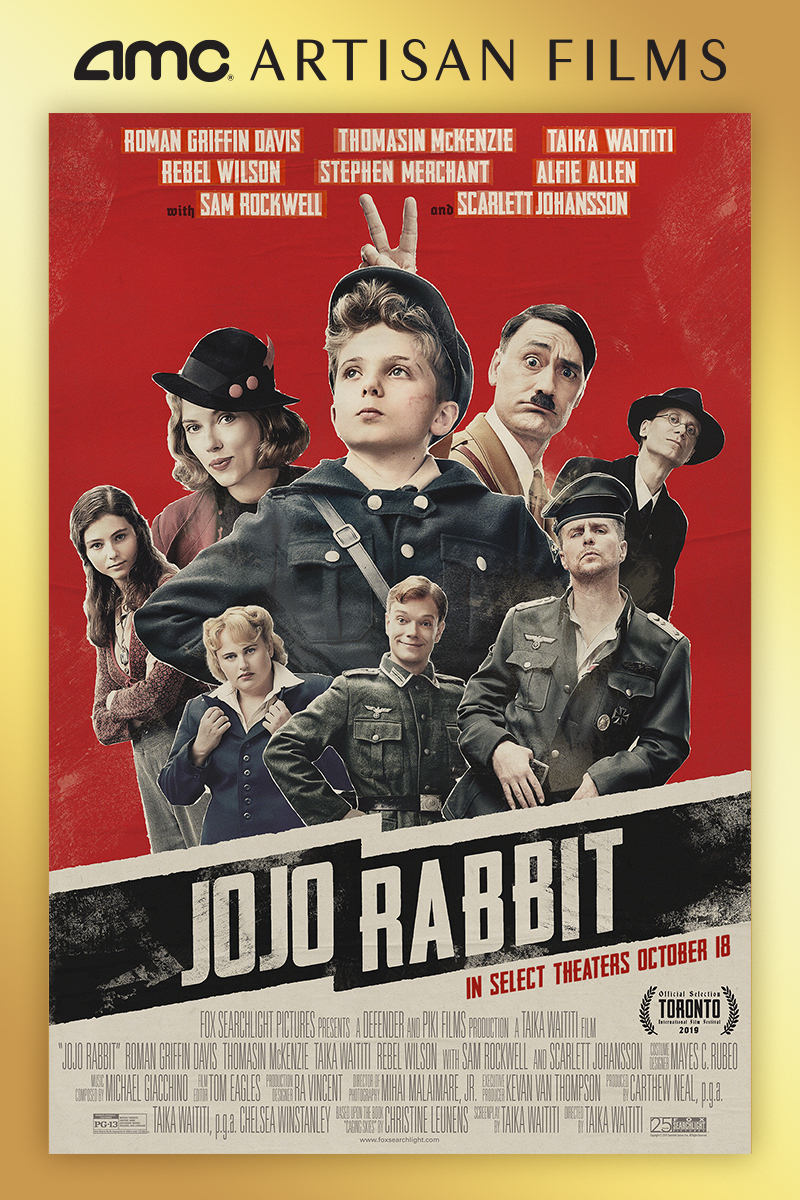
 I just had the privilege of seeing a film called Jojo Rabbit by Taika Waititi. Based on Christine Leunens’ novel, Caging Skies (The Overlook Press, 2004), the film looks at the absurdity of war through a child’s perspective. While broad themes in the movie include friendship, trust, and the loss of childhood innocence, Orthodox audiences may find particular resonance in other themes: the nature of obedience and obligation, white supremacy, and the oppressive consequences of mob mentality. If readers are familiar with an earlier Waititi film, Boy, there are some recognizable motifs between the two, particularly in the way that a child’s perspective is imagined and portrayed. Waititi’s style is not unlike that of Wes Anderson in his deliberate uses of color and artistic framing.
The movie follows 10-year old Jojo, a new initiate of Hitlerjugend, the Nazi version of Boy Scouts. The blurry lines of war are introduced early in the film when it becomes clear that Jojo’s enthusiasm for the group is not enough to protect him from bullying from older youth. The inconsistencies of the protagonist’s life deepen when he realizes that his own mother (played by an energetic Scarlett Johansson) is hiding a Jewish girl in their home. Jojo is torn between deep curiosity about her and the propaganda he has been hearing. We see his inner conflict personified by an imaginary friend—a cartoonish version of Adolf Hitler played expertly by Taika Waititi himself. It is important that this character is Jojo’s own creation more than the actual dictator (he eats a unicorn steak at one point). Read More






 ORTHODOXY IN DIALOGUE