~
Ukraine and Ecumenical Patriarchate Sign Agreement to Establish Independent Ukrainian Church
Official Report from President of Ukraine
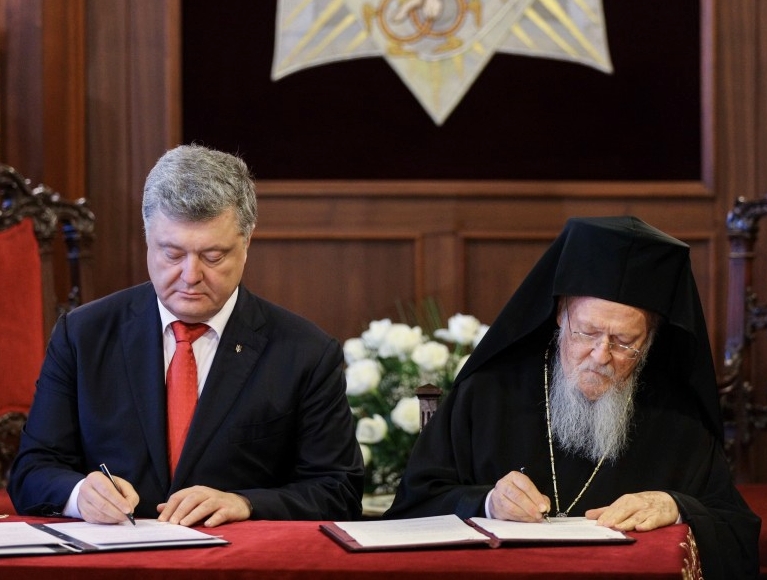
President Petro Poroshenko and Ecumenical Patriarch Bartholomew signed the Agreement “On Cooperation and Interaction between Ukraine and the Ecumenical Patriarchate of Constantinople” [on Saturday, November 3, 2018]. This is an agreement on cooperation in the creation of an independent Orthodox Church in Ukraine: the Ecumenical Patriarch provides the Tomos, recognizing the independence of the Ukrainian Church, and presents it to the Primate elected by the Council.
The Head of State stressed that this day is historic for the creation of an independent Ukrainian Autocephalous Orthodox Church, as today the agreement was signed on the establishment of an independent Ukrainian Church.
“The Agreement we signed today provides all the conditions for the process of preparing for the Council, the process of giving the Tomos to be brought to a strict conformity with the canons of the Orthodox Church. I congratulate you all on signing this Agreement. I want to emphasize that November 3 is a historic day for the creation of the Ukrainian Autocephalous Orthodox Church,” Petro Poroshenko said. Read More