Editor’s Note [at the Kyiv Post]: As Ukraine gets set to inaugurate its sixth president on May 20, the Kyiv Post is asking Ukrainians and those with Ukrainian ancestry who live abroad to send in their pictures (horizontal mug shots, please) with answers to the following three questions for publication. Please keep responses brief — no more than 200 words for each answer or 600 words in all. Include contact details for verification as well as full name, occupation and country of residence. A selection of respondents will be published periodically before Volodymyr Zelenskiy is sworn in as president. Send responses/photos with the subject header “Ukrainian Voices From Abroad” to Kyiv Post chief editor Brian Bonner at bonner@kyivpost.com.
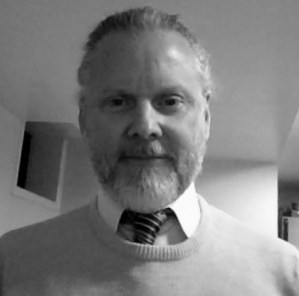
Giacomo Sanfilippo
As I noted previously on these pages, the remarkable fact that three-fourths of a predominantly Orthodox Christian nation should cast its vote for a Jewish candidate over against an Orthodox incumbent serves as a clarion call—in a very positive way—for the newly organized Orthodox Church of Ukraine (OCU) to adopt a more appropriate paradigm for church-state relations than the imperialist model inherited from centuries of Russian occupation. My advice to the OCU has been to work with government toward creating a more just society where all citizens and visitors feel welcome, regardless of religious affiliation, ethnic origin, language of preference, socioeconomic status, political persuasion, sexual orientation, gender identity, etc.
My advice to Zelenskiy is to respect and work with the deep religiosity of the vast majority of his constituency, not only Orthodox but also Jewish, Muslim, Greek-Catholic, Roman Catholic, Armenian Apostolic, and Protestant—all of the faith communities represented by the All Ukrainian Council of Churches and Religious Organizations (AUCCRO). Take the initiative to meet and enter into sustained dialogue with them, not only one on one with the individual religious bodies but with the AUCCRO as a group. Enlist them as allies in the pursuit of social justice and the common good for all Ukrainians. Assure them that their support for liberalizations in the social sphere will not infringe on their doctrines and practices within their own communities of faith. Read More



 In 2018-19, Ukraine made the news again when President Petro Poroshenko announced that Patriarch Bartholomew of Constantinople would grant a tomos of autocephaly to the Orthodox Church in Ukraine. Poroshenko’s prediction came true, and the events of autocephaly introduced the world to a deep and embittered battle for authority and power over Ukraine’s Orthodox Church. As religious experts hastened to describe the geopolitical implications of autocephaly and theologians interpreted the scene as a battle between Constantinople and Moscow, numerous questions surfaced. Who has the authority to grant autocephaly in the Orthodox Church? Do Orthodox Ukrainians want to be separated from Moscow because of the war in Donbas? Why are the Orthodox churches in Ukraine divided, and who is to blame for the schism? Are radical Ukrainian nationalists responsible for the autocephaly movement?

