CHRISTIANITY A RELIGION OF LOVE AND DIALOGUE by Patriarch Bartholomew

This brief report appeared in English translation yesterday on the Panorthodox Synod website. To what extent can we agree or disagree with the Patriarch’s comments? Is it proper to characterize Orthodox Christianity as “a religion,” or does the Incarnation essentially put an end to religion? Does Orthodoxy share a “common belief in God” with non-Christian faiths? What can it mean that “the Church has the same interests as society?” In the Orthodox Church’s relations with society, other faith communities, and persons of no religious faith, what do love and dialogue require and not require of us?
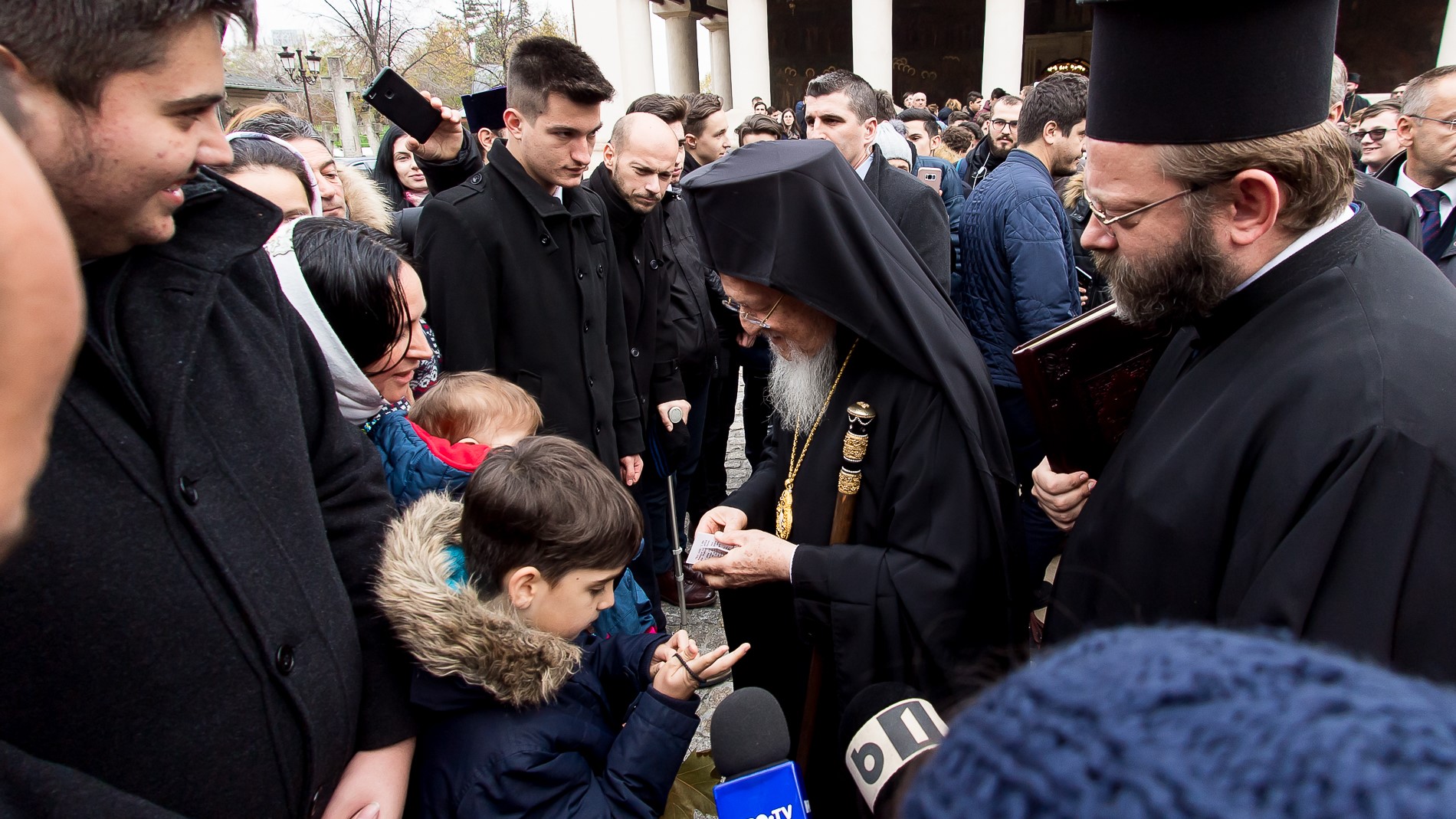
Ecumenical Patriarch Bartholomew of Constantinople (centre)

Christianity is a religion of love and dialogue, and the Church’s unique contribution to our modern world is precisely its openness to meeting and having dialogue, Patriarch Bartholomew said in a recent interview with the Romanian outlet evz.ro. 

“If there is a unique and contributing element of the Orthodox Church for our time and our world, this would be the meeting and the dialogue. This is the spirit we want to convey to you,” the Patriarch said. 

“It is our belief and, at the same time, our hope that Christianity can be viewed as a religion of love and dialogue. The visions of the Gospel are what the Orthodox Church seeks to incarnate and support in the modern world” he continued. 

Read More


BRIDGING VOICES: MORAL CLASHES by Steven J. McMeans

The present essay launches Orthodoxy in Dialogue’s Bridging Voices series, an ongoing initiative to respond to the summaries of papers presented at the August 2019 conference of the same name at Oxford and published over time by Public Orthodoxy.
If you would like to write for this series, see our Bridging Voices: Call for Responses and check the Fordham-Exeter Bridging Voices Project archive periodically for an updated list of summaries published. 
Mr. McMeans responds to Richard Swinburne’s Christian Teaching on Sexual Morality, which appeared on October 7, 2019. We recommend that you read the Swinburne article first.
Image result for Richard Swinburne

Professor Richard Swinburne

When I heard that Richard Swinburne had published an article in Public Orthodoxy called Christian Teaching on Sexual Morality I was delighted. First, I was delighted as an Orthodox Christian, and second, I was delighted as a philosopher. Sadly, I was disappointed on both counts.

I had assumed that the presence of so great a philosophical light as Professor Swinburne at the Bridging Voices conference last August would put to rest the reactionary chatter on Orthodox Twitter and Facebook; how the secret cabal of Orthodox heretics (whatever those are) was meeting to normalize heresy; how the next thing you know, they’ll be demanding we have gay Pride processions during Liturgy; how all the transgenders are out trying to convince our kids to experiment with gender choice because postmodernism and Jordan Peterson says, and on and on. My naive optimism is in no way a reflection on the professor. Read More


REPRESENTATIVES OF PATRIARCHATES OF CONSTANTINOPLE, ANTIOCH, AND MOSCOW MEET

L to R: Archbishop Elpidophoros (GOA), Metropolitan Joseph (AOCA), Metropolitan Hilarion (MP)

At the invitation of His Eminence Metropolitan Joseph, Archbishop of New York and Metropolitan of all North America (Antiochian Orthodox Christian Archdiocese of North America-Patriarchate of Antioch and all the East), Their Eminences Archbishop Elpidophoros of America (Greek Orthodox Archdiocese of America-Ecumenical Patriarchate) and Metropolitan Hilarion of Volokolamsk and Chairman of the Department of External Church Relations of the Moscow Patriarchate met at the headquarters of the Antiochian Orthodox Christian Archdiocese of North America on Wednesday, October 23, 2019. Read More


THE PRODIGAL CHURCH by Luke Beecham

holyascensionukorth2In In U.S., Decline of Christianity Continues at Rapid Pace, published on the 17th of this month, the Pew Research Center released the findings of its latest surveys on the continuing rapid decline of Christianity on the American landscape. While this is certainly not news to anyone who has been paying attention the past two decades, the response to this trend within the traditional churches bears reflection. Having spent the better part of the past 20 years serving in various roles as a Christian youth worker—including 17 years as the director of a thriving camp program, and 18 months as the National Youth, Young Adult, and Campus Ministries Director of the Orthodox Church in America—I have watched this trend from a front row seat. The number one question I was asked by clergy and parents alike was, “How do we keep the young people from leaving the Church?” Read More