The following message from Metropolitan Emmanuel of France appeared earlier this month in the first edition of La Lettre du Vicariat. We regret that we do not have the time to translate the entire newsletter.
For many of Orthodoxy in Dialogue’s readers around the planet who have followed the Ecumenical Patriarchate’s sudden decision of November 2018 to dissolve the Archdiocese of Russian Orthodox Churches in Western Europe and its aftermath—see the preface to Alexandra de Moffarts’ Quo Vadis, rue Daru?—His Eminence’s message raises more questions than it answers:
How does a “vicariate” differ from an “exarchate?”
What happens to the parishes of the former Exarchate located outside of France?
How can the members of the new Vicariate trust that their status will not be dissolved in faraway Istanbul as abruptly and unilaterally as that of the Exarchate?
Whereas page 2 of the newsletter lists “Parishes and Communities Remaining Faithful to the Ecumenical Patriarchate,” what explanation has ever been proffered for the Ecumenical Patriarchate’s faithlessness to the former Exarchate?
Does the Ecumenical Patriarchate accept responsibility for pushing a significant segment of the former Exarchate with its bishop into the arms of the escalating Muscovite Schism?
What becomes of the legal status of the former Exarchate under French law, and what will be the legal status of the new Vicariate?
Message from Metropolitan Emmanuel of France
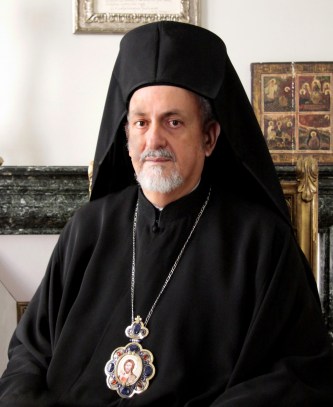
Metropolitan Emmanuel (Adamakis)
Dear Fathers, brothers, and sisters, dear friends,
As you know, following the decision taken by the Holy Synod of our Patriarchate in November 2018, the proposal was made to the parishes of the old Exarchate to join the Metropolises of the countries in which they are located. In my letter of February 7, 2019 I renewed this proposal to all of you, confirming the possibility of receiving you within a vicariate operating under its own statutes and guaranteeing the preservation of your liturgical traditions, allowing you to pursue your work of Orthodox witness in France.
This is now an accomplished fact with the creation of a “Vicariate of Russian Tradition of the Metropolis of France,” placed under the protection of St. Maria of Paris and St. Alexis of Ugine. This Vicariate will have internal autonomy, with its own statutes. In the coming months, you will have to work toward organizing this group of parishes and communities in order to continue to ensure a faithful witness to the heritage common to the whole Orthodox Church. The convocation of the General Assembly on January 18, 2020 will constitute a first step, allowing us to clarify the complex situation in which we find ourselves. At the end of the first quarter of 2020, a clergy-laity assembly will also be called in order to accept the guiding principles of the operation of the Vicariate, confirming its future direction. Read More