EVOLUTION AND THE FALL by Christopher Howell

pjimage (31)And death shall have no dominion.
Dead men naked they shall be one
With the man in the wind and the west moon;
When their bones are picked clean and the clean bones gone,
They shall have stars at elbow and foot;
Though they go mad they shall be sane,
Though they sink through the sea they shall rise again;
Though lovers be lost love shall not;
And death shall have no dominion.

Dylan Thomas, “And Death Shall Have No Dominion”

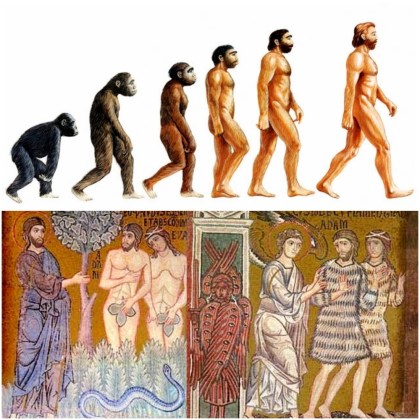
“The origin of animal suffering,” writes C.S. Lewis in The Problem of Pain, “could be traced, by earlier generations, to the Fall of man—the whole world was infected by the uncreating rebellion of Adam. This is now impossible, for…animals existed long before men” (138). Here is the problem of evolutionary theodicy in a nutshell: humanity—traditionally the cause of the “the groaning of creation”—is no longer apparently guilty of wrecking the cosmos in a primordial act of rebellion. The world before us was one of predation, destruction, and death, just as it is now. Evolutionary history, then, raises significant questions about theodicy—about God’s goodness in overseeing history, and the role of death and suffering in both creation and human life. The apparent priority of death to sin is an enormous challenge to theological doctrine, and Orthodox theology in particular. However, despite these fearsome challenges, Orthodoxy also brings to bear some unique tools to deal with the problem.
Read More

SCIENCE FICTION: BEARER OF FAITH IMAGES by Alexandra de Moffarts

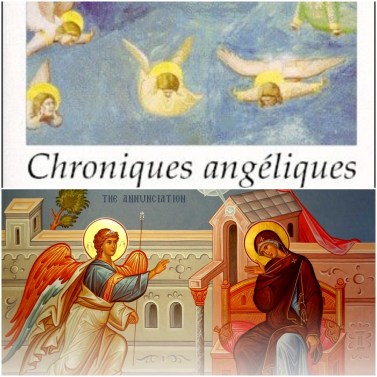
pjimage (30)Science fiction is a branch of literature which, with its far-reaching images, stimulates the reader to look at reality in an original, unexpected way. This genre may often “bring heaven down to earth,” and may seem demythologizing by transferring concepts of transcendence or numinous mystery—such as other worlds, fantastic beings, fairies, gods, etc.—to a material world of “other planets” or to a hypothetical (but materially not impossible) future.

But all these instances may be seen as figures, too. And even when they are not consciously used as symbols by an author, they circulate universal images that may awaken the imagination of the readers to Something Else. They may give flesh to something more mysterious, and generate a longing for the transcendent. Some authors deliberately use science fiction images to express higher things, but many probably don’t; the images then speak for themselves.

I will briefly outline two types of science fiction images loaded with symbolic potential. Both belong to very frequent—we may even say, prototypical—themes of science fiction: first, other worlds, and second, time travel vs. alternative history (uchronia). Read More


THEOLOGICAL CONFERENCE IN TORONTO: CALL FOR PAPERS

TST What Matters Poster Final-page-001

On May 7-8th 2020, the Toronto School of Theology (TST) is hosting a conference concerning:

What Matters? On Value and Valuing

Call for Papers

What is value? How do we come to value what we value? At multiple moments in any given day, individual and collective action is influenced by the mechanisms of valuing, even when—or perhaps especially when—those mechanisms are invisible to us.

For this conference we invite papers and panel proposals that move beyond simple descriptions of values and instead address: (1) how value is made and maintained in both contemporary and other historical moments, or (2) the effects and implications of these value systems upon society, culture, philosophy, and/or theology.  Read More


MEMORY ETERNAL: PRIEST PAVEL FLORENSKY (+DECEMBER 8, 1937)

Image result for pavel florensky

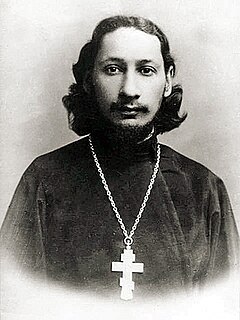
Priest Pavel Florensky
January 22, 1882 – December 8, 1937
Memory Eternal ~ Вѣчная Память

“What none of them knew positively but many felt instinctively was that, precisely for the more educated and this politically undesirable prisoners, Solovki was now a death camp. An order…required that STON be decreased by 1,200 people, all to be properly bureaucratically processed and done away with extraterritorially, as though they were simply being moved elsewhere. In the meantime, they were expendable. [A] letter of 19 September 1937 records a desperate shortage of food and money for the prison shop.

At the end of October 1937, this twilight existence came to an end. There was a hurried evacuation of more than a thousand men to the mainland. A witness recalls seeing Florensky…among the lines of four who were marched out to the Bay of Content. Weighed down with cases and rucksacks, they could only nod as they passed. They were conveyed to the so-called Workers’ Island where Florensky, with 12 others, was brought up before a troika, accused of counter-revolutionary Trotskyite propaganda and condemned to be shot. Read More