ON SAME-SEX LOVE by Metropolitan Kallistos (Ware)

The following excerpt is taken from Metropolitan Kallistos’ Foreword in The Wheel, Issue 13/14, Spring/Summer 2018, Being Human: Embodiment and Anthropology. The links to the full text and order form for the hard copy of this issue are provided below.
In reproducing His Eminence’s reflection on same-sex love at this time we hope to bring it directly into conversation with Metropolitan Nathanael (Symeonides) on Same-Sex Orientation, Priest to Priest: An Open Letter to Fathers Damick, Farley, Jacobse, Parker, and Trenham, Bishop to Bishop: Straight from Confession to Suicide, Letter to a Young Gay Orthodox Camper, Protodeacon Theodore Feldman’s LGBTQ+ in Our Churches, Father Aaron Warwick’s Pastoring LGBTQ Individuals in the Orthodox Church, and the anonymous Continuing the Conversation: A Response to Father Aaron Warwick. We also hope to embolden other like-minded hierarchs, priests, and deacons to speak out openly. LGBTQI Orthodox Christians are craving to hear from you.
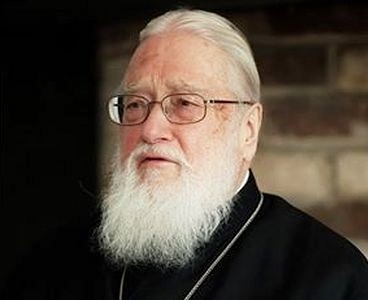
Image result for kallistos ware

Metropolitan Kallistos (Ware)

…With regard to homosexuality, the Orthodox Church today has undoubtedly to confront a series of difficult issues. Without accepting everything that is said by the three authors of the text “Jesus Christ and Same-Sex Marriage,” I fully recognise that they are dealing with genuine problems. I can see at least three anomalies in our current treatment of homosexuals. First, until recent times, Orthodox thinkers did not make use of the concept of sexual orientation, as this is understood in contemporary psychology. More precisely, they assumed that there is only one orientation, and that is heterosexual. They considered that persons of homosexual inclination were such because of personal choice and were therefore willfully wicked. Nowadays Orthodox writers would normally prefer to make a distinction between orientation and action. Homosexual orientation, we would say, is indeed contrary to God’s plan for humankind, being one of the consequences of the fall (incidentally, I am surprised that more is not said about the fall in the course of this issue of The Wheel). But homosexual men and women are not personally guilty of their orientation, because this is not something they have chosen; they only become guilty if by deliberate choice they decide to live out this orientation in their actions. They can choose to be celibate. Read More

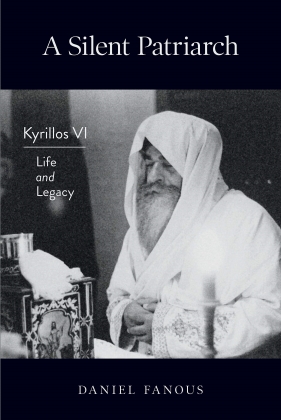
A SILENT PATRIARCH: KYRILLOS VI, LIFE AND LEGACY reviewed by Bavly Kost

A Silent Patriarch: Kyrillos VI, Life and Legacy
Daniel Fanous
Yonkers, NY: SVS Press, 2019

silpat

The latest volume in SVS Press’ Coptic Studies Series examines the life and legacy of Pope Kyrillos VI. The book is divided into two parts: the first looks at Kyrillos’ life up to his patriarchal ordination, and the second examines his tenure as patriarch. Throughout, history and biography are interwoven, and aligns the Patriarch’s life with current events as they played out.

The author of the book, the Reverend Father Daniel Fanous, is the current Dean of St. Cyril’s Coptic Orthodox Seminary in Sydney, Australia, where he is also a Lecturer of Theology and Biblical Studies. The book is based on his doctoral dissertation which he completed at the University of Newcastle, Australia. In it we see, for the first time, manuscripts and telegrams that had not been published or brought to the public. Many of these telegrams and messages were hidden at the Monastery of Saint Samuel the Confessor in Upper Egypt, or they were provided to Fanous through Pope Kyrillos’ living family members.

This is the first scholarly biography of Pope Kyrillos to be published. Previous scholars have published minor works (John Watson, Patriarch and Solitary; Nelly Van Doorn-Harder, Kyrillos Sixth: Planner, Patriarch, and Saint), but these pale in comparison to this current edition. I would recommend reading this book to obtain a clearer picture of the man who, for the most part, is only known for his miraculous acts.

Here I aim to analyze how Fanous addresses history, conflict, and personal issues that arose for the Patriarch.

Read More


CONTINUING THE CONVERSATION: A RESPONSE TO FATHER AARON WARWICK by an American LGBTQ Christian

Although Orthodoxy in Dialogue normally declines to publish anonymous articles, we make an occasional exception on the subject of sexuality and gender when an author feels the need to protect himself or herself from the kind of hatred that is far too often directed at us from ecclesiastical and ecclesial sources.
The climate of fear in which we live cannot be blamed solely on the Evangelical invasion of the Orthodox Church over the past 30+ years, although this has certainly played a substantial part in giving rise to a culture entirely foreign to the spirit of Orthodox Christianity. Father Thomas Hopko—in articles that still appear on the OCA website, and especially in his Christian Faith and Same Sex Attraction: Eastern Orthodox Reflections (2006)—was the first to call for the excommunication of Orthodox Christians for merely asking the questions and proposing the answers on sexuality and gender for which Orthodoxy in Dialogue has become the Orthodox Church’s principal voice.
The importance of the present article lies in its giving expression to a reality often overlooked by all sides in the Church’s debates on sexuality and gender: Christians who positively embrace their identity somewhere along the LGBTQ spectrum, some of whom have formed or seek to form a committed same-sex couple, and yet feel called to lifelong sexual abstinence. Orthodoxy in Dialogue addressed this issue more than two years ago in Gregg Webb’s Sexual Minorities in the Orthodox Church: Towards a Better Conversation. The present article restores these Christians to their rightful place in our ecclesial consciousness and discourse.
We can vouch that the “American LGBTQ Christian” who authored this article is well known to us.

womenhands

Let me begin by saying I appreciated Father Aaron Warwick’s opening a discussion in his Pastoring LGBTQ Individuals in the Orthodox Church. His article represents a beginning of a conversation, and certainly shouldn’t be taken as the only word to be said on the subject.

Father Warwick seemingly constructs the conversation about LGBTQ individuals relative to the curbing of lusts. He can scarcely be faulted for this approach. After all, Saint Paul takes a similar approach when he writes to the Corinthians:

Now concerning the matters about which you wrote: “It is well for a man not to touch a woman.” But because of cases of sexual immorality, each man should have his own wife and each woman her own husband. The husband should give to his wife her conjugal rights, and likewise the wife to her husband. For the wife does not have authority over her own body, but the husband does; likewise the husband does not have authority over his own body, but the wife does. Do not deprive one another except perhaps by agreement for a set time, to devote yourselves to prayer, and then come together again, so that Satan may not tempt you because of your lack of self-control. This I say by way of concession, not of command. I wish that all were as I myself am. But each has a particular gift from God, one having one kind and another a different kind. Read More


MUSCOVITE SCHISM CONTINUES APACE

Let the readers of Orthodoxy in Dialogue be perfectly clear in their minds: history will judge the diabolical schism “greater than 1054” to be entirely of Moscow’s own making from beginning to end. Moscow, and Moscow alone, has broken and continues to break communion with one autocephalous Church after another which refuses to bend to its will.

Name of Patriarch of Alexandria Was Removed from Diptychs of Moscow Patriarchate

Name of Patriarch of Alexandria was removed from Diptychs of Moscow Patriarchate

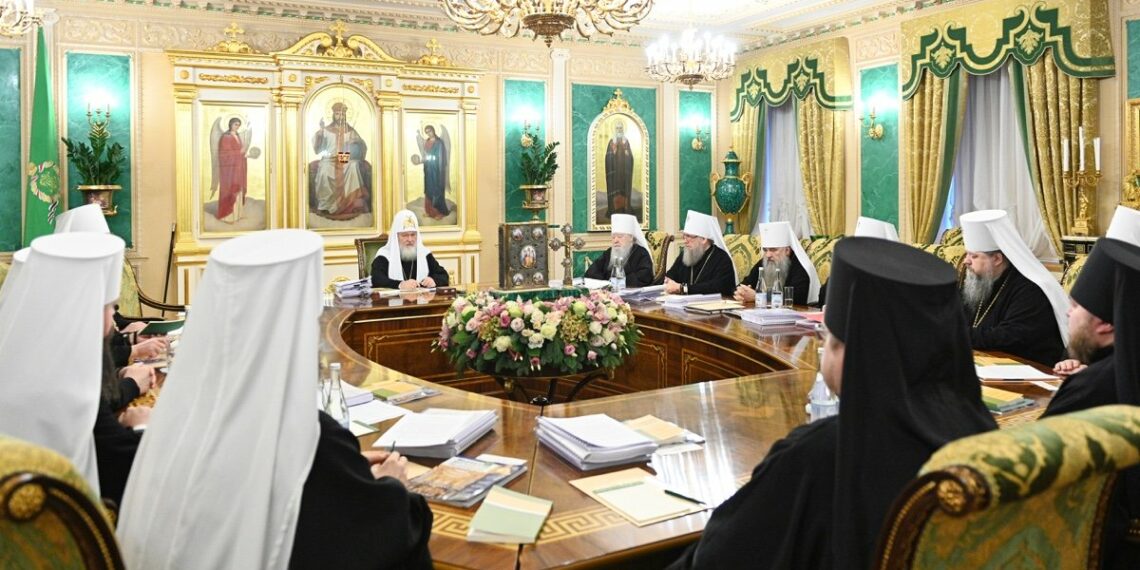
During the meeting of the Holy Synod, chaired by Patriarch Kirill, the Moscow Patriarchate decided to sever full communion with the Patriarchate of Alexandria by removing the name of the Patriarch of Alexandria from its Diptychs. The main reasons were the recognition of the Orthodox Church of Ukraine and the commemoration of Metropolitan Epiphanius by Patriarch Theodoros.

Read More