IMPORTANCE Of CHURCH-STATE COOPERATION IN THE EUROPEAN CONTEXT by Patriarch Daniel of Romania

In A New Political Theology for 21st-Century Ukrainian Orthodoxy we noted, “What works in the West, with its tiny minority of Orthodox Christians, might not fit unmodified in Ukraine, with its solid majority of Orthodox Christians. Yet we can meet together, learn from each other, borrow from each other, support and encourage each other.” We offer Patriarch Daniel’s remarks, delivered on June 7 of this year to the International Conference on the Relations between the State and Religious Denominations in the European Union, in order to advance the conversation on what an Orthodox political theology might look like in our time and how it might be modified to fit local circumstances.  (Published originally at the news agency of the Romanian Orthodox Church.)

Importance of Church-State cooperation in the European context

Patriarch-Daniel

Patriarch Daniel of Romania

According to the Treaty on the Functioning of the European Union (TFEU), as amended by the Treaty of Lisbon of 2007, ‘The Union respects and does not prejudice the status under national law of churches and religious associations or communities in the Member States’ (article 7, paragraph 1 TFEU). Thus, ‘recognising their identity and their specific contribution, the Union shall maintain an open, transparent and regular dialogue with these churches and organisations’ (article 17, paragraph 3 TFEU).

Therefore, in the European Union there is no ‘European model’ for the relationship between religious communities and the political authority, but the legislative systems in force in the EU Member States oscillate from a radical separation to an almost complete identification between a particular religious community and a State. At the same time, the European Union aims to engage in dialogue with religious denominations so that they may express their specific contribution to the European construction.

Today there are four Member States with a majority Orthodox population in the European Union (Greece, Cyprus, Romania, and Bulgaria), where Autocephalous Churches are organized and operate, while in other Member States there are important Orthodox communities organized ethnically as autocephalous (Poland, Czech Republic and Slovakia) or autonomous (Finland and Estonia). Also, in some Member States there are consistent Orthodox communities organized ethnically as diaspora (Italy, Spain, France, Germany, Belgium, and Austria). Romania, with a population of 16,307,000 Orthodox believers, is the largest country of the European Union with a majority Orthodox population. Read More

UNANSWERED LETTER TO AN OCA BISHOP (or, Where Are the Pastors?) by Giacomo Sanfilippo

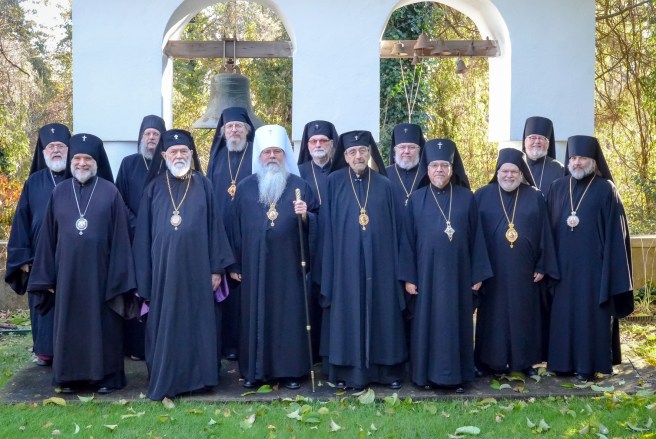
holysynod

Holy Synod of the Orthodox Church in America

On July 4 one of Orthodoxy in Dialogue’s readers reached out to me for pastoral support. Let’s call him “John.” I share the following publicly with his permission in the hope that it may help others.

John is a cradle Orthodox, middle-aged, married, and the father of children. Prior to marriage, he had only been intimate with men. His priest convinced him to give up men and marry a woman. Five years into marriage, he began to see men intermittently behind his wife’s back. He continues to do this to the present time.

Over the course of several emails in one day, in which I asked questions to get a better sense of the situation but said nothing judgmental, it became clear to me—and was no surprise to me—that John sought emotional fulfilment more than sexual gratification in the arms of men. Read More


ST. SERAPHIM OF SAROV: PATRON SAINT OF RUSSIA’S NUCLEAR ARSENAL

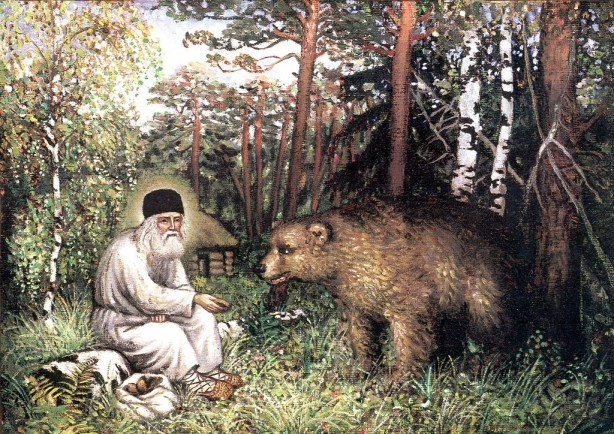
St. Seraphim of Sarov (1754-1833) is arguably the most beloved of modern saints anywhere in the Orthodox world. We have seen his icon even in Greek churches. He is remembered for his gentleness, his relationship with wild animals, his visions of uncreated light, his conversation with Nicholas Motovilov on the acquisition of the Holy Spirit, and his practice of calling all his visitors my joy as he greeted them every day of the year with Christ is risen, my joy! 
A less likely candidate for patron saint of Russia’s nuclear arsenal there could not be.
The following short excerpts are taken from Russian Orthodox Church Considers a Ban on Blessing Weapons of Mass Destruction, which appeared yesterday at Religion News Service. We encourage you to take a few minutes to read the whole report at the source. 

seraphim2

St. Seraphim of Sarov

As police officers stood guard [in May 2018], two Russian Orthodox priests wearing cassocks and holding Bibles climbed out of a vehicle and began sprinkling holy water on the stationary Topol and Yars intercontinental ballistic missiles.

Priests have sanctified S-400 surface-to-air missiles, nuclear submarines, tanks and fighter jets.

Vsevolod Chaplin, an influential priest and former spokesman for the patriarch, told the Vzglyad newspaper that nuclear weapons were the country’s “guardian angels” and necessary to preserve “Orthodox civilization.” Read More


RESPONSE TO OUR OPEN LETTER by Archbishop Mark (Maymon)

In sending our Open Letter to the bishops of the United States and Canada this morning we invited them to send responses which we would be happy to publish. 

Archbishop Mark (Maymon) of Philadelphia and Eastern Pennsylvania
Orthodox Church in America

Read More