ON ADOPTION AND THE UNITY OF BELIEVERS IN THE BODY OF CHRIST by Matthew the Poor ~ Translated by Andrew Abdelmalek

Orthodoxy in Dialogue is deeply honoured to begin 2018 by offering the following extract* from Father Matthew the Poor for the first time in English. He is revered around the world as perhaps the greatest luminary of modern Coptic Orthodoxy. The full title of this article given by the translator is “On Adoption and the Doctrine of the Unity of Believers in the Body of Christ within the Meaning of Soteriology.” The bullet point format is reflective of Father Matthew’s original Arabic version. 
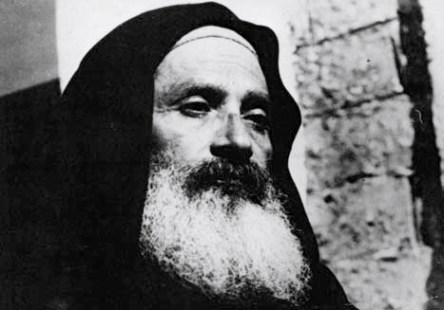
  • matthewpoorAdoption is a divine gift that we acquire through our union with the Person of Christ, the Son of God. It is not a mere relationship governed by will or emotions.
  • The most important aspect of our relationship to Christ is this union, the immediate result of Christ’s divinity and His consubstantiality with the Father. This is the foundation upon which the reality of salvation is built, together with all that pertains to our salvation from adoption, accepting eternal life with God, and acquiring the qualities of Christ for communion in His glory, which is the inheritance of the Father.
  • The sonship of mankind to God has become an inevitable reality because of the Son of God, given that adoption is the fruit of the Incarnation.
  • Adoption is also an aspect of “deification”, which is to say “union with God.” When we are united to the Incarnate Word, we become in Him true children through adoption, which is to say inheritors.
  • The fact which St. Athanasius affirms is that it was impossible for man to acquire adoption, not because of sin, but rather because of the created nature’s inability to receive adoption.
  • Therefore, this which the Son of God instituted in His body was for our sake and therefore was given to us.
  • Read More

THE YEAR IN REVIEW

2017-image

Orthodoxy in Dialogue launched on August 22, 2017 with our inaugural editorial,  “The State of Orthodox Theology Today.” In just over 18 weeks we have reached a number of significant milestones with the help of God, the unflagging support of our readers around the globe, and an expanding team of guest writers dedicated to producing a consistently high calibre of essays on every imaginable topic relevant to Orthodox Christianity. The free exchange of ideas in a manner befitting brotherly love has comprised our sole agenda.

During our pre-launch period we engaged three times with the Assembly of Canonical Orthodox Bishops in the United States of America concerning the racist violence in Charlottesville here, here, and here.

We have had a few editorial changes since August. These include the amicable resignation of an editor, experimentation with various divisions of labour between the two remaining editors, an ongoing search for a candidate for our vacant editorial position, and the expansion of our search from Trinity College to all the member schools of the Toronto School of Theology. Read More


LONGING FOR PEACE BUT COMPLICIT IN WAR by Jim Forest

nt_nativity_icon

Christmas is widely seen as a feast of peace. Last night I looked through all the Christmas cards and letters that were delivered to our house from near and far in recent weeks, and no word appears more often in them than peace. A number of cards used the biblical announcement sung by angels to the shepherds of Bethlehem:

Peace on earth, good will toward men!

In some cards Jesus is referred to as Prince of Peace. Along with news of children and grandchildren, many of the letters enclosed with cards expressed the hope that 2018 would be more peaceful than 2017. 

Peace. Apart from the rare psychopath, a deep longing for peace is something we all share: a world without war, a world without nuclear weapons, a world in which no one starves to death, a world in which children are safe, a world without poisoned air and water…. 

Good wishes. But as the saying goes, “If wishes were horses, beggars would ride.” The sad reality is that, in our passivity, we are quiet accomplices of war, and our churches docile chaplains of war.  Read More