Father Cyril Hovorun, interviewed below, recommended this article and the translator to Orthodoxy in Dialogue.
 The refusal of a priest to conduct the funeral service for a killed child reveals the split of the Churches in Ukraine
The refusal of UOC-MP priests in Zaporizhia to conduct the funeral service for the killed 2-year old boy, who was baptized in the “schismatic” UOC-KP, has shown the depth of the chasm between the Churches in Ukraine. How does society react?
Representatives of the Ukrainian Orthodox Church-Moscow Patriarchate (UOC-MP) from the outset consider the Ukrainian Orthodox Church-Kyiv Patriarchate (UOC-KP) to be “schismatic,” thus they do not recognize sacraments administered by the UOC-KP, including baptism and chrismation. The Churches now demonstrate “mutual understanding” and “peaceful coexistence” outwardly. But the case of the refusal to conduct a child’s funeral service has proven the deep split between the Churches and their faithful.
The course of the events
For several days, people have been bringing dolls and toys to the walls of UOC-MP churches to protest the actions of the UOC-MP priest in Zaporizhia, who refused to conduct the funeral service for the tragically killed 2-year old boy because he had been baptized in the UOC-KP. Metropolitan Luka of Zaporizhia and Melitopol of the UOC-MP stated that the priest had acted in accordance with the church canons. Read More

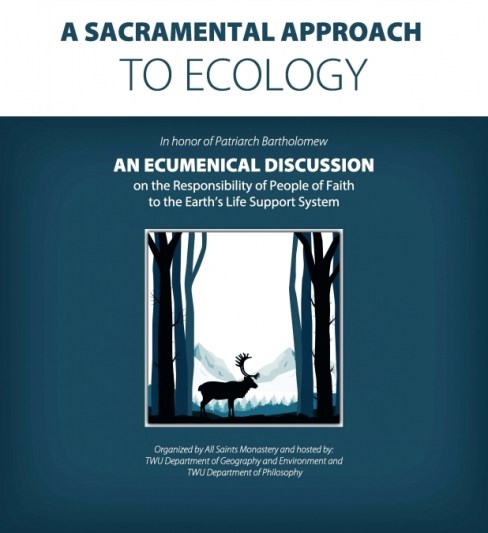 During the spring and summer of 2017, retired Archbishop Lazar (Puhalo) of the Orthodox Church in America, David Goa (Orthodox), Brad Jersak (Orthodox), Chris Morrissey (Roman Catholic), and Ron Dart (Anglican) met a few times to organize an ecumenical conference on ecotheology, dedicated to the “Green Patriarch,” His All-Holiness Bartholomew I of Constantinople. The planning unfolded well and wisely. The opening session was scheduled for the evening of Friday, October 6 at All Saints Monastery in Dewdney BC, while a full day was planned for Saturday, October 7 at Trinity Western University in Langley BC.


 I was wounded at the nexus where the holiness of priests touches the innocence of children. In my case, that involved being sexually and emotionally harmed by a series of Catholic priests for a period lasting over a decade. One day when I was nineteen years old, I drove away and did not return until many years later, after finally I had accepted the Lord’s indwelling. At the time of my escape, I had grown to hate the Catholic Church; but I nevertheless returned quietly, alone and guarded, to Mass, to Adoration and to praying my rosary. I was a stealth Catholic, until the emotional impact of what had happened drove me into exile.

