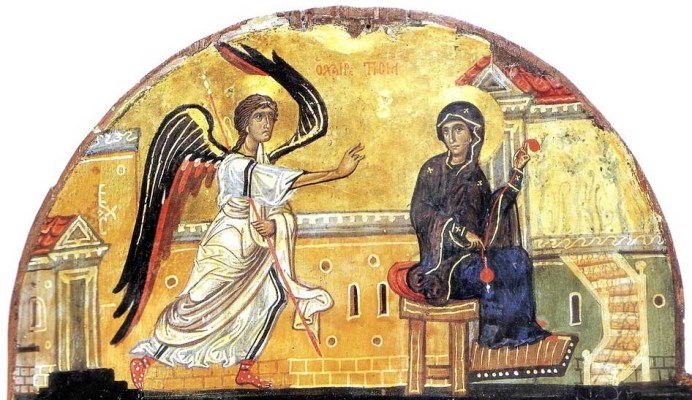
Annunciation. 12th century. Sinai.
The beginning of spring has come. Nature is awakening. Some parts of the Christian world are already enjoying it, while others are still dreaming of the bright, blossomy days to come. But today, March 25, all who love Christ are united in celebration of the beginning of Renewal and Salvation. Rejoice! says Gabriel. And rejoice we do.
[On the Old Calendar the Annunciation falls on April 7, Holy Saturday this year.]
The Annunciation icon is in the centre of our churches today, adorned with lilies, venerated by faithful worshippers. It is no secret that most of the Annunciation icons are inspired by the Apocrypha, particularly by the Protoevangelium of James (chapters 10-12) and the Gospel of Pseudo-Matthew (chapters 8-9). This is how the presence of the throne, the spindle with purple yarn, and sometimes the well and the pitcher in any icon or a wall painting can be explained. Read More

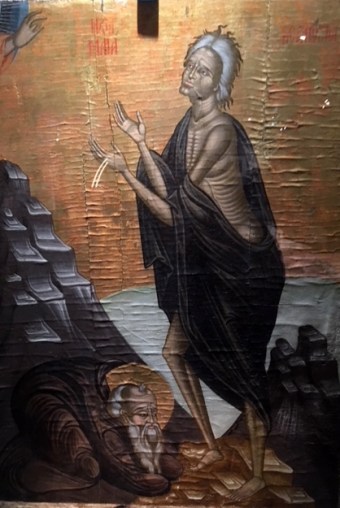 When the monk Zosimas arrives at a monastery near the Jordan, the abbot asks, Who are you and where do you come from? When Zosimas encounters Mary in the desert, he asks her the same questions.