 As a new editor of Orthodoxy in Dialogue, one of the first tasks I considered necessary was to look closely at the Archives and take stock of the wide array of subjects on which we have published thus far. In the eight short months of our existence, we have published articles by 18 different women authors, meaning that roughly 20% of our authors are women. Considering that Orthodox bloggers and academics online tend to be overwhelmingly male, this isn’t a bad number. But we, the editors, feel that we can do much better than this.
The importance of female voices cannot be understated. If we are to have real, honest conversations about the Orthodox Church today, we must have more women speaking up, and doing so with authority. In saying that, however, I want to be wary of falling into the all-too-common trap of relegating female writers to subjects that society considers to be traditional “women’s topics.” This, in my opinion, tends to be counterproductive in the long run, causing women to view themselves as lesser in the eyes of the Church, and their opinions to only be important in specific situations. Sexism is alive and well within Orthodoxy, and we wish for Orthodoxy in Dialogue to be a place where women can actively write, participate, and lead discussion on any issue related to the Church.
I would like to take this opportunity to openly invite women who are reading this to consider writing for us. You certainly do not have to be an academic or a theologian (but if you are either of those things, we want to hear from you, too!). You don’t even have to be Orthodox. Your insight is important, your experiences help others, and we will only grow stronger as a resource for open and constructive dialogue with more voices like yours. Read More

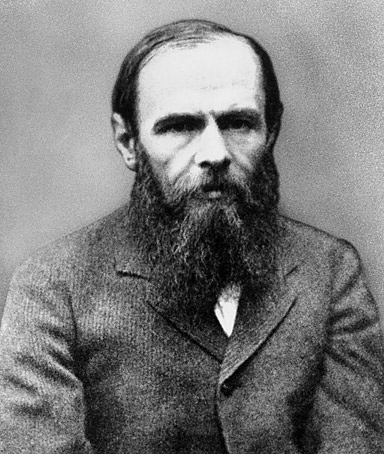 To be born with an ascetic temperament comes with a unique spiritual vocation—to enter into and abide in the world. To believe that one is and must be perfect calls one to a counter-intuitive spiritual life—to be human and risk sinning. The sacramental embracement of life in the world, and the love of your own sinfulness for real redemption, notions at the heart of Eastern Orthodox theology, could have only been encountered by the young Evangelical that I was in the novels of Fyodor Dostoevsky. Christians know of their need to be rid of and separate from “all that is in the world, the lust of the flesh, and the lust of the eyes, and the pride of life” (1 Jn 2:16), seeing themselves as “a prisoner of the law of sin…” and proclaiming, “What a wretched man I am!” (Rom 7:23-24). However, there is the occasional person born who is an ascetic by nature, whose core identity is wrapped up in being perfect, recognizing no conflicting law at work in themselves—it is for such as I that The Brothers Karamazov and The Idiot impart spiritual wisdom.

 This isn’t a bad definition, either. Scholars have had a lot to say about Protestant fundamentalism over the past several decades, but Falwell’s simple statement remains strikingly relevant, appearing in just about every academic work on the subject since George Marsden’s groundbreaking Fundamentalism and American Culture was first published in 1980. Back then, Marsden was essentially pleading for his fellow scholars to pay attention to fundamentalism, to include it in their analyses of American religion, to not write it off as an oddity. In 2018, many scholars (myself included) would argue that fundamentalism has defined post-World War II American religion more than any other movement. How things change in such a relatively short time!

