NO FIXED ADDRESS by Nicholas Hune-Brown

Two weeks ago we published the main dates for the Triodion & Pentecostarion 2019 as a service to our readers. 
The Sunday of the Last Judgment falls on March 3 this year. On that morning, Matthew 25:31-46 will be chanted solemnly in every Orthodox church around the planet. Will we—individual Orthodox believers, families, parishes, seminaries, monasteries, dioceses, national Churches—raise our eyes piously to heaven, sigh, and return to our comfortable homes to forget about this uncomfortable Gospel for another year? Or will we have the ears to hear at last the message that our path to God runs straight through every single hungry, thirsty, homeless, inadequately clothed, foreign, lonely human person who steps into our line of vision from day to day? Will we repent—in the most radical possible sense of changing our mind and turning around—even in relation to our precious money, our unnecessary possessions, our world travels?
Almsgiving is not a part-time hobby for the Orthodox Christian individual, family, parish, seminary, monastery, diocese, national Church, but our very way of life, our only life, that newness of life to which we were called when our selfish egos  were buried with Christ in baptism.
It’s become insufferably trendy to inject “theosis” into every second or third sentence of our theological discourses. St. Maximus the Confessor is clear on this point: Unless we give money to the poor cheerfully every day, we have not even begun to become God.
Toronto’s story is Every City’s story. Let’s begin today, wherever God has placed us, to do what we can. We can do much more—and without much more—than we imagine.

daniel-1-1680x0-c-default

The Rosedale Valley is a ribbon of calm winding through the bustling centre of Toronto, a natural buffer of Manitoba maples and Japanese knotweed separating the mansions of south Rosedale from the crowded towers of St. James Town. It’s also one of the few places downtown where someone can set up camp, just minutes from churches that serve hot meals, without fear of being moved along by city workers or police.

On a grey and rainy afternoon late last fall, Greg Cook headed toward the ravine on one of his regular walks. He’s a 39-year-old outreach worker at Sanctuary, a Christian charity run out of an old church near Yonge and Bloor that hosts daytime drop-ins and community meals for the homeless. Cook has long, shaggy hair, a quiet demeanour and a deep faith. He has worked with Toronto’s homeless for more than a decade, handing out sleeping bags and socks and trying to find people space in shelters. Sometimes he just goes out to talk, showing a friendly face to people who are often ignored. Read More

THE ECUMENICAL PATRIARCH: FIRST WITHOUT EQUALS by Metropolitan Elpidophoros (Lambriniadis) of Bursa

Earlier today Orthodoxy in Dialogue published Joseph Zheng’s When Andrew Reigned Alone on the Earth: Ecclesial Implications of the Ukrainian Tomos. In it he draws our attention to the following interpretation of Constantinopolitan primacy and its attendant canonical prerogatives.
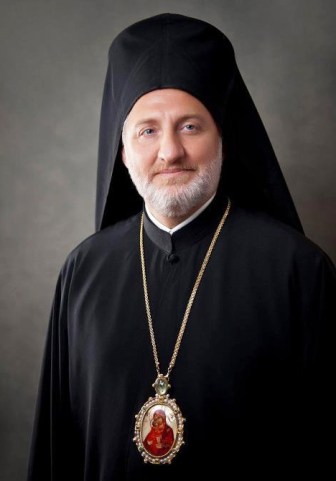
Metropolitan Elpidophoros turns 52 this year. Since he was born in Istanbul, and Turkish law requires that the Ecumenical Patriarch be a Turkish citizen by birth, it seems plausible that he could become the next Patriarch of Constantinople and have a very long reign on the Ecumenical Throne. We offer his understanding of the Ecumenical Patriarch’s personal primacy for careful study and robust debate throughout the whole Body of the Church.   

First without Equals: A Response to the Text on Primacy of the Moscow Patriarchate

In a recent synodal decision,[1] the Church of Russia seems once again[2] to choose its isolation from both the theological dialogue with the Roman Catholic Church and the communion of the Orthodox Churches. Two points are worth noting from the outset, which are indicative of the intent of the Church of Russia’s Synod:

elpi

Metropolitan Elpidophoros of Bursa

First, its desire to undermine the text of Ravenna,[3] by invoking seemingly theological reasons in order to justify the absence of its delegation from the plenary meeting of the joint commission (an absence dictated, as everyone knows, by other reasons[4]); and

Second, to challenge in the most open and formal manner (namely, by synodal decree) the primacy of the Ecumenical Patriarchate within the Orthodox world, observing that the text of Ravenna, on which all the Orthodox Churches agreed (with the exception, of course, of the Church of Russia), determines the primacy of the bishop on the three levels of ecclesiological structure in the Church (local, provincial, universal) in a way that supports and ensures the primacy and first-throne Orthodox Church.

The text of the position of the Moscow Patriarchate on the “problem” (as they call it) of Primacy in the universal Church does not deny either the sense or the significance of primacy; and up to this point, it is correct. In addition, however, it endeavors to achieve (indeed, as we shall see, in an indirect way) the introduction of two distinctions related to the concept of primacy. Read More


WHEN ANDREW REIGNED ALONE ON THE EARTH: ECCLESIAL IMPLICATIONS OF THE UKRAINIAN TOMOS by Joseph Zheng

When Orthodoxy in Dialogue published the full text of the Ukrainian Church’s Tomos of Autocephaly on January 16, 2019, we appended the following note: “Orthodoxy in Dialogue welcomes discussion and debate on the ecclesiological assumptions implicit and explicit in the Tomos—particularly in its understanding of the primacy and canonical prerogatives of the Ecumenical Patriarchate—which might seem contrary to other modern articulations of Orthodox ecclesiology.” Mr. Zheng’s commentary presents a well-written and thoughtful response to these kinds of questions.

andrew_252520copy__12072.1372976887.1000.1200_grande

Holy, Glorious, and All-Laudable Apostle Andrew the First-Called
Patron of the Ecumenical Patriarchate of Constantinople

The ongoing crisis surrounding the new Ukrainian autocephaly has blended historical, political, canonical, and doctrinal problems into a rank polemical stew, which it’s hard to even sniff without getting a little dizzy and bad-tempered. Here I hope to set aside as far as possible the historic particularities of Orthodoxy in Ukraine, and focus on the one ingredient with the most far-reaching potential for world Orthodoxy. This is the matter of the Ecumenical Patriarchate’s special privileges, which it asserts in its intervention in Ukraine.  

What’s New in the Ukrainian Tomos

After the Tomos of Autocephaly for the Orthodox Church of Ukraine was published, Vladimir Burega, a professor at the Kyiv Theological Academy, wrote a helpful analysis of it, comparing it with previous Tomoi issued to other Churches and highlighting elements that set the Ukrainian Tomos apart. Read More


MARTIN LUTHER KING, JR. DAY: READINGS ON CHRISTIANITY AND RACE

iakovos1

Our elder sister blog, Public Orthodoxy, has sent the following four selections from its archive to its mailing list in honour of Martin Luther King, Jr. Day. It gives us pleasure to share them with Orthodoxy in Dialogue’s readers as well, along with a brief selection from our own archive. 

Racism: An Orthodox Perspective
Aristotle Papanikolaou

African American Orthodox Christians: Faith, Culture, and Emerging Values
Lydia Kemi Ingram

Read More