A LOVE LETTER TO SERGEI by Pavel Florensky

sergei2

Sergei Semionovich Troitsky

August 8, 1881 ~ November 2, 1910

Memory Eternal ~ Вѣчная Память

Friend and Intended Life-Companion (Спутник Жизни, “Husband”) of Pavel Alexandrovich Florensky

My meek one, my radiant one! Our vaulted room greeted me with coldness, sadness, and loneliness when I opened its door for the first time after my trip. But, alas, I entered it alone, without you. But you are not with me, and the whole world seems deserted. I am alone, absolutely alone in the whole world. 

Мой кроткïй, мой ясный! Холодомъ, грустью и одиночествомъ дохнула на меня наша сводчатая комната, когда я въ первый разъ послѣ поѣздки открылъ дверь въ нее. Теперь,—увы!—, я вошелъ въ нее уже одинъ, безъ тебя. Но нѣтъ тебя со мною, и весь мïръ кажется запустѣлымъ. Я одинокъ, абсолютно одинокъ въ цѣломъ свѣтѣ. Read More


CHRISTIANITY A RELIGION OF LOVE AND DIALOGUE by Patriarch Bartholomew

This brief report appeared in English translation yesterday on the Panorthodox Synod website. To what extent can we agree or disagree with the Patriarch’s comments? Is it proper to characterize Orthodox Christianity as “a religion,” or does the Incarnation essentially put an end to religion? Does Orthodoxy share a “common belief in God” with non-Christian faiths? What can it mean that “the Church has the same interests as society?” In the Orthodox Church’s relations with society, other faith communities, and persons of no religious faith, what do love and dialogue require and not require of us?

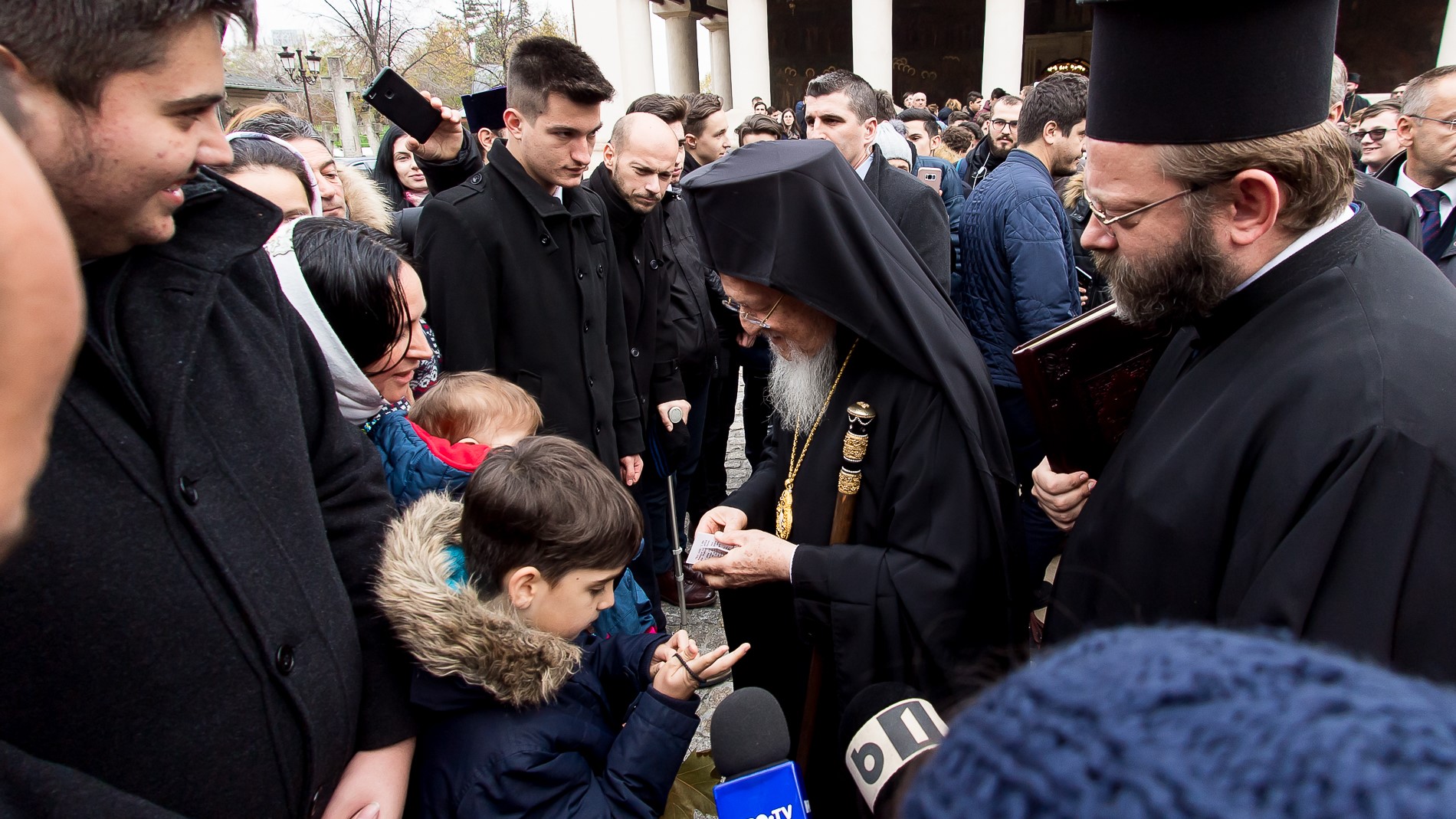
Ecumenical Patriarch Bartholomew of Constantinople (centre)

Christianity is a religion of love and dialogue, and the Church’s unique contribution to our modern world is precisely its openness to meeting and having dialogue, Patriarch Bartholomew said in a recent interview with the Romanian outlet evz.ro

“If there is a unique and contributing element of the Orthodox Church for our time and our world, this would be the meeting and the dialogue. This is the spirit we want to convey to you,” the Patriarch said. 

“It is our belief and, at the same time, our hope that Christianity can be viewed as a religion of love and dialogue. The visions of the Gospel are what the Orthodox Church seeks to incarnate and support in the modern world” he continued. 

Read More


BRIDGING VOICES: MORAL CLASHES by Steven J. McMeans

The present essay launches Orthodoxy in Dialogue’s Bridging Voices series, an ongoing initiative to respond to the summaries of papers presented at the August 2019 conference of the same name at Oxford and published over time by Public Orthodoxy.
If you would like to write for this series, see our Bridging Voices: Call for Responses and check the Fordham-Exeter Bridging Voices Project archive periodically for an updated list of summaries published. 
Mr. McMeans responds to Richard Swinburne’s Christian Teaching on Sexual Morality, which appeared on October 7, 2019. We recommend that you read the Swinburne article first.
Image result for Richard Swinburne

Professor Richard Swinburne

When I heard that Richard Swinburne had published an article in Public Orthodoxy called Christian Teaching on Sexual Morality I was delighted. First, I was delighted as an Orthodox Christian, and second, I was delighted as a philosopher. Sadly, I was disappointed on both counts.

I had assumed that the presence of so great a philosophical light as Professor Swinburne at the Bridging Voices conference last August would put to rest the reactionary chatter on Orthodox Twitter and Facebook; how the secret cabal of Orthodox heretics (whatever those are) was meeting to normalize heresy; how the next thing you know, they’ll be demanding we have gay Pride processions during Liturgy; how all the transgenders are out trying to convince our kids to experiment with gender choice because postmodernism and Jordan Peterson says, and on and on. My naive optimism is in no way a reflection on the professor. Read More