WRITING STRAIGHT WITH CROOKED LINES: A MEMOIR reviewed by Monica Spoor

Writing Straight with Crooked Lines: A Memoir
Jim Forest
Maryknoll, NY: Orbis Books, 2020

forestbook

I’d like to start with something I hadn’t really realized until I sat down to write this review: Jim Forest and I have lived in the Netherlands for almost the same length of time. In the early 80’s, when I was focusing on potty training, Jim was focusing on keeping nuclear weapons out of the country where I was busy growing up. I’m grateful to him for that.

Now, the book! As with all of Jim’s books, I found the writing style engaging, even if some of the events he recounts chilled me to the bone. I knew the Vietnam War era from history books; what Jim describes is the reality of living in a country where not wanting to kill is a crime. The book succeeds, in a very matter-of-fact way, almost as if it’s in the background, to describe the atmosphere of some very tense years. Had it been described with a great deal more drama and pathos, it would not have made such an impression on me.

Starting at the beginning, his childhood as the son of communist parents, we appear to be taking the journey along with a young Jim Forest as he recounts joining and leaving the Navy, the progress in forming and running the Catholic Peace Fellowship, and his friendships with people like Dorothy Day, Thich Nhat Hanh, Phillip and Daniel Berrigan, and Thomas Merton. [Editor’s note: Mr. Forest’s book has earned the endorsement of such luminaries as Archbishop Rowan Williams and Joan Baez, who refers to him as “my brother in nonviolent arms.”] Wikipedia provides an overview of the main events of Jim’s life, so I’m not going to summarize them here. What is interesting in Jim’s narrative are the people he meets over the course of his long career in the Peace Fellowship, and the first-person account he gives of events that many even now recall during the years of the Vietnam War.

Read More


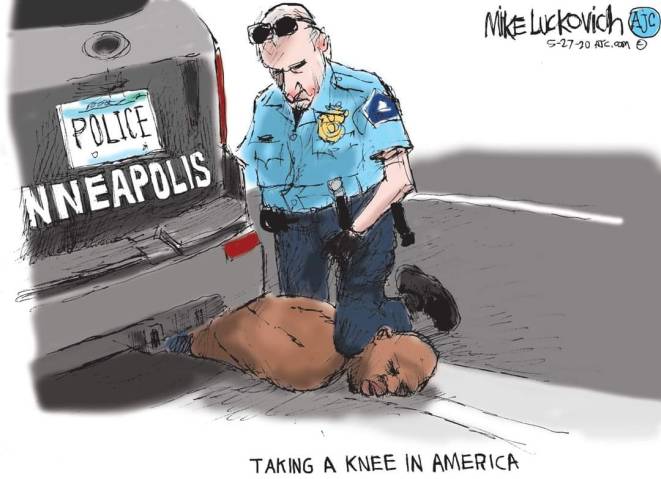
Black Lives Matter

knee

In Solidarity with Our African-American Brothers and Sisters

within and beyond the Orthodox Church

Please see the White Supremacy and Racism section in our

Archives 2017-19 and Archives 2020

See our Submission Guidelines if you would like to write for us on this topic.


CRIME FICTION AND THE GOSPEL by Alexandra de Moffarts

Learn English Through Story | Crime Stories part 1 Audiobook - YouTubeIn Strong Poison by Dorothy Sayers, a lawyer affirms, “A person who can believe all the articles of the Christian faith is not going to boggle over a trifle of adverse evidence.”

It so happens that Miss Climpson, the person the lawyer is speaking about, is right, and all the “adverse evidence” which seemed to point in a certain direction was not pointing in the right direction at all. She was right “not to boggle over adverse evidence.” As is very often the case in a classical detective story, this comment seems to be nothing more than a witty remark, but I don’t think it should be taken so lightly.

Disillusionment* and Inversion

Read More


FAITH IN A TIME OF PANDEMIC: GOD’S PRESENCE IN OUR ABSENCE FROM CHURCH by Meghan Bowen

Jesus Christ Appearing to Mary Magdalene, Hand painted orthodox ...As politicians begin to lift restrictions around social distancing, I am hearing calls to put pressure on bishops and metropolitans to open church buildings again. When I discussed this with a friend, she pointed out that God does not need us to be in a church in order to come to us. Look at the example of Pentecost, she said. The apostles were in a house, and the Spirit descended with the sound of a great, rushing wind. Or the first time Jesus came to the apostles after the Resurrection, I added. Jesus appeared despite the doors being locked. God will come to us, not because we are in a church building, but because we desire to be in relationship with Him.

To say that the pandemic altered my prayer life is to grossly understate things. As a theology student, I have more opportunities than the average person to attend liturgies of various kinds. Mass at my own college, daily Matins and Vespers at a Greco-Catholic chapel on campus, Divine Liturgy with an Orthodox mission at another chapel, the odd Coptic or even Anglican service thrown into the mix. All of that came to an abrupt halt and, honestly, I miss it. Still, I am nervous about some of the rhetoric around the need to open our churches again. When we hear people arguing that the churches need to be reopened as soon as possible—or even that the bishops made a mistake in closing them in the first place—because it deprived the people of God’s grace, we need to recognize that there is a problem in how they are conceiving of God’s providence. I do not mean to condemn or berate them here. If anything, I feel an even greater charity towards them. Read More