FAITH IN A TIME OF PANDEMIC: WHY ARE WE SITTING HERE? by Metropolitan Alexander of Nigeria

Some of our readers have asked for the source of this article. Metropolitan Alexander submitted it to Orthodoxy in Dialogue himself for consideration after he saw Metropolitan Petros’ article introducing St. Mark’s Academy. They are not the first bishops to work directly with Orthodoxy in Dialogue. When we reprint articles from elsewhere we always link to the original source.
alexnigeria (2)

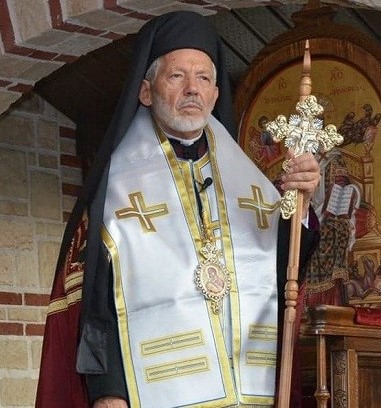
Metropolitan Alexander (Gianniris) of Nigeria

I have to be honest. These two months of lockdown in the diocese, in response to the measures brought in by the Nigerian government, really tired me out—just the same as everyone else, every other Christian, every other member of the clergy. But what wearied me most, and continues to weary, trouble, and, I dare say, frighten me, is what surfaced in churchgoing people during this time. Conspiracy theories, fantasies, panic, hysteria, and phobias. Condemnation, rejection, threats, and who knows what else, of and against every peaceful and wise voice attempting to calm down and encourage those weaker than themselves. Patriarchs, archbishops, bishops, priests, theologians, university professors, ordinary reasonable people—all perfunctorily hauled in front of the firing squad by the long-known Maenads of the Church, both clergy and laymen. 

And what is most frightening of all is that everything that one has recently read on many Orthodox websites, both Greek and non-Greek, contains the same arguments, the same theology, as everything that is posted and claimed on Protestant, and especially Pentecostal, websites. International Christian Fundamentalism at work! Covid-19, by the grace of God and through the efforts of scientists, will sooner or later be overcome.

But as for the virus of fundamentalism, how will that be defeated? Read More


ST. MARK’S: A THEOLOGICAL ACADEMY WITH A DIFFERENCE by Metropolitan Petros of Accra

stmarksThe Venerable and Ancient Patriarchate of Alexandria and All Africa has surprised us with its courage and initiative in the past. We need only recall the appointment of deaconesses by His Beatitude, Pope and Patriarch Theodoros II. While there was debate whether it constituted a true “ordination” (cheirotonia), rather than a blessing (cheirothesia), the fact remains that the Patriarchate took an initiative in such matters.

The same can be said regarding the establishment of St. Mark’s Academy, offering theological education through distance learning. Other such Academies exist, but St. Mark’s promises a quality, contemporary, and challenging curriculum. Situated in Johannesburg, South Africa, by making use of electronic media it makes learning available to all, regardless of distance and location. In addition, due to favourable exchange rates for foreign students, tuition is affordable to many.

The faculty presently consists of a group of five highly qualified academics and an external independent moderator. Between them, there are five with doctorates and one with a master’s degree. More academics will be sourced as the need arises. The staff also consists of persons responsible for administration and financial issues. Read More


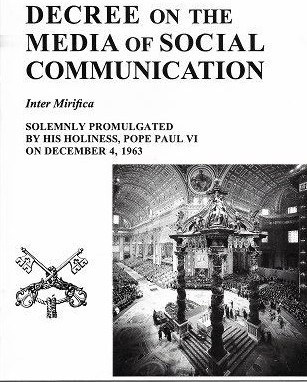
VATICAN II: CHRISTIAN FAITH IN A SOCIAL MEDIA ERA by Warren Schmidt, CSB

For better or for worse, Orthodoxy in Dialogue has found itself on the front lines of the battle over what constitutes helpful and harmful use of social media among competing visions of Orthodox Christianity in the 21st century. Father Schmidt’s reflection from a Roman Catholic perspective offers food for thought for the Orthodox Church and other ecclesial communities in the internet era.

intermir (2)

As both a PhD student at l’Institut Catholique de Paris and a sessional instructor primarily of online theology courses through St. Joseph’s College of the University of Alberta in Edmonton, Canada, I’m always somewhat saddened when especially my Catholic students, albeit through no fault of their own, almost invariably lack awareness of any position by their faith tradition on social communications and media. In fact, the Roman Catholic Church has official written teaching on social communications: one of the first documents promulgated by the Second Vatican Council (1962-65) was its Decree on the Media of Social Communications, Inter Mirifica (“Among the Wonders”) of December 4, 1963. However, I appreciate that, for my students, for whom my courses are often their first exposure to the documents and teachings of Vatican II, Inter Mirifica and Vatican II’s other fifteen documents may seem dated.

By the time Inter Mirifica was promulgated, media—radio, television, film, and so forth—could be and were being used for the good of faith traditions and societies more broadly. Inter Mirifica acknowledged this generously in its opening two paragraphs: Read More


FAITH IN A TIME OF PANDEMIC: GREEK ORTHODOX ARCHBISHOP OF CANADA SILENCES CLERGY, PROFESSORS OF THEOLOGY, AND ALL ORTHODOX CHRISTIANS

The following directive from Archbishop Sotirios (Athanassoulas)—forbidding Greek Orthodox priests, deacons, professors, “or any other Orthodox Christian” in Canada to express their opinions on the Church’s response to the pandemic—appeared on the website of the Greek Orthodox Archdiocese of Canada on June 5, 2020. Visit the website for the Greek version.
In publishing this directive Orthodoxy in Dialogue invites hierarchs, clergy, monastics, and laity of the Greek Orthodox Archdiocese of Canada and all other Orthodox jurisdictions to discuss the ecclesiological ramifications of referring to Istanbul as “the Holy and Sacred Centre of Orthodoxy” and banning open dialogue on matters of importance to the whole body of the Church. 

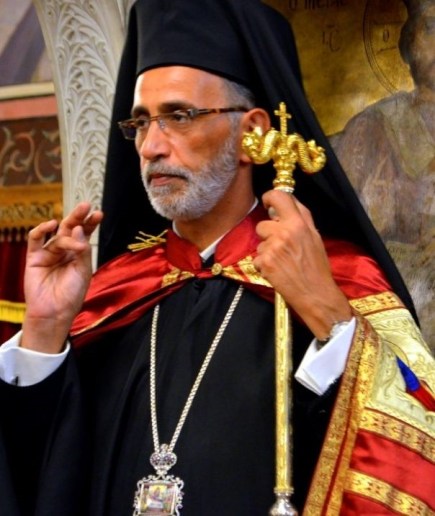
ARCHSOT (2)

Archbishop Sotirios
Greek Orthodox Archdiocese of Canada
(Photo: The Orthodox World)

Reverend Fathers of the Greek Orthodox Archdiocese of Canada

Beloved in the Lord:

During this difficult period of COVID-19 I think of you and of our communities, and pray unceasingly. Some clergy and lay people express their uneasiness, because the Archbishop has not given instructions for the re-opening of the churches and the distribution of Holy Communion. Read More