ROD DREHER GLORIFIES COLONIALISM, ADDS AFRICAN BARBARIANS TO LIST OF PEOPLE WHO TERRIFY HIM

pjimage (11)

Addendum: One of our readers has alerted us to this Snopes report, according to which Rod Dreher—in his article of May 8, 2017, “When Is It OK to Kill Whites?”—falsely accuses African-American professor Tommy Curry of advocating the murder of white people. According to Snopes, “After [Dreher’s] blog post was published, Curry started receiving death threats that were serious enough to warrant what he described as a constant police presence near his home.” Dreher remained unapologetic when Snopes reached out to him for comment.

This morning Rod Dreher published “Miguel Monjardino’s República” at The American Conservative. In it he glorifies the West’s colonial past, adds 21st-century African barbarians to the list of people who terrify him, and finds yet another opportunity to plug The Benedict Option. (For critiques of the latter, see Giacomo Sanfilippo’s here, George Demacopoulos’ here, and Adam DeVille’s here.)

Our readers are encouraged to read Mr. Dreher’s piece in full to form their own opinion. Here we offer only a few of his more salient points:

One of the best things — the very best thing, in fact — about traveling is getting to meet extraordinary people.

We met Miguel and Kika at a picnic table down by the harbor in Angra do Heroismo, the capital city. We arrived on Terceira for the island’s annual St. John festival. Over platters of limpets (sea snails) grilled in their shell, in olive oil and chopped garlic, we got to know each other.

Miguel explained to us how the city was vital to Portuguese trade in the East Indies, and how much money had passed through the place during Portugal’s heyday as one of the world’s great colonial powers….

But the challenges the US faces are relatively small compared to the massive problems coming hard and fast at Europe, in the form of African migration.

Where are those Africans going to go? They’re going toward Europe, which is depopulating. Miguel said that given the geography of the Mediterranean, it’s going to be very, very hard for Europe to keep African migrants from entering.

Will the latter-day descendants of those Europeans be able to hold back the “barbarian invasions” from Africa in the 21st century?

Miguel Monjardino…is a secular Benedict Option abbot, working to keep tradition alive through the new Dark Age.

Be of good cheer, reader. The times are dark, but there are men and women of good will working to guard and spread the light in the hidden places of the crumbling Empire. Read More


ST. MAXIMOS THE CONFESSOR: ON DIFFICULTIES IN SACRED SCRIPTURE: THE RESPONSES TO THALASSIOS reviewed by Henry C. Anthony Karlson III

St. Maximos the Confessor: On Difficulties in Sacred Scripture: The Responses to Thalassios
Fr. Maximos Constas, Translator
Washington DC: Catholic University of America Press, 2018

maxconstSt. Maximos the Confessor is one of the most difficult and yet most rewarding patristic writers to read. As St. Photios the Great once indicated, he can be subtle and difficult to understand. This is because most of his writings are not meant for theological novices. He engages, criticizes, and develops the theological tradition which was handed down to him, answering questions which arise as a result of that tradition. He expects his readers to know the basics of that tradition and to be in agreement with it, making it rare for him to explain that tradition and establish its principles in detail before providing his unique theological contemplations. While this is true for most of Maximos’ writings, this is especially true for the answers to the sixty-five scriptural questions given to him by his friend, St. Thalassios.

Fr. Maximos Constas has done a fine job of not only translating Maximos’ text, but also of introducing the text and giving readers unfamiliar with Maximos’ theological premises the foundation that they need to understand his responses. Likewise, he has done a tremendous service by offering the scholia which went with the text. He explains that the two go together, with Maximos writing at least some of the scholia and the whole being seen and used together by later writers, such as those who edited his works for the Philokalia. The scholia can be very useful, as they provide a kind of engaged summary of what Maximos wrote, complementing the main text by making it more accessible. However, as is mentioned in various footnotes, sometimes the scholia differ with what Maximos wrote in the main text, making it sometimes difficult to trust all that is found in the scholia.  Read More


ARE THERE NO ORTHODOX BISHOPS AND PRIESTS IN LOS ANGELES?

pjimage (10)

Clergy arrests, Los Angeles (upper); March for Life, Washington DC (lower)

When it comes to public symbolic gestures and photo ops, the Orthodox Church in the United States gives the impression that the lives of children before they’re born constitute the one and only issue worthy of our concern. Curiously we seem to vanish when the lives of born children hang in the balance and the cameras start rolling or clicking.

As widely reported, over two dozen individuals—most of them clergy of various faith communities—were arrested in Los Angeles on Tuesday of this week during an orchestrated act of peaceful civil disobedience.

Nathan Solis writes for Courthouse News Service: Police arrested priests, reverends, rabbis and other members of the faith community outside a California courthouse in downtown Los Angeles on Tuesday over a show of civil disobedience against the Trump administration’s immigration policies. They locked hands, blocked traffic and then sat in the middle of a street and waited for officers from the Los Angeles Police Department to arrest them…..

Haaretz reports (with a large number of photos): In Los Angeles, California clergy members, including Rabbis, pastors and other faith leaders, lined up outside the federal court house building ahead of a visit by Attorney General Jeff Sessions. They were later seen being taken into custody in a series of planned arrests, local media reported. Rabbi Jonathan Klein, who helped organized the protest, told the Los Angeles Times that demonstrating against U.S. President Trump’s immigration policies aligns directly with his faith…. Read More


MOLDOVAN CHURCH SUSPENDS PRIEST OVER ALLEGED LGBTQ SUPPORT by Alan Crosby

The fact that incidents such as the one reported here are occurring in historically Orthodox societies underscores all the more the need for the Church to articulate a proper theological and pastoral response to the universal phenomenon of sexual and gender variance in human nature. 

‘Outrageous Sins’: Moldovan Church Sidelines Priest In Spat Over LGBT Support

melenti

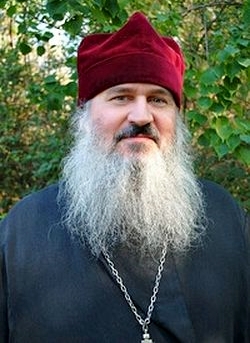
Father Maxim Melenti (centre)

Every week, priest Maxim Melinti can be found at the Church of the Virgin Mary in the Moldovan village of Ghidighici. This past weekend was no different, except Melinti was in front of the altar, not behind it.

Melinti was relegated to the role of spectator by the Moldovan Orthodox Church, which banned him indefinitely from officiating services as of June 21, alleging he was “promoting and encouraging sexual minorities and contributing to the development of the LGBT movement in the Republic of Moldova.”

There’s just one problem: He says he didn’t do anything.

“In me, many have found the man who will understand them and treat them with respect. I do not judge anyone, I just help people get to Christ,” he told reporters at a press conference on June 26.

“Unfortunately, there was no fair, transparent, public church judgment. The act was signed in my absence. All the press rang and asked me to comment, but it was the first time I was hearing about this. No clear accusations have been presented to me, which canons have been violated by me. I was not allowed to argue. Members of our community were not consulted,” he added. Read More