This article takes its place in our Faith & the Arts series.

~
I had been hesitant to write anything for Orthodoxy in Dialogue. I’m aware that its editorial staff and target audience are people with, or studying for, doctorates, while my highest level of educational achievement is a 2-year degree in data processing from my local community college. However, one trick I have learned from people more academically qualified than I am is that you can get away with a much lower level of academic rigor by putting the word “towards” in the title of your essay. So that’s what I’ve done.
I have long been fascinated by comics. They taught me to read at an early age, something I share with many other people, and I once tried (unsuccessfully) to start a line of comics aimed at adult literacy and English language learners.
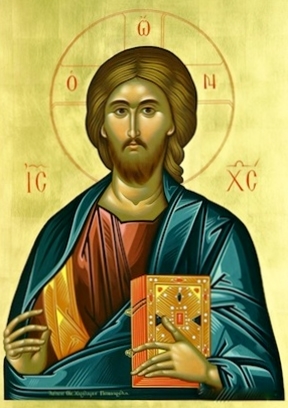
But as an Orthodox Christian, my fascination runs deeper, as I sense much unfulfilled potential in the medium itself. Our Orthodox liturgical life affirms two art forms above all others: iconography and poetry, the latter as expressed in our hymns. It strikes me that comics are better placed than almost any other artistic medium to combine the two. Read More


When St. Athanasius in the 4th century addressed the centrality of the incarnation of Christ and His subsequent redemption of all creation via His death on the cross, he also justified the use of icons in Christian worship. (See Athanasius, On the Incarnation.) His appeal wasn’t aesthetic or moral, but theological, albeit a theology rooted in the Gospel. The denial of iconography vis à vis honoring the cross, he claimed, was a denial of the intrinsic goodness of creation, and thereby also a denial of the incarnation. Denying the incarnation, he said, was of the spirit of the antichrist (1 Jn 4:2).