
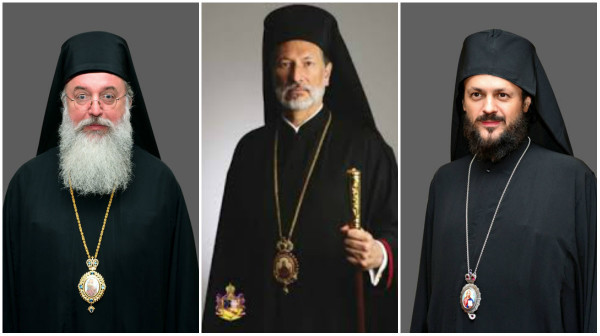
L to R: Bishop Longin (Krco), Bishop Irinej (Dobrijevic), Bishop Maxim (Vasiljevic)
On September 7, 2019 Bishop Longin of New Gracanica-Midwestern America, Bishop Maxim of Western America, and Bishop Irenej of Eastern America published a statement, Regarding the Episcopal Council for North, Central and South America, the St. Sava Serbian Orthodox School of Theology, Constitutional Matters and Draft Child Protection Policies and Procedures, on the website of the Serbian Orthodox Dioceses in the United States of America.
While we do not have sufficient information to comment on the controversies addressed in the statement or in the “internet ‘postings’ and ‘e-petitions'” cited therein, the final paragraph stands out as particularly needing clarification on the part of Their Graces: Read More



 Studies have indicated that same-sex orientation and behavior has a genetic basis and runs in families, yet specific genetic variants have not been isolated. Evidence that sexual orientation has a biological component could shape acceptance and legal protection: 4 to 10% of individuals report ever engaging in same-sex behavior in the United States, so this could affect a sizeable proportion of the population. On page 882 of this issue, Ganna et al. report the largest study to date, comprising almost half a million individuals in the United Kingdom and United States, identifying genetic variants associated with same-sex sexual behavior. They provide evidence that genetic variation accounts for a small fraction of same-sex sexual behavior and uncover a relationship to the regulation of the sex hormones testosterone and estrogen as well as sex-specific differences. They also reveal complexity of human sexuality.


 ORTHODOXY IN DIALOGUE