SOCIAL JUSTICE IS A FORM OF WORSHIPPING GOD by Stephen Mattson

Our Open Letter to the Church: The Humanitarian Crisis at the US-Mexico Border drew a range of mixed reactions from our readers. At one extreme stood the letter’s 115 signatories: an Orthodox bishop, priests, academics, and laity, joined by many clergy and laity representing other Christian traditions.

To this list we gratefully add the names of those very few hierarchs who issued a letter to the White House or a public statement: in alphabetical order, Metropolitan Nicolae (Condrea), Bishop David (Mahaffey), Metropolitan Tikhon (Mollard), Archbishop Lazar (Puhalo), Metropolitan Antony (Scharba), Metropolitan Nathanael (Symeonides), and Archbishop Daniel (Zelinsky). You may find their letters or statements under their names in our Archives by Author with the exception of Archbishop Lazar, whose statement took the form of a letter to the editors.

At the other extreme stood those angered by our letter, who felt that the institutional Orthodox church and even individual Orthodox Christians should play no role in the public life of a pluralistic secular democracy. Orthodox bishops, many of these thought, should restrict themselves to ministering to the spiritual needs of their flocks.

Yet, year after year in our preparation for Great Lent, we are confronted with the Sunday of the Last Judgment. We also have the witness of Mother Maria of Paris, among our most universally beloved of modern Orthodox saints. What do these say to us, both as Church and as individual Orthodox Christians?

In publishing the present article Orthodoxy in Dialogue wishes to raise the following questons:

  1. Should the Orthodox Church of the 21st century articulate a more robust “social justice doctrine?”
  2. Given the fundamentally eschatological focus of Orthodox liturgy, theology, and ascetical spirituality, what might an Orthodox social justice doctrine look like? How would it maintain the necessary tension between the present world and the world to come? How does the Orthodox Church avoid becoming little more than just another social justice agency operating under a thin religious veneer?

Read More


INTRODUCING ORARION: ORTHODOX HYMN SETTING PLATFORM by Ilya Tolchenov

cover

The chants sung in the cathedrals of the Slavic Orthodox Churches form a spiritual, living, and breathing choral tradition that is as unique in the world of Christian music as it is beautiful. Part of what makes it so unique is that the melodies are written to emphasise and decorate each line of the liturgical text so as to prayerfully carry across the meaning of the words. Therefore the building blocks of an Orthodox hymn are the lines of text themselves, unlike the rhythm-oriented phrasing found in other forms of choral music. This results in virtually every bar of music having a different time signature, and these can often be something as uncomfortable as 17/4.

2018-05-21 09.32.44 1-1

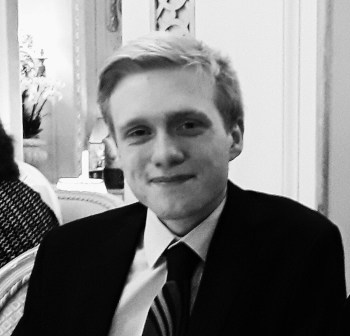
Ilya Tolchenov

With all mainstream regular music notation software available today, this fact alone has meant that notating an Orthodox hymn is not at all a straightforward process. Each bar would require you to count the number of beats in a phrase, set the time signature, notate each note of each chord, then type the lyrics, and then format away any awkward notation (like those horrific time signatures!). So despite the relative simplicity of a lot of the music, producing a neat and readable score using a computer is very complicated and time-consuming.

This is why we created Orarion. It’s a web-based notation programme optimised for writing Orthodox choral chants, featuring a unique, user-friendly, and intuitive method of creating music. Instead of writing everything out note by note, you first type in the chant as a stripped-down musical template, and then just enter the lyrics with some simple markings demonstrating how the melody of your chant fits around the words. Orarion uses this information to instantly produce a fully-formatted and ready-for-use score. The process was inspired by how Orthodox choirs harmonise troparions and stikhiras—the singers know the melody for each phrase of the chant and fit it around the lyrics. Read More


NATIONAL COMMISSION FOR WOMEN CALLS ON GOVERNMENT TO BAN SACRAMENTAL CONFESSION by Liz Mathew

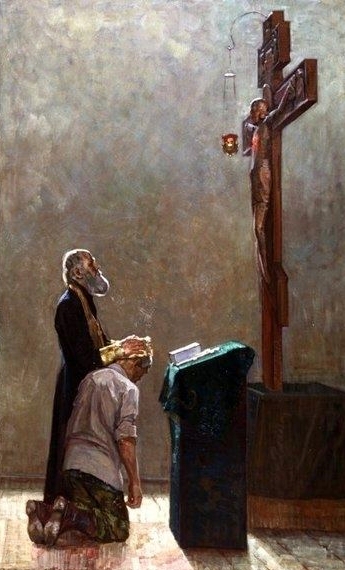
confessionThe following report on the Malankara Orthodox Syrian Church—part of the Oriental Orthodox communion—comes from Kerala, a state on the southwest coast of India. Orthodoxy in Dialogue is publishing it not in order to advocate for abolishing confession, but to shine a light on related questions for discussion in an Eastern Orthodox context. 

The article focuses on priests accused of using women’s confessions to blackmail them into sexual submission and silence after the assault. Without minimizing the gravity of these allegations, we raise a number of questions on other possible, less direct connections between confession and crime: 

  1. Have cases similar to those cited in the following article occurred in our churches, i.e., priests using the confession of serious sin to blackmail or otherwise abuse those who have confessed to them?
  2. Do our dioceses/jurisdictions/national churches have policies in place to govern priests when someone confesses a crime to them?
  3. If yes, what are they? If no, why not? Should we have such guidelines?
  4. How have priests actually handled the confession of crimes? For priests who have never experienced this, how do they imagine themselves handling it?
  5. Does the nature or seriousness of the crime make a difference in how priests should handle it vis-à-vis law enforcement? For instance, shoplifting vs. sexual assault?
  6. In theory are there ever instances in which a priest—without the penitent’s consent or knowledge—might, should, or even must divulge to law enforcement something that he has heard in confession?
  7. Does the Roman Catholic Church have any policies on this that might be relevant to our discussion?
  8. Are these kinds of questions addressed in pastoral theology courses at Orthodox seminaries?

We welcome thoughtful responses from clergy, hierarchy, and laity.

The National Commission for Women (NCW), submitting a report on the two sex scandals in churches in Kerala, has recommended the government should abolish confessions in churches as “they come in the way of security and safety of women.”

Read More