WHITE SUPREMACY IN THE AMERICAN ORTHODOX CHURCH: AN OPEN LETTER TO THE ASSEMBLY OF CANONICAL ORTHODOX BISHOPS OF THE UNITED STATES OF AMERICA

Those wishing to sign this letter may send their name and city/state/province/country of residence to editors@orthodoxyindialogue.com. Names will be added as quickly as possible as we receive them.
mattheim

Dear Metropolitans, Archbishops, and Bishops, Member Hierarchs of the Assembly of Canonical Orthodox Bishops of the United States of America:

[Addenda of January 24 – 1). The gravity of the situation described below is underscored all the more by the heartbreaking fact that we have begun to hear from American families of colour who have converted to the Orthodox Faith and no longer feel safe or welcome in their own Church. 2). See today’s letter to the editors here. 3). A few people who signed below have asked to have their name removed for fear of retaliation.]

[Addendum of January 25 – An SPLC-designated hate group has responded here to our Open Letter.]

Masters, bless.

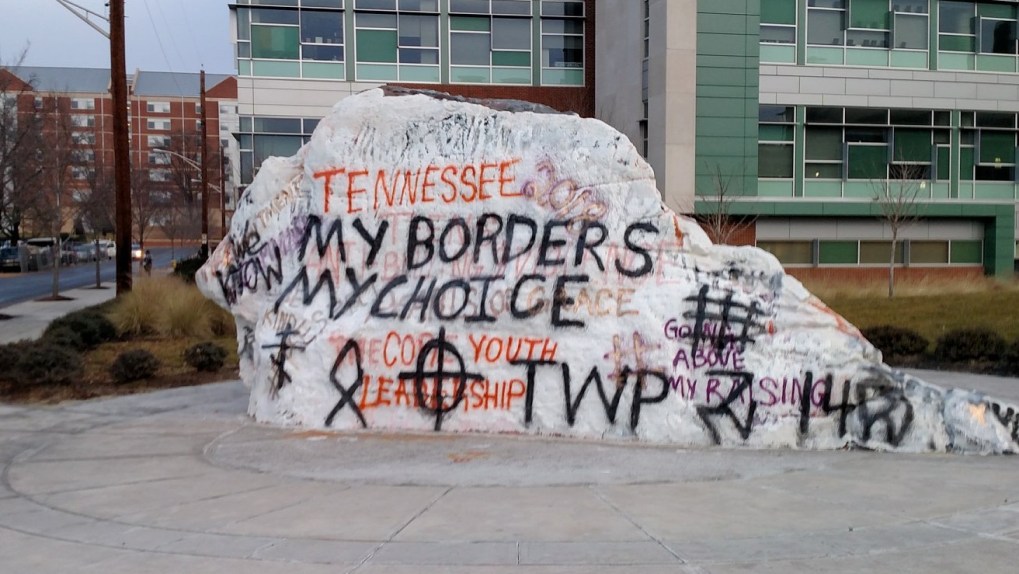
At approximately 7:50 a.m. today, January 22, Arthur Hatton of St. Anne Orthodox Church (OCA) in Oak Ridge TN took the above photograph on the Knoxville campus of the University of Tennessee. “The Rock” is available to students as a medium of free expression.

Mr. Hatton has given Orthodoxy in Dialogue permission to publish his photograph and his name. As a new convert to Orthodoxy he has asked the following question: “Why is a symbol of my faith being used alongside Nazi and White Nationalist symbols, and what is American Orthodoxy going to do about it?” Read More


CHRISTIAN UNITY: EAST AND WEST IN MARRIAGE COUNSELING by Gerry Ken Crete

This is the fourth article in our Christian Unity Series.

popespats

I’m a marriage and family therapist. Imagine for a moment that my first couple client of the day is the Catholic Church and the Orthodox Church. 

These two Churches have a long and complicated history that ended in divorce and estrangement. In recent years there has been a great deal of rapprochement, but there are still many obstacles. Is a remarriage even possible? 

I would begin by asking them to remember the early shared experiences. We could reminisce about the early tumultuous but inspiring first few hundred years of Church history. Remember how we developed into a universal Church? We would reflect on the early mission work, the shared Eucharist and developing liturgies, and the writings of the Eastern and Western church fathers. We were both inspired by the lives of the saints, the wisdom of the desert fathers, and the development of monasticism.  We experienced some anger and confusion when we had to deal with the first christological heresies, but we worked together and united in Councils. We felt joy when we witnessed the birth of Christendom and the transforming of pagan culture. We experienced fear during the persecutions, but we also had courage and often embraced martyrdom. This is our shared heritage. We experienced all of this together.  Read More


SUNDAY OF ZACCHAEUS by Priest Richard René

Seeking the Margins

The Sunday of Zacchaeus occupies an interesting place in the Orthodox liturgical calendar. While not a part of the services leading up to and including Great Lent and Holy Week (known as the Lenten Triodion), the Slavic tradition prescribes Luke 19:1-10 to be read on the Sunday before the Triodion begins. The story of Zacchaeus is thus both “unknown and well known,” both marginal and essential in the journey that ends with Pascha.

zacchsundayLike the placement of Zacchaeus Sunday itself, Jesus’ encounter with the tax collector demonstrates the importance of seeking the margins for theosis, the process by which Christians come to be “partakers of the divine nature” (2 Pt 1:4).

Zacchaeus is a powerful man, contracted and backed by the all-powerful Roman state to collect taxes from the local Jewish populace (Lk 19:2). At the same time, he is generally despised, not only as a Roman collaborator and quisling, but also as a man who has used his power to defraud his own people and enrich himself (Lk 19:8). His short physical stature epitomizes his moral situation: a “big man” on the political and economic scene, he is ultimately of “short stature” in the eyes of his community (Lk 19:3). He is both the centre of (negative) popular attention, and a dweller in the margins.

Zacchaeus’ spiritual struggle unfolds through the account. He seeks to see who Jesus is, from which we can suppose he makes every possible effort to get through the crowd. Since prestigious men like Zacchaeus would not travel anywhere without bodyguards, one imagines that his servants would attempt to physically (and perhaps even violently) clear a path for him through the crowd. When this effort fails, Zacchaeus experiences a crisis. He realizes that his worldly power and privilege count for nothing in this situation. When it comes to “seeing Jesus” (which can be understood both literally and spiritually, as the contemplation of Christ), he really is just a little man, powerless and ineffectual. Read More


DEATH OF SMALL CHILD REVEALS SPLIT IN UKRAINIAN ORTHODOX CHURCH by Lilia Rzheutska ~ Translated by Olena Chemodanova

Father Cyril Hovorun, interviewed below, recommended this article and the translator to Orthodoxy in Dialogue.

caves (3)The refusal of a priest to conduct the funeral service for a killed child reveals the split of the Churches in Ukraine

The refusal of UOC-MP priests in Zaporizhia to conduct the funeral service for the killed 2-year old boy, who was baptized in the “schismatic” UOC-KP, has shown the depth of the chasm between the Churches in Ukraine. How does society react?

Representatives of the Ukrainian Orthodox Church-Moscow Patriarchate (UOC-MP) from the outset consider the Ukrainian Orthodox Church-Kyiv Patriarchate (UOC-KP) to be “schismatic,” thus they do not recognize sacraments administered by the UOC-KP, including baptism and chrismation. The Churches now demonstrate “mutual understanding” and “peaceful coexistence” outwardly. But the case of  the refusal to conduct a child’s funeral service has proven the deep split between the Churches and their faithful.

The course of the events

For several days, people have been bringing dolls and toys to the walls of UOC-MP churches to protest the actions of the UOC-MP priest in Zaporizhia, who refused to conduct the funeral service for the tragically killed 2-year old boy because he had been baptized in the UOC-KP. Metropolitan Luka of Zaporizhia and Melitopol of the UOC-MP stated that the priest had acted in accordance with the church canons. Read More