
Jim Forest
As someone who made his way to the Orthodox Church from a Roman Catholic background, I am often asked why I became Orthodox and how I would compare the two Churches.
In the 29 years since my Orthodox chrismation, my answers to both questions have evolved. One of the constants has been to stress that, in crossing the Great Schism’s border in an eastward direction, I neither slammed nor locked any doors, and that my transition has not involved a conversion. There has been but one conversion in my life, and that occurred before I was either Catholic or Orthodox—my becoming a Christian, that is, an apprentice follower of Jesus. Finding a church came next.
“But after so many years a Catholic,” friends have asked, “why your turn to Orthodox Christianity?”
In the early years, I tended to stress what I didn’t like about Catholicism: its monarchical papacy, a fast-food liturgy that too often could be described as a McMass, a legalistic approach to pastoral issues such as failed marriages, its insistence that priests be celibate, its obsession with sexual sins, its insertion of the filioque into the ancient creed. (As Hilaire Belloc wrote, “The moral is / it is indeed / you must not monkey / with the Creed.”)
Taking a slightly different tack, I sometimes said that the two Churches were like parallel highways which, at first glance, looked nearly identical; but then, on closer inspection, you notice the traffic moves more slowly on the Orthodox highway, and there are no police cars. With such slow-moving vehicles, cops aren’t needed. Read More

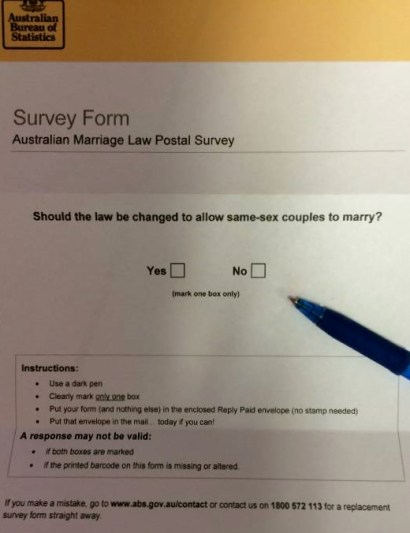 Leaders of the current political scene in Australia deemed it expedient for Federal Parliament to decide the question of changing the Marriage Act (1961) to allow for same-sex marriage by considering the results of a voluntary plebiscite. Citizens of Australia over the age of 18 years could receive a voting paper in the mail and return it having answered “Yes” or “No” to the question: “Should the law be changed to allow same-sex couples to marry?” The voluntary plebiscite would run over eight weeks, with a non-binding result on lawmakers—the outcome would merely inform a debate on a Bill to enable same-sex marriage.
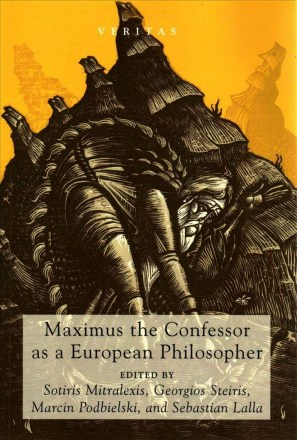 In the English speaking world, three fields of study have grown tremendously in the last few decades: the study of “Byzantine philosophy,” scholarship on Maximus the Confessor, and research in “Continental Philosophy of Religion.” Maximus the Confessor as a European Philosopher is a critical and timely book for bridging these three areas of emerging scholarship. Byzantine philosophy in particular is a new area of research (often thought of as a supplement to the much better researched medieval Latin, Hebrew, and Arabic traditions), with no introductory text or handbook on the subject as of yet. Maximus is sometimes excluded from Byzantine philosophy (which is sometimes viewed as beginning either with Photios or John Damascene). This text takes up precisely this question of how Maximus should be placed within the history of philosophy. As Dionysios Skliris puts it, the questions of this volume are as follows (p. 3): “Is Maximus ‘European’?” “Is Maximus a ‘philosopher’?” “What is Maximus’ contribution to Europe?” “What is his contribution to philosophy?” Likewise, is Maximus more than just a Byzantine or just a theologian? Similarly, Sotiris Mitralexis asks in the introduction (p. xxi), “Should towering figures of Byzantine philosophy like Maximus the Confessor be included in an overview of European philosophy?” These questions connect Maximus scholarship both to the larger attempt to include Byzantine philosophers in the narrative of the history of philosophy, and to the dialogue between contemporary European philosophy and patristic texts, construing Maximus as a predecessor to continental philosophy.


 ORTHODOXY IN DIALOGUE