ALFEYEV & LAVROV: A GLIMPSE INTO CHURCH-STATE RELATIONS IN RUSSIA by Archdeacon John Chryssavgis

This brief essay appeared earlier today at Commonweal. We reprint it with the author’s permission as part of Orthodoxy in Dialogue’s frequent critique of Russian-style, 21st-century “Byzantine symphonia.”
Metropolitan Hilarion (L) and Sergey Lavrov (R)

Metropolitan Hilarion (Alfeyev) of Volokolamsk has served as chairman of the Moscow Patriarchate’s Department for External Church Relations since 2009. He is an outspoken critic of the independence granted to the Orthodox Church in Ukraine by the Ecumenical Patriarchate of Constantinople, which—in his frequently bombastic and belligerent statements—he associates with the alleged corruption of the West and the perceived geopolitical dominance of the United States. His reactionary and parochial worldview centers on a denunciation of modern culture and a return to an imagined golden age of Russian Orthodoxy. But has the Russian Patriarchate effectively become a department of Sergey Lavrov’s Foreign Ministry? Are the Department for External Church Relations and the Russian Foreign Ministry acting on behalf of global Orthodoxy or of Russian state interests?

Some years ago, a neoconservative theologian and cultural critic observed that “Metropolitan Hilarion does not always speak the truth.” Since I have on several occasions witnessed the Russian prelate’s unabashed dishonesty before his peers and seniors, it is becoming increasingly difficult to attribute his persistent misbehavior to a mere lapse in judgment. There must be some other reason for the abject shamelessness of a powerful clergyman and prolific scholar. Surely his words have a purpose.

Read More
TOLERANCE HAS A CHILD’S FACE by Aida Bode

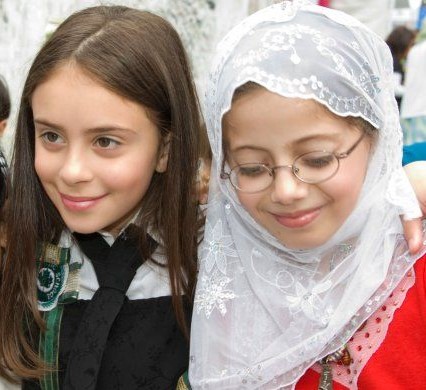
There’s no doubt that religious tolerance is a great need we have in our world today. And while I could make a few philosophical points, or even preach about the human aptitude to love and accept others, I will not do that. In fact, I believe we are far from being philosophical, or even accepting of another’s religion; and that’s because, before we do any of that, we need to be children whose faith can move mountains.

I was born in communist Albania, at the peak of religion denial and of spiritual poverty. These are big words that I use now, but as a child, I knew not of religion or of the human need to believe. I only knew that there was something, deeper than myself that constantly called me, and every time I responded to that call, I found peace in darkness.

My knowledge of God was nonexistent. What I remember are bits and pieces of conversations in hushed voices that adults would have, and somehow, the concept of “God” became real in me. I knew not to ask about God, for anyone who mentioned Him was in danger, taken away, imprisoned; put to death whose face held an irrefutable truth. Death was never abstract. It was real without anyone ever explaining to me what it was. And so, with this understanding of God being dangerous, yet somehow good, I believed ever since I can remember. In fact, I have no memories without God. He was always present and constant, good and dangerous.

Read More

ORTHODOX RESPONSIBILITY TOWARDS SOCIETY by Deacon Stephen Hayes

1.  Introduction

Recently Orthodoxy in Dialogue posted the following tweet on Twitter:

In the context in which it appeared it seemed to assume that “we” (non-women, non-LGBTQ, non-immigrants, believers, non-adherents of other religions) did think that our only responsibility towards society was to stop other people from doing what they want to do.

I question that assumption, and some of the other assumptions that the statement seems to make.

Read More

A TRANS READING OF SALVATION HISTORY: IS IT POSSIBLE? by Kevin Elphick

EDITOR’S NOTE: We publish the present thought experiment as part of Orthodoxy in Dialogue’s commitment to the well-being of transgender Orthodox Christians and to their full inclusion in the Church’s life. This does not mean that we agree with the author’s exegesis, in whole or in part, but that we consider it vital to hear a diversity of voices in the conversation surrounding the theological, spiritual, and pastoral question of transgender identities.
In observance of Pride Month, we welcome other contributions on the subject of sexual and gender variance in human nature and its place in ecclesial life.

Does the Judeo-Christian tradition contain anything that resembles gender transition? Do our Scriptures record anything akin to recognizing a valid gender experience other than the gender one is assigned at birth? A kneejerk reaction to these questions would immediately suggest an answer of “no.” But is another perspective possible upon further reflection?

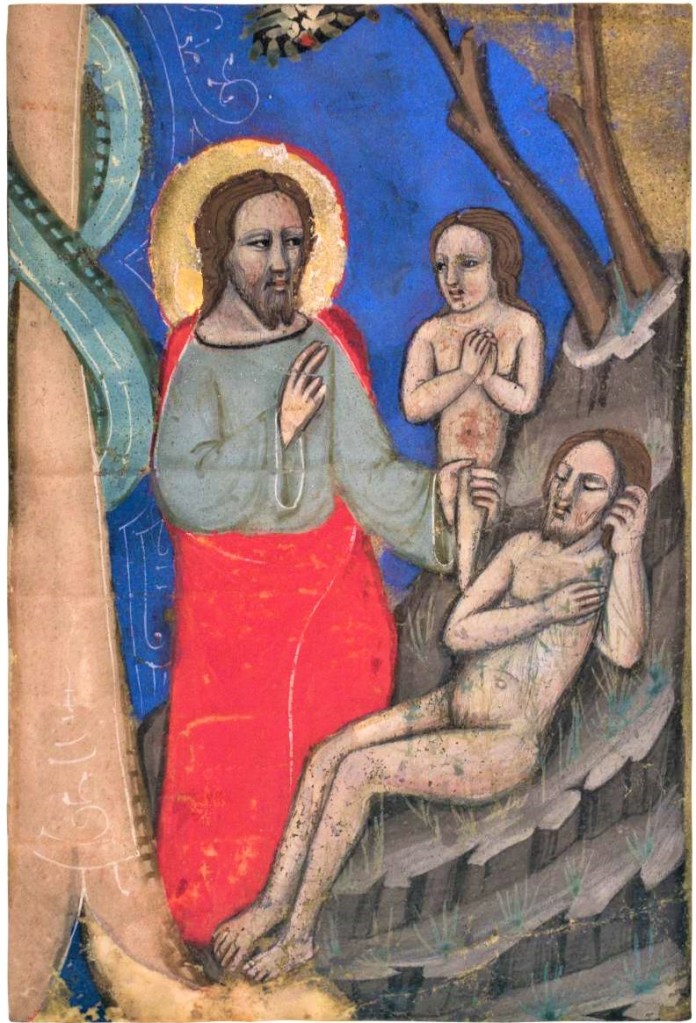
What of the Genesis account of the creation of Adam and Eve?

So the LORD God cast a deep sleep on the man, and while he was asleep, he took out one of his ribs and closed up its place with flesh. The LORD God then built the rib that he had taken from the man into a woman. (Gen 2:21)

Here God takes the male flesh of Adam and transforms it into a woman. Flesh which was previously male is now fully female. How might our transgender sisters and brothers hear this creation narrative? Does it speak to them? We did not have to go far to find a gender transition; it is right there in the second chapter of Genesis.

And while the sleep which God cast upon Adam might sound like prep for reconstructive surgery, genital alteration was not involved in this story. Genital reconstruction is part of the contemporary transgender experience. Is anything like this found in Scripture? In this same first book of the Bible, we find God entering into the Covenant of Circumcision with Abram (Gen 17:10). Surgical alteration to the phallus of every male is required with this biblical covenant. Anthropologists have long observed that circumcision is found in various cultures throughout the world. They note that the ritual often connotes a feminization of the recipient. Female genitalia bleed monthly; with circumcision, the phallus ritually bleeds also. The importance of this ritual bleeding is emphasized in the Exodus text in which the wife of Moses circumcises their son. “But Zipporah took a piece of flint and cut off her son’s foreskin and, touching his feet, she said, ‘Surely you are a spouse of blood to me.’” (Ex 4:25)

Read More