WHITE-RAGE AND THE MIGRANT CARAVAN: WHEN RELIGION JUSTIFIES RACIAL SELF-INTEREST by Christopher Brittain

caravan

Migrants cross border from Guatemala to Mexico on October 21, 2018 (Image: CNN)

A rift is tearing through politics in the global North, fuelled by racism and fear of the other. Anxiety over the decline of white majorities is being deployed as a device for political gain by numerous politicians in Europe and North America. This development is puzzling and alarming, yet it is often expressed in contradictory terms.

This is illustrated in a recent edition of the Washington Post by a striking disparity between a headline on the front-page and another on page three. Page one includes a gripping image of Hondurans attempting to climb a barrier at the Guatemala-Mexico border. The photograph captures the desperation of migrants participating in the human caravan, trying to escape the violence and poverty of Central America. This movement has been met with ferocious rhetoric and threats by the Trump administration, which is seeking to ensure that these asylum seekers never get anywhere near the American border. Just two pages later, however, the headline reads: “Finger-pointing begins as U.S. fertility rates fall.” Speaker of the House Paul Ryan is quoted as suggesting that, for America to remain great, it is “going to need more people.”

This contradiction between a fear of migrants and anxiety over inadequate domestic population growth needs to be unpacked. Unfortunately, the tone of public discussion often adds fuel to the fire rather than encouraging considered reflection. Eric Kaufman’s new book Whiteshift is a case in point. He addresses the rise of white nationalism while essentially normalising it. Arguing on the basis of demographic data, Kaufmann defends a version of white identify politics, criticises some anti-racism taboos and supports notions of ethnic selection in immigration. Read More


WHY SEX IS NOT BINARY by Anne Fausto-Sterling

Orthodoxy in Dialogue offers the following article to introduce our readers to the important work of Dr. Anne Fausto-Sterling in the biology of sexuality and gender. Our approach to theological anthropology cannot ignore the contributions of the empirical sciences to a holistic understanding of the human person.
The significance of this article lies largely in the fact that sex, in contemporary parlance, refers to a person’s anatomy, while gender refers to the social construction of what it means to be male or female and to an individual’s sense of personal identity as male or female—an identity not always consistent with one’s anatomy. This article focuses on the surprisingly non-binary character of sexual anatomy. 

The complexity is more than cultural. It’s biological, too.

fusto-sterling

Dr. Anne Fausto-Sterling

Two sexes have never been enough to describe human variety. Not in biblical times and not now. Before we knew much about biology, we made social rules to administer sexual diversity. The ancient Jewish rabbinical code known as the Tosefta, for example, sometimes treated people who had male and female parts (such as testes and a vagina) as women — they could not inherit property or serve as priests; at other times, as men — forbidding them to shave or be secluded with women. More brutally, the Romans, seeing people of mixed sex as a bad omen, might kill a person whose body and mind did not conform to a binary sexual classification.

Today, some governments seem to be following the Roman model, if not killing people who do not fit into one of two sex-labeled bins, then at least trying to deny their existence. This month, Prime Minister Viktor Orban of Hungary banned university-level gender studies programs, declaring that “people are born either male or female” and that it is unacceptable “to talk about socially constructed genders, rather than biological sexes.” Now the Trump administration’s Department of Health and Human Services wants to follow suit by legally defining sex as “a person’s status as male or female based on immutable biological traits identifiable by or before birth.”

This is wrong in so many ways, morally as well as scientifically. Others will explain the human damage wrought by such a ruling. I will stick to the biological error. Read More


FELLOWSHIPS AT AUSCHWITZ FOR THE STUDY OF PROFESSIONAL ETHICS: For Seminarians, Theology Students, and New Clergy

Editorial Note: Given the alarming resurgence of anti-Semitic and other xenophobic violence in today’s sociopolitical climate—often buttressed by false appeals to “religion”—the information offered below seems more timely than ever.

Feldgottesdienst f¸r deutsche Soldaten

An army chaplain blesses Wehrmacht soldiers in German-occupied Poland, 1941.
(German Federal Archive / BArch, Bild 146-2005-0193 / Walter Henisch / CC-BY-SA 3.0)

FASPE Seminary examines the role played by German and international clergy during the period of 1933-1945, underscoring the reality that moral codes governing clergy of all religions can break down or be distorted with devastating consequences. Having demonstrated the power held by religious leaders, FASPE addresses ethical issues now facing individual members of the clergy and religious institutions at large. With the historical background in mind, the FASPE Seminary Fellows are more committed and better positioned to confront contemporary issues.

Each year, FASPE chooses 12 to 18 Seminary Fellows from divinity schools and seminaries, as well as early-career religious leaders, to spend two weeks in Berlin and Poland where they visit key historical sites and participate in daily seminars led by specialized faculty. The Seminary Fellows travel with the Medical Fellows, having the opportunity to exchange views over shared meals and in several interdisciplinary seminars. Read More


MODERN SLAVERY: ECUMENICAL PATRIARCH TO HOST THIRD INTERNATIONAL FORUM

jw-and-patriach-bartholomew

Archbishop Justin Welby of Canterbury and Ecumenical Patriarch Bartholomew of Constantinople
First International Forum on Modern Slavery, Istanbul, February 2017

Awareness, Action and Impact: A Forum on Modern Slavery
January 2019

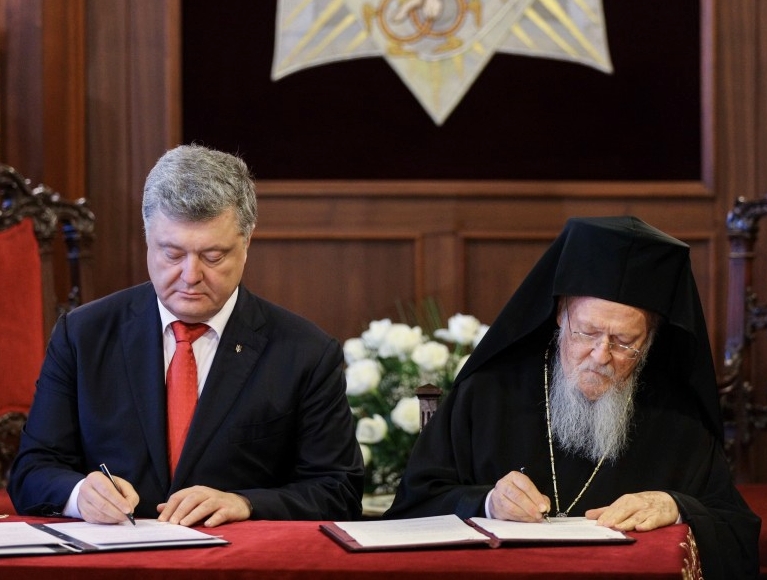
His All-Holiness Ecumenical Patriarch Bartholomew announced his plans to convene a Third International Forum on Modern Slavery, with the theme “Awareness, Action and Impact.” Recognizing that modern slavery is a global scourge that traps millions of people to lives of suffering, injustice and humiliation, His All-Holiness established a Task Force on Modern Slavery as a commitment of the Ecumenical Patriarchate to learn, to act and to witness towards the elimination of the interconnected forms of visible and invisible enslavement affecting over 46 million people worldwide. This Forum convenes experts, practitioners and policymakers from international, governmental and non-governmental organizations, in consultation with representatives from Orthodox Christian ministries of the Ecumenical Patriarchate. It will concentrate on capacity building, programmatic cooperation and religious literacy improvements by which Orthodox Christian engagement and solidarity can help to eliminate the complex, intersectional causes, contours and consequences of modern slavery. The first Forum, “Sins Before Our Eyes,” was held in Istanbul, Turkey, in February 2017. The second Forum, “Old Problems in the New World,” was held in Buenos Aires, Argentina, in May 2018. Read More