A WAY OUT OF THE ORTHODOX CHURCH’S PRESENT CRISIS by Antoine Arjakovsky

The original French version of this wide-ranging article appeared on December 15, the day of the Reunification Council in Kyiv. This explains why a few of the details are already dated. Yet the substance of Prof. Arjakovsky’s commentary remains a valuable contribution to our dialogue on the current state of the Orthodox Church. The author offers much to ponder—and much to debate.
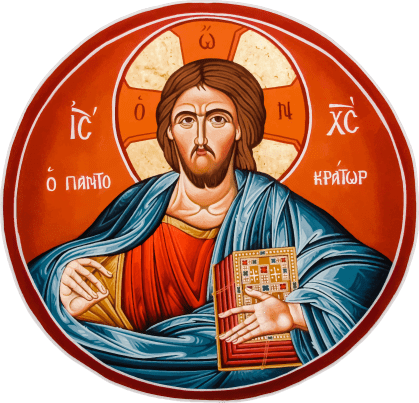
Greek-Orthodox-Jesus-Christ-Mural.png

Before the passions presently troubling Orthodox Christians spin out of control, in this article I wish to set forth how I see current developments in the Orthodox Church and to offer my proposals for a way out of the crisis. I have written several books which study the older and recent history of the Orthodox Church closely, both in France and around the world, and I have lived a long time in Ukraine and Russia, two countries in conflict today and situated at the epicentre of the present crisis. Also because of the friendship that I feel for Christians in the different Churches in conflict today, I believe that it’s my responsibility as an Orthodox Christian to share my opinion without, of course, claiming any exhaustiveness whatever.

Becoming Aware of the Crisis in the Orthodox Church

To begin, I believe that we must admit that the Orthodox Church has realized for some years that she is passing through a crisis, which is also a call from the Spirit. To be convinced of this it suffices to mention the dozens of subjects of disagreement on the agenda of the pan-Orthodox council at the start of the 1970s. The fourteen Orthodox Churches recognized that they were in need of reform. Thus they entered into a period of thaw which is and will be extremely beneficial to them. That the pan-Orthodox Council of Crete in 2016 was held after a century of preparation attests to this thaw. In particular, the recognition by the fathers of the Council that the borders of the Church of Christ extend beyond those of the Orthodox Church, and that in consequence the ecumenical movement is legitimate, was crucial. But the non-participation of four Churches at this Council showed that the wounds and the distrust are deep. This is why, conscious that the Spirit blows in and on the Churches, we must not make quick decisions in reacting too emotionally to the disappearance of certain elements from the past which we are in the habit of considering stable, even eternal. Read More


STUDY: 0.7% OF AMERICAN YOUTH IDENTIFY AS TRANSGENDER

This report was released a year ago but just now came to the attention of Orthodoxy in Dialogue. The numbers are surprisingly high. We continue to urge the whole body of the Church—bishops, priests, deacons, monastics, theologians, laypeople—to study and reflect upon these things prayerfully, with pastoral discernment, and acknowledging the importance of the testimony of the empirical and social sciences and of transgender people themselves.
The Williams Institute is a think tank on sexual orientation and gender identity law and public policy founded in 2001 at the UCLA School of Law and dedicated to conducting rigorous, independent research with real-world relevance.
See the extensive Sexuality and Gender section in our Archives by Author. Click here if you or a loved one in the US or Canada is in need of a transgender suicide hotline.

Williams_Institute_logo

New Estimates Show that 150,000 Youth Ages 13 to 17 Identify as Transgender in the US

In addition to 0.6 percent of U.S. adults (1.4 million individuals), new study finds that 0.7 percent of youth ages 13 to 17 identify as transgender

An estimated 0.7 percent of youth ages 13 to 17, or 150,000 youth, identify as transgender in the United States, according to a new study released by The Williams Institute at the UCLA School of Law. This study is the first to provide population estimates for youth who identify as transgender in each of the 50 states, plus the District of Columbia.

The study, titled Age of Individuals Who Identify as Transgender in the United Statesby Jody L. Herman, Ph.D., Andrew R. Flores, Ph.D., Taylor N. T. Brown, MPP, Bianca D.M. Wilson, Ph.D., and Kerith J. Conron, Sc.D., provides new estimates of the age composition of individuals who identify as transgender in the U.S. and estimates of the size of the transgender-identified population by age group. The youngest age group, 13 to 17, has the highest estimated percentage of individuals who identify as transgender. Read More


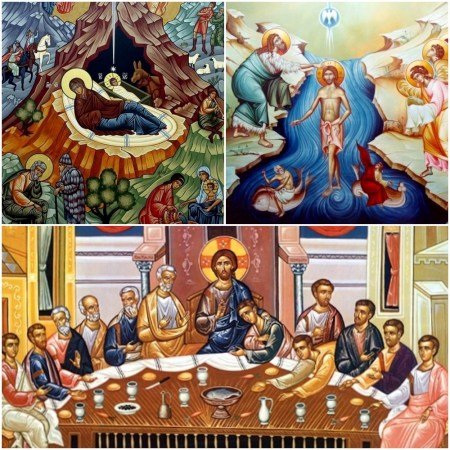
ON THE INCARNATION: BORN AND BAPTIZED THAT WE MAY BE ONE by Archpriest Isaac Skidmore

This is the ninth article in our On the Incarnation series for the Nativity season.

pjimage (20)

The season of Nativity through Theophany is rich with themes for our edifying contemplation. Central amongst these are new birth, as we celebrate the Word of God taking human flesh upon Himself, and baptism, as Christ sanctifies creation by entering the waters of the Jordan. Each season of the Church presents multiple facets for our consideration. This year, as we once again celebrate these Feasts of Light, one facet in particular might warrant our special attention.

The recent schism between the Patriarchates of Moscow and Constantinople is being billed as one of historic significance, perhaps on the level of the Great Schism of 1054. Time will tell. Whether it ends up being such, or merely a momentary hiccup in the overall unity of the Church, this Nativity-Theophany season can remind us of why we should care at all. Read More


KENOTIC ECUMENISM by Archpriest John A. Jillions

Welcome to our first article of 2019!
In our Looking Ahead to January we solicited reflections on the annual Week of Prayer for Christian Unity. We thank Father Jillions for being the first to respond.

Christ_washes_apostles'_feet_(Monreale)

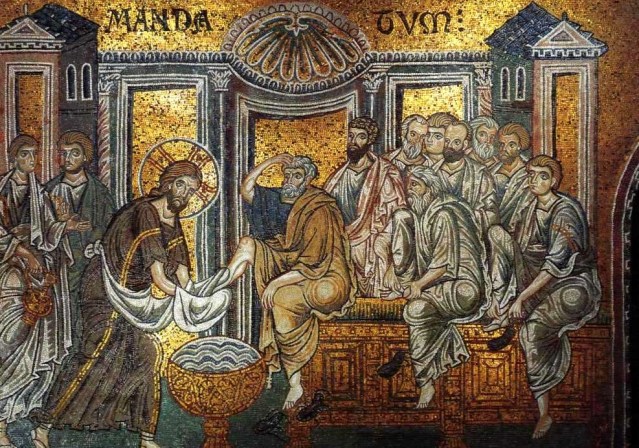
Without tampering with any church’s ecclesiological assumptions, there is nothing that should prevent churches from being generous and self-emptying, following the pattern set by the Lord Jesus Christ.

Let each of you look not to your own interests, but to the interests of others. Let the same mind be in you that was in Christ Jesus, who, though He was in the form of God, did not regard equality with God as something to be exploited but emptied Himself [ekenosen], taking the form of a slave. (Phil 2:4–7)

Kenotic ecumenism begins with a conscious rereading of the Gospels, and seeing that Jesus regularly consorts with the “wrong” types of people. He puts the Kingdom of God and the pastoral needs of real people ahead of ideology and rules, in line with a vision that placed mercy above sacrifice (Mt 12:7). Read More