

THE SILENCE OF THE BISHOPS: WHITE SUPREMACIST TERRORISM AND AMERICAN ORTHODOXY

Vasillios Pistolis, a U.S. Marine, clubs a man with a wooden flagpole during the deadly white supremacist rally in Charlottesville on Aug. 12, 2017. (Samuel Corum/Anadolu Agency/Getty Images)
Earlier today, Politico published State Pushes to List White Supremacist Group as Terrorist Org, with the subheading The top candidate for the designation is Atomwaffen, a neo-Nazi group with branches abroad. The report begins:
The State Department is pushing to designate at least one violent white supremacist group as a foreign terrorist organization, an unprecedented move that national security experts say would be a big step toward fighting a growing threat on U.S. soil.
State Department officials want to have the designation finalized by next week, according to four people familiar with the effort. But the White House, where top officials have long preferred to focus on terrorism by Islamist extremists, has yet to give the green light. Read More
Share this:

ROCOR COMMUNITIES TRANSFER ALLEGIANCE TO ECUMENICAL PATRIARCHATE
The following brief report and accompanying photo appeared on March 9, 2020 on the website of the Greek Orthodox Archdiocese of America. In a move which appears to reject the Muscovite Schism, the two parishes and one monastery comprising the new “Vicariate for the Orthodox Christian Communities of Slavic Tradition” have departed the Eastern American Diocese of the Russian Orthodox Church Outside of Russia (ROCOR), of which the primate, Metropolitan Hilarion (Kapral), serves also as diocesan bishop.
The natural home for Russian Orthodox communities in the US wishing to transfer out of ROCOR would have been the Orthodox Church in America (OCA). Unless informed otherwise, we can assume that the OCA’s sycophancy to the Moscow Patriarchate—and, by extension, to the Kremlin—made such a move impossible for these communities.
For the broader context of this development see the extensive Ukraine section in our Archives 2017-19 and Archives 2020.
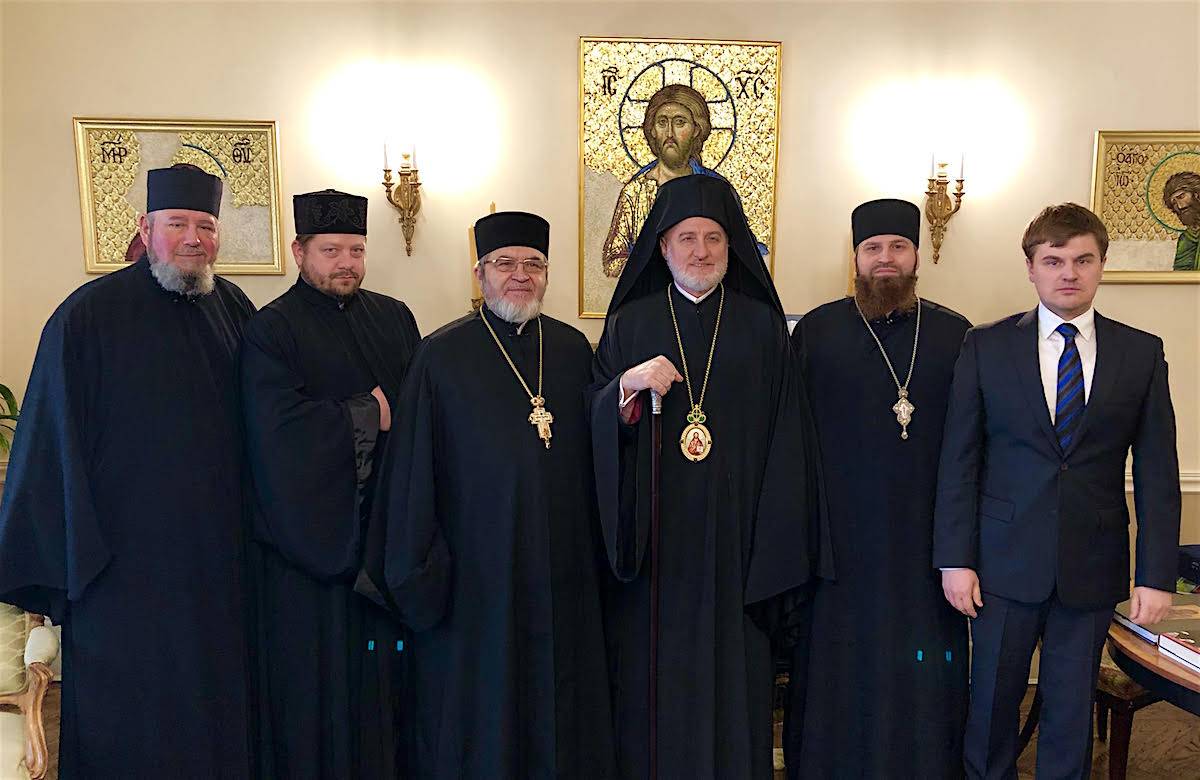
Archbishop Elpidophoros Announces the Creation of a New Vicariate in the Greek Orthodox Archdiocese
On Monday, March 9, 2020, following approval of the Mother Church of Constantinople last November after the request of the Holy Eparchial Synod, His Eminence Archbishop Elpidophoros, Primate of the Greek Orthodox Archdiocese of America and Exarch of the Ecumenical Patriarchate, announced the creation of the Vicariate for the Orthodox Christian Communities of Slavic Tradition. Read More
Share this:

DOES ARCHBISHOP ELPIDOPHOROS REALLY ALLOW NON-ORTHODOX SPOUSES TO RECEIVE COMMUNION?
The Pappas Post reported the following on February 22, 2020 under the title, Archbishop Elpidophoros of America: OK for Non-Orthodox Christian Spouses to Receive Communion.
Given the extreme seriousness of this anti-canonical and anti-ecclesiological position, the speciousness of His Eminence’s reasoning, and numerous unanswered questions—e.g., are non-Orthodox spouses free to commune in both their own denomination and the Orthodox Church, why are we allowing uncanonical mixed marriages in the first place, is marriage a “sacrament” in and of itself, unconsummated in the Eucharist, etc.?—we await a more formal statement from the Ecumenical Patriarchate or the Greek Orthodox Archdiocese on this matter.
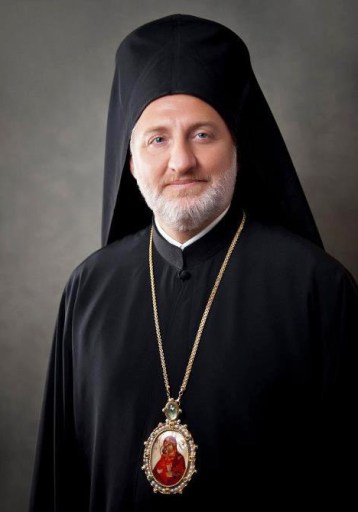
Archbishop Elpidophoros of America
Archbishop Elpidophoros of America, head of the Greek Orthodox Archdiocese of America, declared in a public forum that Christians who have been married in the Orthodox Church but are not Greek Orthodox themselves, may receive Holy Communion.
His statement came in a question and answer session during the annual conference of Leadership 100, an organization of Greek Orthodox Church donors, which was holding its annual event in Palm Beach, Florida.
Specifically, the Archbishop was responding to a question by a member of the audience who asked why the Orthodox Church wouldn’t administer Holy Communion to non-Orthodox spouses.
The Archbishop answered the question pointedly suggesting that since a non-Orthodox spouse has already participated in a sacrament of the Orthodox Church (marriage), why wouldn’t he or she be allowed to participate in the sacrament of Holy Communion.
It is important to note that the question was specifically about non-Orthodox Christian spouses who have been married in the Orthodox Church. Read More


