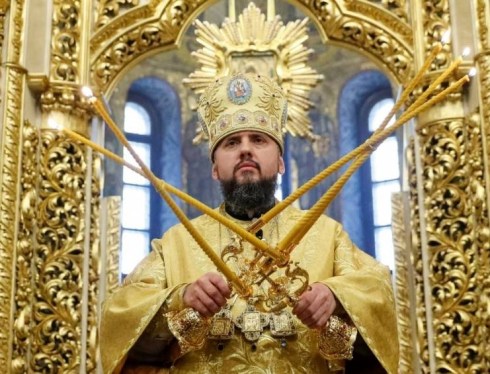
PATRIARCHAL PROCLAMATION OF CHRISTMAS by Ecumenical Patriarch Bartholomew

Orthodoxy in Dialogue is honoured to share this astonishing testimony to the Orthodox faith in the 21st century. We especially celebrate the Ecumenical Patriarch’s embrace of dialogue and rejection of moralism.

nativicon

+ B A R T H O L O M E W
By God’s Mercy Archbishop of Constantinople-New Rome and 
Ecumenical Patriarch
To the Plenitude of the Church
Grace, Mercy and Peace from the Savior Christ Born in Bethlehem
* * *

Venerable brothers and beloved children in the Lord,

We glorify the Most-Holy and All-Merciful God, that we are again deemed worthy this year to reach the festive day of Christmas, the feast of the pre-eternal Son and Word of God’s Incarnation “for us and for our salvation.” Through the “eternal mystery” and “great miracle” of the divine Incarnation, the “great wound,” namely humankind sitting in darkness and shadow, is rendered into “children of light and day,” while the blessed road of deification by grace is opened for us. In the theandric mystery of the Church and through her holy sacraments, Christ is born and takes shape in our soul and existence. Maximus the Confessor theologizes that “the Word of God, though born once in the flesh, is ever willing to be born spiritually in those who desire Him. Thus, He becomes an infant and fashions Himself in us by means of the virtues; indeed, He reveals Himself to the extent that we are capable of receiving Him.” God is not an abstract “idea,” like the god of the philosophers, or an unapproachable God enclosed in absolute transcendence. He is “Emmanuel,” “God with us,” closer to us than we are to ourselves, “more akin to us than our very own selves.”  Read More


ON THE INCARNATION: MARY, MY MOTHER FROM ETERNITY by Caleb Upton

This is the eighth article in our On the Incarnation series for the Nativity season.

entranceAs Mary was prepared before the foundation of the world to be the Mother of God, so too were we prepared to be the children of Mary with Our Lord Jesus Christ, as the adopted children of God.

With my having grown up in an Evangelical home, it could be difficult to see how it is that I now with great gladness ask for Mary’s intercession and pray the Rosary almost daily. Having reasoned from the revelation of God in the Incarnation, I came to see how the two simple claims of historical Christian orthodoxy that Jesus is God and that Jesus derives His humanity from Mary are enough, it could be shown, to lead one to the truth of all the praises that the Church has always bestowed upon our Mother: Mother of God, Ever-Virgin, Immaculate One, Intercessor, and Queen of Heaven, all of them can be derived, by the sheer brute force of logic, from the outworking of what the Incarnation, the birth of Christ, really means. 

However, for the sake of those who would not be persuaded by the coldness of the logic alone, or would get their guard up at the suggestion that sheer logical outworking of the Incarnation would forcibly compel one to accept the teaching of the Church about Mary, we will not dwell upon those arguments. It is my purpose here, rather, to give you testimony, the testimony of how a relationship with Mary has been prepared for me since childhood, though truly from the foundation of the world. It is a testimony as to how a relationship with her has begun to change my life as a Christian, especially as someone who is aspiring to the Priesthood.  Read More


ON THE INCARNATION: WORD(S) INCARNATE by Helen Coats

This is the seventh article in our On the Incarnation series for the Nativity Fast.

sermon+on+the+mount

In Brian Doyle’s introduction to his memoir, The Wet Engine, he writes, “I don’t know much, but I know these things uncontrovertibly and inarguably: One: stories matter waaaaay more than we know. Two: all stories are, in some form, prayers. Three: love is the story and the prayer that matters the most.” Doyle, a devout Catholic writer, passed away due to a brain tumor in 2017. He was only sixty years old. The Wet Engine, a reflection on his son, who was born with an incomplete heart, reveals much about the frailty of the human body. Doyle begins the book with a call to action: “Let us contemplate, you and I, the bloody electric muscle.”

And contemplate it he does, especially when it comes to one owner of a “bloody electric muscle” in particular—He whom we celebrate each year on the 25th of December:

He too was once a fertilized egg (Doyle writes), doubling and redoubling itself, forming endocardial heart tubes, myocardium and epicardium, the cells of what would be his heart miraculously migrating and fusing and dividing into the genius engineering of the four magic chambers, his amazing new heart beating beneath his amazing mother’s amazing heart after eight weeks […] and then mere moments later he is crying Eloi! Eloi! as he dies, he breathes his last, he yields up his spirit, his heart sludges to a halt on a cross on a bitter bleak afternoon; and then, three days later, in the oceanic black silence of the tomb in the garden […] There’s a heartbeat. And another. And another. And another…. Read More