METROPOLITAN IGNATIUS OF DIMITRIAS AND ALMYROS: HE WHO DOESN’T HELP REFUGEES AND MIGRANTS “IS NOT A CHRISTIAN”

The Old Testament, the New Testament, and the writings of the Holy Fathers of the Church consider the care of foreigners to be a non-negotiable duty of believers in the one true God. Visit our Angels Unawares page to learn how you can provide assistance to the refugees and asylum seekers at the US-Mexico border, or Orthodox Christians Helping Children and Families in Syria to provide assistance to victims of unending war in that part of the world.

Metropolitan Ignatius of Dimitrias and Almyros

Someone who refuses help to refugees and migrants is “neither Greek nor Christian,” said Metropolitan Ignatius of Dimitrias and Almyros amid growing protests by local communities against the resettlement of refugees from the islands.

Speaking to Alpha FM, Ignatius said, “I cannot accept anyone who refuses to help refugees and immigrants. For me, he is neither Greek nor Orthodox. Orthodoxy cares for any person, regardless of their origin. This means Jesus. As long as we preach Jesus, this we’ll practice.” Read More

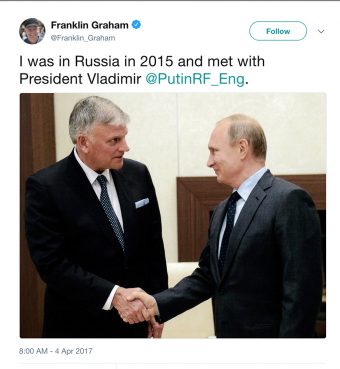
THE WEAPONIZATION OF RELIGION: HOW THE KREMLIN IS USING CHRISTIAN FUNDAMENTALISM TO ADVANCE MOSCOW’S AGENDA by Lesia Shymko

A question for Orthodoxy in Dialogue’s readers to ponder: How is the Kremlin using the Orthodox Church in America (OCA), the Russian Orthodox Church Outside of Russia (ROCOR), Archbishop John (Renneteau) and his followers in Western Europe, and its other ecclesiastical proxies around the globe to advance Moscow’s geopolitical agenda?

Recent public attention has focused on Moscow’s use of cyber warfare against elections in the US and Europe. But lately, a far more insidious threat to liberal democracy and the Euro-Atlantic alliance has emerged – Russia’s weaponization of faith-based organizations.

Expelled from the G-8 and sanctioned economically for its illegal seizure of Crimea, Russia is employing new tactics to influence US and European decision makers and win the war of public opinion. In America, the Russian government has re-configured its active measures strategy to deliberately target the three pillars of modern American conservatism — big business, gun-rights advocates, and Christian fundamentalists. Read More


THE RUSSIAN ORTHODOX CHURCH’S BATTLE WITH TIME: REFLECTIONS ON THE PATRIARCHATE OF ALEXANDRIA’S RECOGNITION OF THE ORTHODOX CHURCH OF UKRAINE by Andreja Bogdanovski

kirtheo

Patriarch Theodoros II of Alexandria (second from right) concelebrates with Patriarch Kirill of Moscow (left) in July 2018
(Photo credit: Religion News Service)

By coincidence or not, this time last year Patriarch Kirill of the Russian Orthodox Church (ROC) thanked Patriarch Theodoros II of Alexandria for his support of the Ukrainian Orthodox Church-Moscow Patriarchate (UOC-MP) on the question of Ukrainian autocephaly. Exactly a year later, the Patriarchate of Alexandria (AP) joined the Orthodox Church of Greece (OCG) in recognising the autocephaly of the Orthodox Church of Ukraine (OCU). How do Patriarch Kirill and Metropolitan Onuphrius of Kiev* feel? If the initial reactions from the UOC-MP are any indicator, then the answer is betrayed. Read More


CINEMA AND HOMOPHOBIA: GEORGIA’S FAR RIGHT AND THE ORTHODOX CHURCH THREATEN TO DISRUPT THE RELEASE OF A MOVIE ABOUT GAY LOVE by Karl Mayer

Orthodoxy in Dialogue’s readers will recall that the Georgian Orthodox Church hosted the notoriously homophobic World Congress of Families in 2016, which earned Father Josiah Trenham the distinction of coming to the attention of the Southern Poverty Law Center’s Hatewatch Staff.
In the 21st century, to what extent—if at all—is the Church in a majoritarian Orthodox country justified in trying to control artistic expression and popular culture?

In Georgia, far right groups and the Orthodox Church join forces against the premiere of the Swedish film And Then We Danced, shot in Georgia and featuring a gay Georgian dancer.

And Then We Danced, which notably will open the 32nd annual Image+Nation Film Festival in Montreal on November 21, is a tender story of the discovery of gay love filmed in Tbilisi, Georgia.  Read More