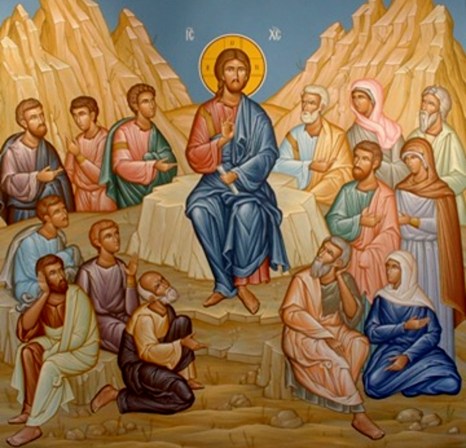
The Sermon on the Mount
I’ve been an Orthodox Christian my whole life. In spite of that, one of the problems I’ve had with religion is that it can—and sometimes does—lead to black and white ways of thinking which ignore the obvious moral complexities of the world, whether because one is unable or unwilling to deal with them. I’ve heard several theologians and philosophers talking about how it would have been sinful to lie to the Gestapo to protect a Jewish neighbor: because lying is wrong or a sin in certain circumstances, so it must be in every circumstance.
One cannot say that lying is wrong, and expect this to be true in every situation— regardless of one’s circumstances, state of mind, or motive—any more than one could say that because you might be justified in punishing your children when they misbehave, it would be fine to punish them when they do nothing. That kind of view of the world should be seen by any rational person as far too simplistic, and obviously wrong.
This, I believe, stems from a literalistic reading of Scripture and Tradition, one which sees these as some kind of universal rule book, rather than divine revelation inspired by the God who transcends time, but interpreted by fallible humans who view what they were given through their own cultural lens. Read More





 ORTHODOXY IN DIALOGUE