ON BEING ORTHODOX & GENDERQUEER: AN INTERVIEW WITH “LINDSEY” by Lydia Bringerud

This likely represents one of the most controversial articles that Orthodoxy in Dialogue will ever publish. The dismissiveness, outrage, or mockery that it will elicit in certain Orthodox circles is entirely—and sadly—predictable. 

Conducted on June 25, 2018, this interview introduces our readers to Ms. Bringerud’s doctoral research in gender, cultural heritage, and conversion in the Orthodox Church. She invites her subject to share their experience of being Orthodox and a seminarian while not identifying as male or female.

Orthodoxy in Dialogue does not normally allow the use of pseudonyms. In this case we have made a rare exception based on the importance of Lindsey’s witness in our ongoing discussion of sexuality and gender and the need to ensure their safety and well-being in the Church. We have communicated with them directly and know their identity. 

The author provides a glossary of terms here.

genderqueer_gradient_by_pride_flags-da1azf9Lydia: Please introduce yourself for our readers.

Lindsey: Hi, my name is Lindsey, and my pronouns are they/them/theirs. I am white, middle-class, on the autistic spectrum of disorders, and have major depression, for which I’m in treatment. I am often read as masculine. I grew up in different parts of California. My parents converted to Orthodoxy, and I grew up attending Liturgy and Vespers every week.

Lydia: You identify as “genderqueer.” Can you talk about what that word means to you, and how you came to identify this way?

Lindsey: I don’t really like labels myself, but we still have to speak a language. Gender, to me, is the meaning we give to being embodied, which is intimately linked with sex, the physical composition of our bodies. The meanings of the two may come from culture, society, family of origin…etc. None of the regulated roles contained under “male” or “female,” or anything else, really, fits my identity. I would almost prefer to think of myself as agender. I don’t experience moving from one gender expression to another; I feel outside of the  gender spectrum. There is a tendency to collapse sex and gender and use those words interchangeably, but we do ourselves a disservice there—they are ultimately inseparable, but they are very much distinct. Read More


A SPIRITUAL JOURNEY: THE UNDER-REPORTING OF RELIGION & FAITH IN THE CANADIAN MEDIA by Jacob McNair

Orthodoxy in Dialogue is pleased to introduce Jacob McNair of Toronto to our readers around the world. He is a young Orthodox Christian in the final stage of his Master of Journalism.

jake

Jacob McNair

Mary Hynes sits with a cup of tea in a cozy, burgundy-walled studio at CBC’s Toronto offices. She’s interviewing Paul Bramadat, a professor at the University of Victoria, about his study of the spiritual demographics of Cascadia, the Pacific Northwest region encompassing British Columbia, Washington, and Oregon. It’s a segment for her radio show Tapestry, where she talks to Canadians about religion, spirituality, philosophy, psychology, and all other aspects of the “messy business of being human.” Even though Bramadat is phoning in from across the continent, Hynes keeps the tone personal—as if he’s sitting right there with her. While Bramadat’s initial answers revolve around mechanics and data, Hynes’s informal, caring tone and questions pry him away from his prepared answers. When asked about the area’s distinctive spiritual trends, he notes, “the influence of what I call ‘reverential naturalism,’ which is to say, that being out in nature is not just a place where one does a spirituality or religion, but it is a medium through which [spirituality or religion] is done.”

Hynes asks for an example, commenting, “I guess the image that’s coming to my mind is, you have everything! You have the ocean, you have the mountains. You know, this part of the world is pretty spectacular in terms of natural beauty. So how does that shape a sense of spirituality?”

“I moved here about 10 years ago, and most professors teach, and were taught, that everything is a social construction—”

“Sorry, where did you move from?” interrupts Hynes.

“I moved from Winnipeg, where I spent about 30 years of my life, but I’ve lived also in Quebec, and in the Hamilton area.” Bramadat goes on to describe how, on moving to B.C., he noticed a number of drivers unironically using a B.C. licence plate with the motto, “The Best Place on Earth,” which was offered by the government from 2007 to 2011. He believes it “does really capture the way in which people think about this place, and so it just led me to think, ‘Well, is there anything about this place which might be distinctive from the various other places I’ve lived?’ I love the prairies, I love that landscape, but it’s a place of horizontal and somewhat elusive beauty. It requires your attention. In Cascadia, the beauty doesn’t really require your attention—it reaches in and kind of grabs it.” Read More


BEFORE HIS DEATH, 10-YEAR-OLD ANTHONY AVALOS CAME OUT AS GAY by Garrett Therolf

Orthodox “pastors” and “theologians” who spew a never-ending stream of homophobia and transphobia from the comfort of their laptops consistently deny any complicity in the suicide and murder of our LGBTQ brothers and sisters. “We are simply speaking the truth!” “We love the sinner, but hate his sin!” “Aw, those poor, fragile, suicidal teenagers!”

Orthodoxy in Dialogue goes on record to assert: If your “truth” and your “love” provide the discursive incentive for even one suicide, even one case of infanticide, it is neither true nor loving, nor is your “gospel” good news. Your “theology” is poison. In your pornographic obsession with techniques of “gay sex” you cover your eyes and stop your ears to the indisputable fact that children start to become aware of their orientation from their earliest memories, long before they have any idea of what “sex” is — “gay” or otherwise.

Do not run for shelter under the fact that this sweet child was abused long before his coming out: no one ever murdered a little boy for saying he likes girls.

If you think Orthodoxy in Dialogue has an “agenda,” we wear it as a badge of honour. We would rather have an “agenda” than blood on our hands.

Grant rest eternal in blessed repose, O Lord, to the soul of Thy child Anthony who has fallen asleep, and may his memory be eternal.

Memory eternal. Memory eternal. Memory eternal.

avalos

Anthony Avalos came out as gay in recent weeks, and authorities are now investigating whether homophobia played a role in the death of the 10-year-old Lancaster boy, a county official said.

Anthony was found mortally wounded at his home last week with severe head injuries and cigarette burns covering his body.

Brandon Nichols, deputy director of the Los Angeles County Department of Children and Family Services, revealed in an interview Monday that Anthony “said he liked boys” but declined to provide more details, including whom the boy told and when.

Nichols said the criminal investigation of the deadly abuse is ongoing. 

Anthony’s aunt, Maria Barron, said it would have taken great courage for Anthony to have announced he was gay in the home.

Read More


ORTHODOXY AND ISLAM: TOWARD A COMPARATIVE THEOLOGY by Phil Dorroll

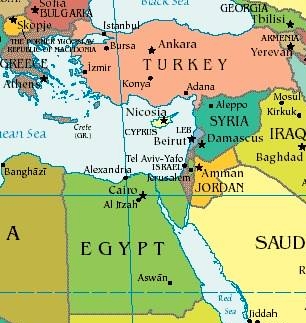
middle-east-map1327228406416This article and the one following will attempt to outline in brief a framework for the systematic comparison of Orthodox and Islamic theology. I hope to develop this framework in future writings in a much fuller fashion, given the importance that I believe it could have for future Orthodox-Islamic relationships. These relations are deeply historically grounded, but also deeply politicized by reductive nationalisms in the modern period. 

Scope and Method

Comparing all of Islam to Orthodox Christianity would be difficult and imprecise, since Islam is as internally diverse as Christianity. It thus makes more sense to compare one particular Islamic tradition with one particular Christian tradition. I will therefore compare the theological history of Orthodox Christianity with that of Sunni Islam in the Eastern Mediterranean—roughly contemporary Turkey, Egypt, Lebanon, Jordan, Syria, and Palestine. Sunni Islam in the Eastern Mediterranean comprises most of the former Ottoman Empire, which gives it a shared intellectual and cultural heritage in much the same way that the Orthodox world has.

Secondly, I will restrict my comparison to dogmatic theology, or theology that represents core beliefs about God and the spiritual life in each tradition. I will argue in this piece that Orthodox and Sunni Islam in the Eastern Mediterranean exhibit a strikingly similar pattern of theological history, but in fact come to almost diametrically opposed conclusions about theological epistemology, i.e., how to know and approach God. Read More