RELIGIOUS CLEANSING UNABATED IN EASTERN UKRAINE’S KREMLIN-BACKED “REPUBLICS” by Halya Coynash

In stark contrast with the religious freedom and separation of church and state guaranteed in the Ukrainian Constitution, the illegal, Russian-sponsored secessionist movement in Eastern Ukraine moves to rid the area of all faith communities except parishes and institutions of the Moscow Patriarchate.

In the following report, DPR = Donetsk People’s Republic, LPR = Luhansk People’s Republic.
dnr

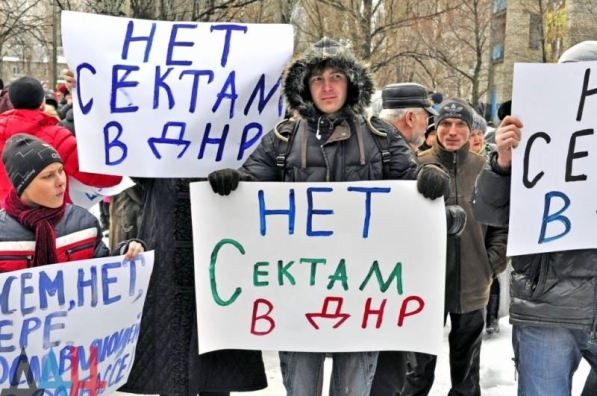
“NO SECTS IN THE DONETSK PEOPLE’S REPUBLIC”

All Faiths outside the Moscow Patriarchate under Fire in Russia-Backed Donbas “Republics”

Over the last weeks, at least two churches in the self-proclaimed ‘Donetsk people’s republic’ [DPR] have been forcibly closed, with the church premises seized by the Kremlin-backed militants. Judging by new rules on ‘re-registration’, many other religious communities are likely to find themselves outlawed in the near future.

Alexander Moseychuk, Pastor of the New Life Church in Makiyivka reports that on 6 July,  seven ‘DPR’ representatives, some of them armed, burst into the church and announced that it no longer belongs to them. Father Alexander notes that their Church has helped over 700 people during the four years since the beginning of the war. Around 120 believers can be expected to arrive at the gates of the Church on Sunday and will find it sealed. He asks if this augurs the beginning of persecution.  Read More


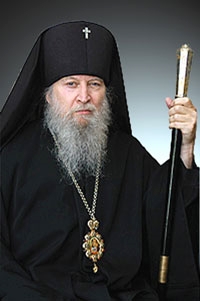
ON THE NEUROBIOLOGY OF SIN: AN INTERVIEW WITH ARCHBISHOP LAZAR (PUHALO)

abp.lazarQuestion: You wrote the book On The Neurobiology of Sin. What motivated you to write it?

Archbishop Lazar: The question of depression was the original motivation. I had read an article by a Protestant minister who suggested that depression does not really exist, that it is only a demonic temptation. At about the same time, an Orthodox priest stated the same thing. Since depression can be the first symptom of a serious illness, and since there is a segment of the brain that has a depression/despair loop, the Brodmann area 25, I thought it was necessary to say something about this.

Depression can, of course, be caused by the circumstances of life, but it can also be the first symptom of a brain tumour, Wilson’s disease, or several other even life-threatening conditions. There is also clinical depression which, if not treated, will cause the hippocampus to atrophy. So I thought I should make a response to that.

Question: Your book turned out to be rather controversial, did it not?

Archbishop Lazar: I was not really aware of any controversy, and I was not concerned about it. I have no idea how controversial it was. It seems there was more controversy about my editorials than about the book.

Question: The chapters on human sexuality seemed to have caused some consternation. What motivated you to write those chapters? Read More


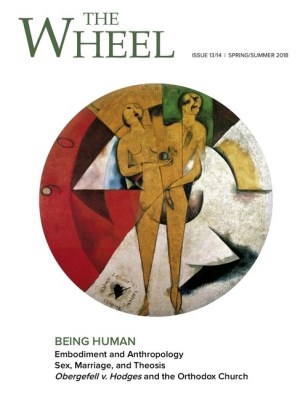
THE WHEEL 13/14: FATHER PAVEL FLORENSKY AND THE SACRAMENT OF LOVE by Giacomo Sanfilippo

wheelThis article appears in the current issue of The Wheel (13/14 | Spring/Summer 2018). Citations are omitted below but provided in The Wheel

The double issue—with the theme of Being Human: Embodiment and Anthropology—features a Foreword by Metropolitan Kallistos (Ware), an Editorial by Father Andrew Louth, and articles by the following authors: Father John Behr; Marjorie Corbman, Steven Payne, and Gregory Tucker; Beth Dunlop; Brandon Gallaher; Father John Jillions; Katherine Kelaidis; Bradley Nassif; Aristotle Papanikolaou; Giacomo Sanfilippo; Father Vasileios Thermos; Father Alexis Vinogradov; and Christos Yannaras.

Click here to subscribe to The Wheel‘s print version. Click here to purchase a copy or copies of this issue.

——————

This essay introduces my doctoral research on Father Pavel Florensky’s “Friendship.” It represents a partial response to the questions that emerged in the weeks following the appearance of my “Conjugal Friendship” in May 2017 on Public Orthodoxy.
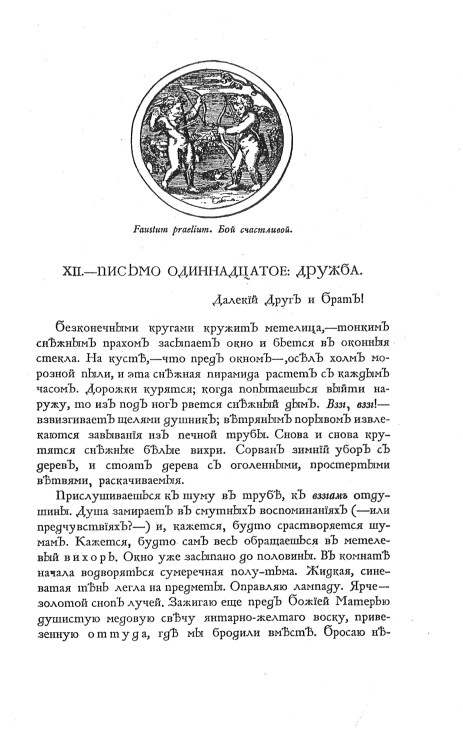
01 first page

A facsimile of the 1914 original. Note the pre-Revolutionary orthography. As an æsthete Florensky selected the emblem and ornate typeface himself.

Father Pavel Florensky’s “Friendship,” structurally and thematically the culminating letter of the twelve which comprise The Pillar and Ground of the Truth, has proven a challenge to his readers from the time that he first wrote it as part of his master’s thesis to the present. A cursory reading in translation allows little room to imagine that it envisages “friends” in any conventional sense, of the sort that a man might have two or three or several, or that he could have such a friend in addition to a wife. In the Russian original it becomes even clearer that Florensky articulates an unmistakably conjugal form of friendship. He describes the relationship as two male bodies sharing a single soul in “the sacrament of love,” sanctified in the brother-making liturgy and the couple’s co-partaking of the Eucharist, and differing in no way from marriage in its premise of monogamy, bodily intimacy, cohabitation, common possessions, and mutual submission. The historical, cultural, and especially biographical context in which Florensky writes leaves little ambiguity concerning his personal interest in the recently discovered notion of “homosexuality” and in germinal ideas on the instability of binarial gender—long before the advent of postmodern queer theory.

 The following pages touch only briefly on these aspects, but in reverse order: the wider context of Florensky’s life and writings, his personal biography, and a few key considerations from his text. I conclude with some observations on his place—a full century later—in one of the most challenging anthropological questions demanding a thoughtful Orthodox response today. Constraints of space permit me to do no more than sketch the basic contours of the argument that I will make at length in my doctoral dissertation. Read More
HEADSCARVES: SOME THOUGHTS ON ORTHODOXY AND CULTURE by Giacomo Sanfilippo


pjimage (12)

21st-century Orthodox women and girls

Recently Public Orthodoxy hosted a conversation between Dr. Katherine Kelaidis and Dr. Nadieszda Kizenko on the wearing of headscarves by Orthodox women and girls in church. The initial article by Kelaidis can be read here, the response by Kizenko here.

Two things struck me most about Kelaidis’ piece: first, the decision (whether editorial or authorial, I do not know) to illustrate it with a folksy painting from 19th-century Ukraine or Russia rather than a photograph from 21st-century Ukraine or Russia; and second, the unusual assertion that American Orthodox women who cover their head in church somehow disrespect Kelaidis’ grandmother. Kizenko addresses the latter point, as well as the rest of Kelaidis’ article, with tact and nuance.

The question of headscarves was raised by the younger women in the Romanian-Canadian parishes where I served as a priest from 1990 to 1992, and again in a mission parish in the same area—on the border between Manitoba and Saskatchewan—from 1992 to 1995. To repeat, the women raised the question, not I, and this because of the continuing preponderance of headscarves among the older women.

I replied that I found headscarves for women and girls in church to be a tradition worth preserving; that I did not require them to cover their head in church; that women who covered their head in church should neither pressure the others to conform nor feel superior to those who did not; and that an elaborate, fashionable hat would seem to contravene the spirit of the headscarf as a traditionally feminine form of modesty in church. Read More